IN Brief:
- ORR has authorised the principal infrastructure delivered through the Salford Crescent station upgrade.
- The works include a new 157-metre Platform 3, extended footbridge, lift and additional gateline.
- Scheduled passenger services are expected to begin using the third platform following the December timetable change.
Network Rail has reached a key regulatory milestone at Salford Crescent after the Office of Rail and Road authorised the new platform, extended footbridge, lift and additional gateline forming the core of the station upgrade.
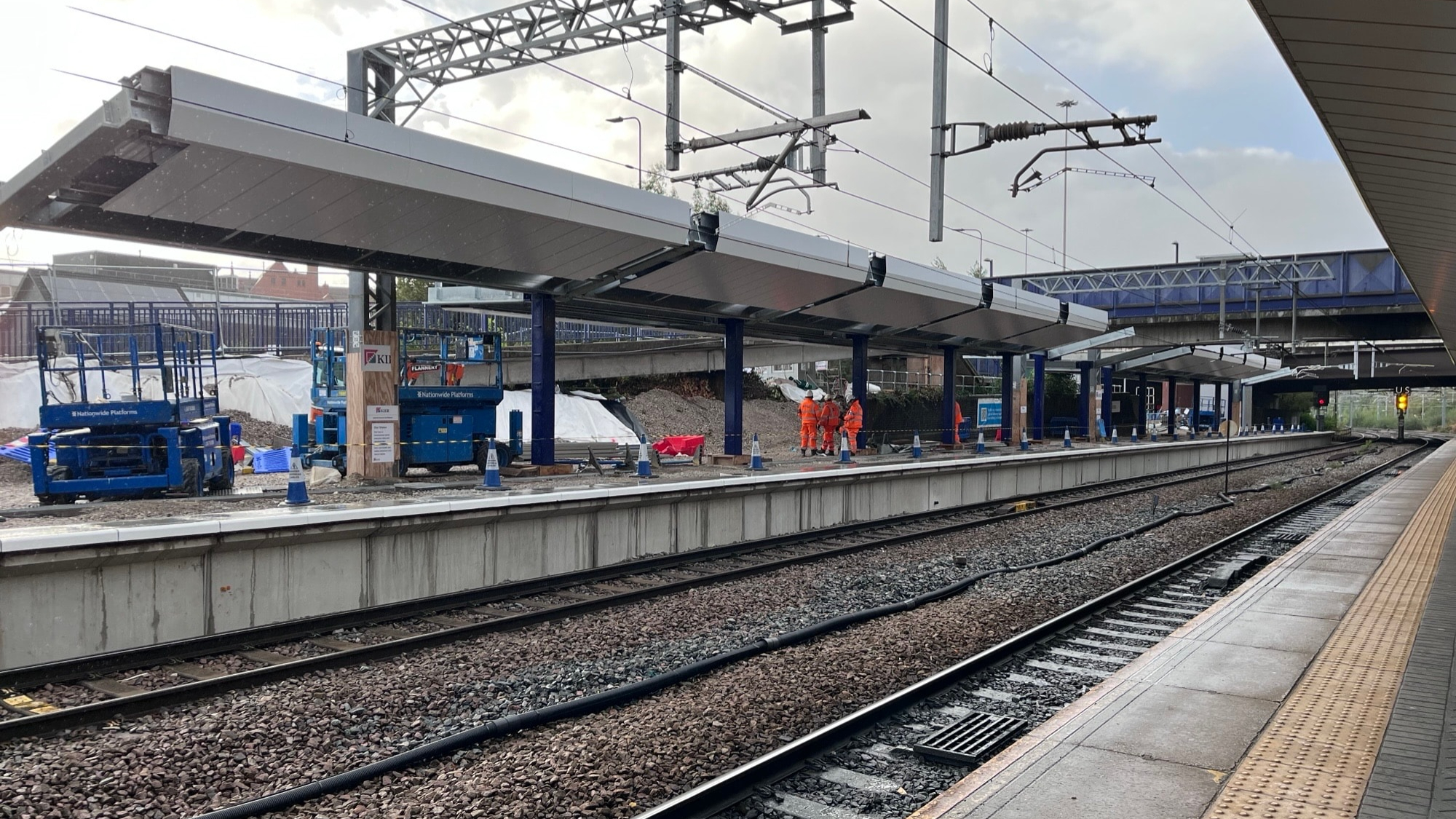
The authorisation covers the new 157-metre Platform 3, including its canopy and seating, together with an extension to the existing footbridge and a new passenger lift. An additional gateline has also been installed beside the station building to increase the number of routes through the controlled station boundary.
Salford Crescent sits on a busy approach to central Manchester, handling services that converge before continuing towards Manchester Victoria, Manchester Oxford Road and destinations beyond the city. Train movements through the station are therefore governed by more than passenger numbers: available platform faces, junction capacity and the sequence in which services arrive and depart all affect how quickly trains can be moved through the corridor.
The third platform adds another stopping position within that constrained layout. Where two services would otherwise require the same platform in close succession, the additional face can give signallers and operators another option for regulating trains without holding one outside the station while the previous service clears.
Network Rail moved onto the site over Christmas 2024, with the principal construction programme beginning in March 2025. Work has taken place around an operational railway and live passenger station, requiring construction zones, deliveries and possessions to be planned around continuing train services and public access.
The platform itself is only one part of that interface. The existing footbridge had to be extended across the new track arrangement so passengers could reach Platform 3, while the lift provides step-free movement between the bridge and platform level.
Connecting new infrastructure into an operating station introduces constraints absent from a cleared site. Bridge geometry has to meet the existing structure, lift shafts must fit around railway clearances and buried services, and platform edges have to match the track alignment within tightly controlled tolerances.
Passenger circulation also has to be maintained while those works take place. Salford Crescent already handles substantial interchange flows, so temporary routes and work zones cannot simply displace passengers into unsafe or excessively narrow areas while construction progresses.
The second gateline is intended to reduce pressure at the entrance by increasing throughput during busy periods. Platform capacity and entrance capacity are linked because a station can add train movements without improving passenger flow only to move congestion from the railway into stairs, bridges or barriers.
ORR authorisation sits between physical construction and unrestricted operation. New or substantially altered railway infrastructure has to demonstrate that applicable requirements covering safety, accessibility, technical compatibility and operation have been satisfied before it can enter service.
The regulator worked with Network Rail and the project team during the authorisation process, including surveys and checks before approval was issued. A platform can therefore appear complete while still awaiting the evidence required to demonstrate that its structural, electrical, access and operational systems are ready for passenger use.
Steve Fletcher, deputy director for engineering and asset management at ORR, said: “This is an important step in getting the busy Salford Crescent station ready to open its new platform to help improve how passengers move through the station.”
Kier Contracting has delivered the construction work for Network Rail. Parts of the programme could be carried out behind segregated work areas during normal operation, while activities affecting track, railway systems or passenger routes required more restrictive working arrangements.
Rail possessions remain a critical resource on projects of this type because access to the track cannot be treated as continuously available. Work that interferes with signalling, track alignment or other operational systems has to fit into agreed periods when train movements can be restricted without creating unacceptable disruption elsewhere on the network.
The station’s new infrastructure also has to be commissioned as a system. Lighting, communications, lifts, ticketing equipment, platform furniture and railway interfaces each require testing before the completed platform can support normal passenger operation.
The project follows a separate £10m upgrade at nearby Salford Central, where Network Rail and Transport for Greater Manchester altered platforms and delivered accessibility, canopy and station-building improvements. Together the schemes form part of a wider programme of rail investment around central Salford rather than one isolated station intervention.
At Salford Crescent, Network Rail expects the new platform and additional gateline to open during autumn 2026. Scheduled services are due to begin making planned stops at Platform 3 following the December National Rail timetable change.
That gap allows the infrastructure to enter operational use before the timetable is rewritten around it. Train planners can then incorporate the additional platform into regular stopping patterns rather than relying solely on it as contingency capacity.
With ORR authorisation secured, the largest remaining transition is therefore operational. The new 157-metre platform must now become part of the daily railway, with its value determined by whether the extra stopping position reduces conflicting movements and allows passengers to move through the station more efficiently during the busiest periods.