IN Brief:
- Barhale will deliver a 7,460m twin pumped rising main through Anglian Water’s @one Alliance.
- Ten horizontal directional drilling locations include major crossings beneath the East Coast Main Line and River Great Ouse.
- Handover is scheduled for November 2027 to provide wastewater capacity for continued development at Alconbury Weald.
Barhale has been appointed to construct a £14.6m twin pumped rising main at Alconbury Weald in Cambridgeshire, providing additional wastewater capacity for one of the region’s largest strategic housing and employment developments.
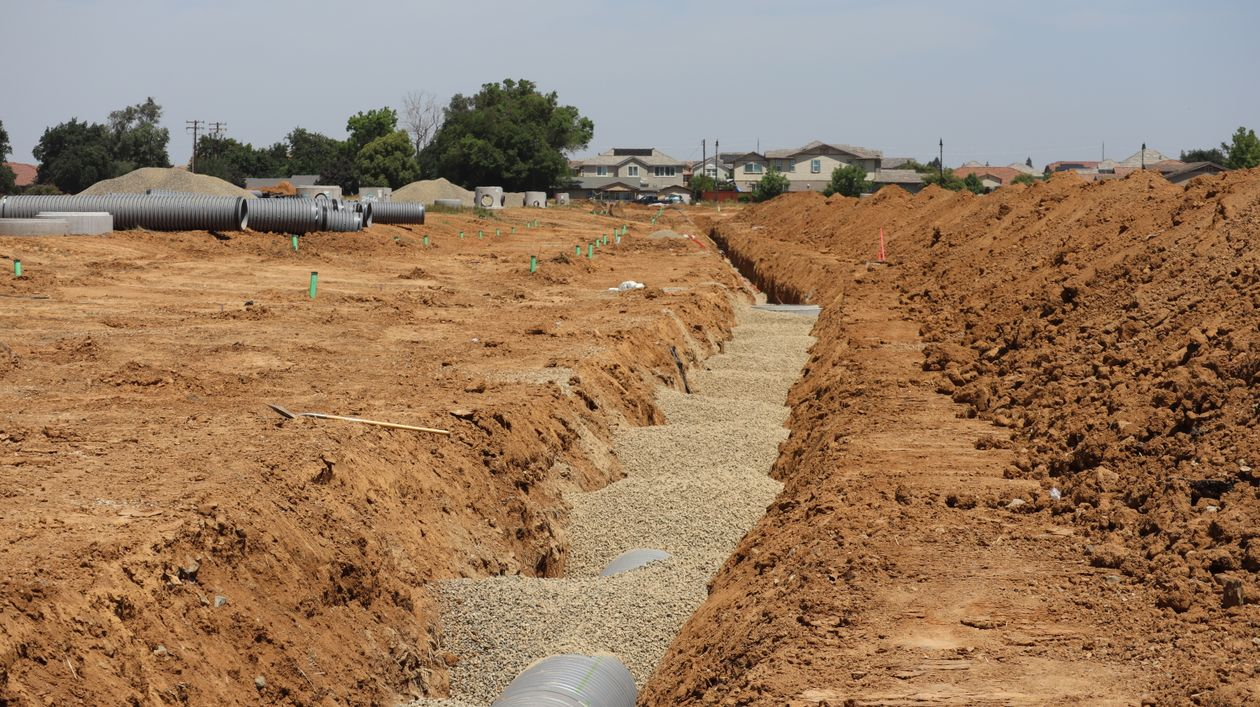
The project will deliver about 7,460m of pipeline around the eastern side of Huntingdon through Anglian Water’s @one Alliance. The twin route will use pipe diameters of 400mm, 315mm and 250mm, with most of the alignment installed by open-cut construction and trenchless techniques used at constrained crossings.
About 1.5km of the route will pass through the Alconbury Weald development, while much of the remainder crosses agricultural land. The alignment avoids taking the pipeline directly through Huntingdon town centre and will discharge wastewater into the inlet works at Huntingdon Water Recycling Centre.
The new infrastructure is designed for a volumetric load of 3,840 cubic metres per day at a flow rate of 144 litres per second. The existing pumping station at Alconbury Weald does not have enough capacity for projected growth, so master developer Urban&Civic is expected to construct a new terminal pumping station to feed the rising main.
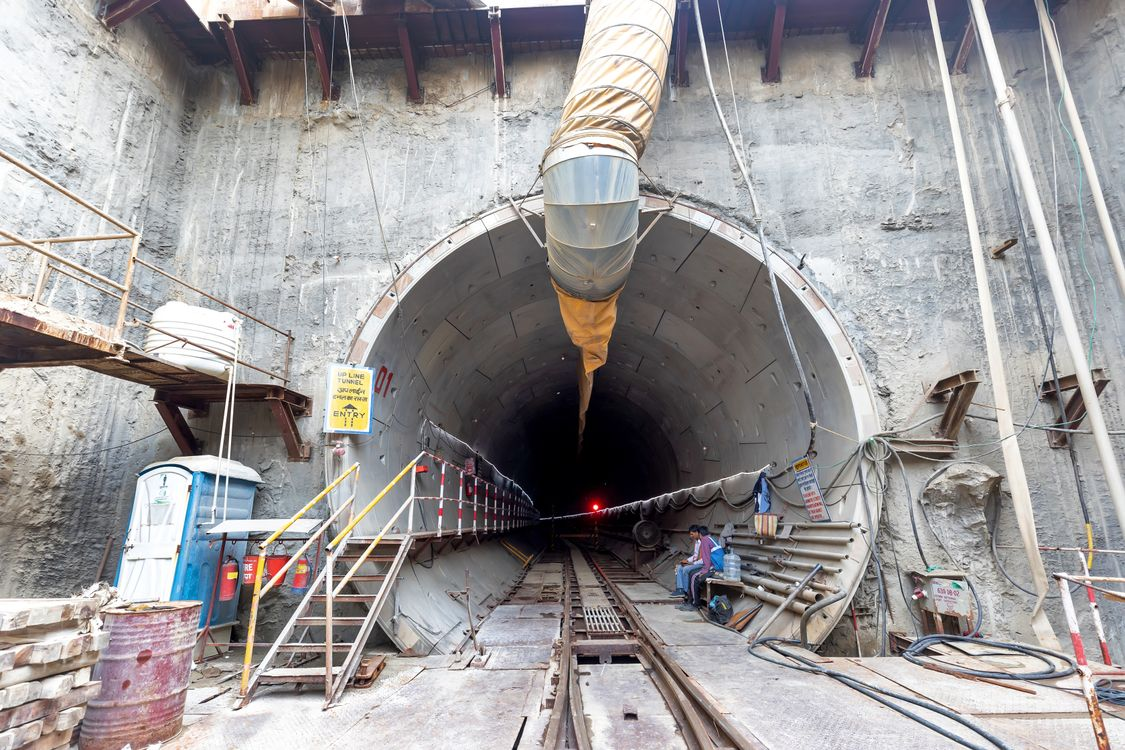
Ten horizontal directional drilling locations account for the most technically demanding sections. At the East Coast Main Line, Barhale is due to install twin sleeves about 355m long and 630mm in diameter, through which the 400mm pipeline will be installed. The method allows the route to pass beneath the operational railway without an open excavation across the corridor.
A second major trenchless section will pass beneath the River Great Ouse. Twin 292m sleeves of 400mm diameter are planned to accommodate the 250mm pipeline. Track mats and temporary Bailey bridges will carry plant across drainage dykes, helping construction avoid an archaeologically sensitive ridge and furrow landscape feature.
The contrast between open-cut and trenchless sections gives the scheme a varied delivery profile. Conventional excavation, pipe laying, backfilling and reinstatement can progress along much of the route, but each rail, river, drainage and environmental interface carries its own access, temporary works and programme controls. Wet ground around the principal drilling locations adds further pressure on drilling stability and site logistics.
Barhale also plans to trial a Wacker Neuson off-road dumper with a changeable skip system. The machine can work as a conventional dumper or carry a flatbed, allowing materials and equipment to move along the cross-country route without relying solely on road-going pickup vehicles. Across a working corridor approaching 7.5km, small gains in handling and plant utilisation can accumulate across the programme.
The wastewater capacity is tied directly to the build-out of Alconbury Weald. Current plans provide for about 6,500 homes, more than three million square feet of employment space, schools, local centres, community facilities and extensive open space. Each completed phase adds to wastewater demand, making network capacity a prerequisite for later housing and commercial construction.
Buried infrastructure therefore has to move ahead of parts of the visible development. Homes, schools and employment buildings can only be occupied at the planned scale if pumping, transfer and treatment capacity are available when required. Delays in a rising main or terminal pumping station can become a constraint on an otherwise consented building programme.
The contract also sits within Anglian Water’s wider @one Alliance programme for 2025 to 2030. The alliance is delivering water and water recycling projects across the region, with pipeline, treatment and resilience work competing for engineering resources and specialist supply capacity.
The trenchless work will also demand a tighter chain of survey and quality records than ordinary pipe installation. Bore alignment, sleeve installation and final carrier-pipe position have to be verified before the crossings are buried and inaccessible. Any deviation beneath the railway or river would be considerably harder to correct than a problem on an open section of route, increasing the value of accurate setting out and monitoring.
Alconbury Weald combines long lengths of conventional pipeline with a relatively small number of higher-risk crossings that can govern the programme. Railway possessions are avoided by drilling beneath the East Coast Main Line, but the crossing still demands precise alignment, ground control and monitoring. The river crossing carries a similar requirement without the tolerance for an open trench through the watercourse.
Handover of the rising main is scheduled for November 2027. By then Barhale’s pipeline, Urban&Civic’s terminal pumping station and the connection into Huntingdon Water Recycling Centre will need to operate as one system, giving subsequent phases of the development the wastewater capacity assumed in the masterplan.