IN Brief:
- PHOSFIRE materials reduced total heat release by nearly 50% and peak heat-release rate by up to 46% against reference solutions.
- REFUGI is developing bio-based fire-retardant varnishes and coatings for timber using lower-solvent manufacturing processes.
- AIMPLAS is coordinating HEFESTOS work examining safer alternatives to brominated flame retardants across construction and other sectors.
AIMPLAS is developing flame-retardant materials and coatings intended to slow fire development, reduce heat release and limit smoke generation while moving towards safer and more sustainable formulations for construction products.
Research across the Spanish technology centre’s PHOSFIRE, REFUGI and HEFESTOS programmes covers several parts of the problem, from new additives for paints, varnishes and plastics to protective coatings for timber and longer-term work on alternatives to brominated flame retardants.
PHOSFIRE has produced the clearest quantified results so far. AIMPLAS reports that sustainable flame-retardant systems developed through the project reduced total heat released during combustion by nearly 50% compared with reference solutions, while peak heat-release rate fell by up to 46%.
The two measurements address different aspects of fire behaviour. Lower total heat release reduces the energy contributed by a burning material over the test period, while a lower peak heat-release rate moderates the point at which combustion becomes most intense.
Smoke is another focus of the research. Limiting heat and flame development can improve the time available for evacuation and emergency response, but smoke production remains a separate hazard because it can restrict visibility and complicate movement through affected spaces.
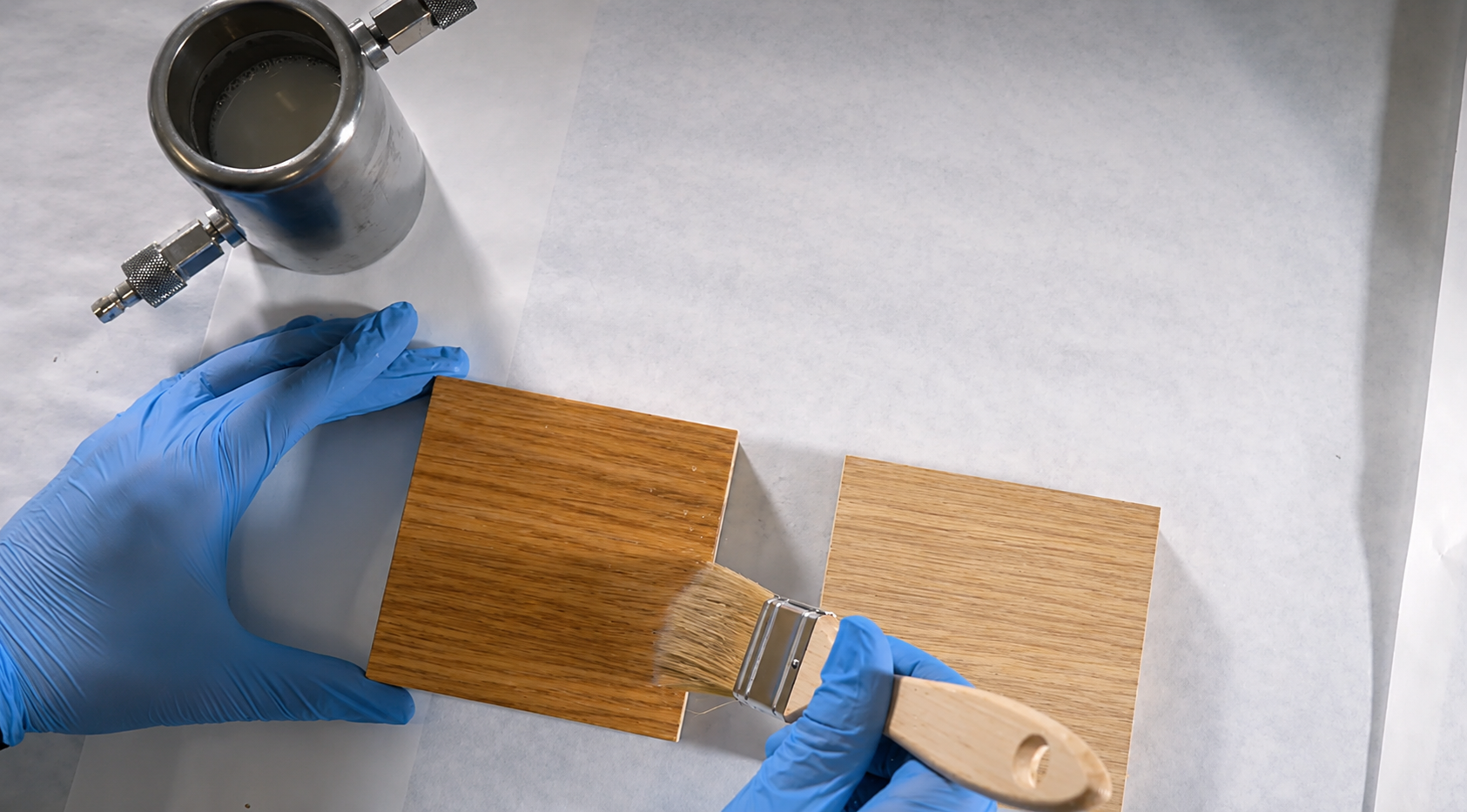
The REFUGI project moves the work towards timber construction and interior applications. Researchers are developing fire-retardant varnishes and coatings using bio-based and biodegradable materials, with manufacturing approaches intended to reduce solvent consumption and environmental impact.
Mechanochemistry forms part of that programme. The process uses mechanical energy during material preparation and reaction, allowing researchers to investigate formulations that require less solvent than more conventional approaches.
The latest coatings have been validated on MDF panels, a widely used engineered timber product found in furniture, wall coverings and interior fit-out. AIMPLAS reports that some formulations reduced the intensity and growth rate of fire while also cutting smoke production.
Protective layers were also observed forming on some test samples during fire exposure. These layers can act as a barrier between the heat source and the underlying material, helping to slow thermal degradation and the rate at which fresh combustible material becomes exposed.
Although testing has concentrated on wood-based panels, AIMPLAS says the coating technology could also be applied to plastic and metal surfaces. That broadens its potential relevance to mixed-material building systems rather than limiting the work to timber alone.
The construction challenge is that fire performance cannot be separated from the rest of a product specification. A coating still has to adhere to its substrate, tolerate manufacturing and installation, retain the required appearance and remain compatible with the wider assembly in which it is used.
That becomes particularly important as timber and wood-based products are used more visibly in buildings. Fire-retardant treatment may have to operate on exposed finishes or manufactured panels where surface quality, colour and compatibility with adhesives or other coatings matter alongside performance in a fire test.
Moving from laboratory panels into commercial products will therefore require more than reproducing the headline reductions in heat release. Performance has to remain consistent across production batches, different substrates and the processing conditions used by manufacturers.
AIMPLAS is addressing the wider substitution problem through HEFESTOS, a European initiative focused on safer alternatives to brominated flame retardants. The technology centre was selected by the European Commission to coordinate the programme, which covers sectors including construction, automotive and cabling.
Brominated flame retardants have been used for decades where polymer products must meet fire-performance requirements, but replacing established systems can alter processing characteristics and finished-product behaviour. A substitute has to provide suitable fire performance while remaining compatible with the polymer, coating, adhesive or manufacturing process in which it is used.
HEFESTOS is intended to bring companies, SMEs, researchers and industry organisations into that assessment rather than treating substitution as a single-material exercise. The programme will examine technical barriers, available alternatives and evidence gaps that could influence future European decisions.
The European Commission-backed initiative is also intended to test the feasibility of a future EU-level substitution centre. AIMPLAS says the work will provide a cooperation framework for evaluating safer and more sustainable alternatives while identifying where further technical evidence is required.
PHOSFIRE and REFUGI address the problem from the materials side, while HEFESTOS deals with the more complicated transition from established chemistries across industrial sectors. Together, the programmes illustrate why fire-retardant substitution is not simply a matter of removing one additive and inserting another.
For construction manufacturers, the eventual value will depend on whether the new formulations can move from promising test results into repeatable products. Lower heat release and smoke generation are useful laboratory indicators, but commercial adoption will require fire performance, manufacturing practicality, durability and substrate compatibility to remain aligned.