IN Brief:
- Miller Plant has acquired seven Caterpillar machines from Finning UK & Ireland for £1.7 million.
- The fleet includes two articulated trucks, two excavators, a wheel loader, and two soil compactors.
- Integrated systems include grade assistance, geofencing, stability protection, remote diagnostics, idle monitoring, and fuel data.
Miller Plant has invested £1.7 million in seven Caterpillar machines for civil engineering and infrastructure work across north-east Scotland, adding earthmoving capacity alongside onboard safety, grading and fleet management systems.
The Inverurie-based contractor has bought two Cat 730 articulated trucks, a Cat 966 XE wheel loader, Cat 340 and Cat 330 hydraulic excavators, and CS13 and CS16 vibratory soil compactors from Finning UK & Ireland.
Miller Plant operates across bulk earthworks, contract crushing, plant hire, haulage and aggregate supply. The new fleet therefore covers several stages of site preparation rather than concentrating investment on a single machine type.
The two 730 articulated trucks provide the main haulage capacity. The current Cat 730 has a nominal payload of 28 tonnes and a heaped body capacity of 17.5m³, placing it in the class of machines used for sustained movement of soil and aggregate over variable haul roads.
Miller has specified additional safety technology on the trucks, including object detection and stability assistance. The systems are intended to warn operators when operating conditions increase rollover risk, with further intervention available where speed and machine behaviour indicate instability.
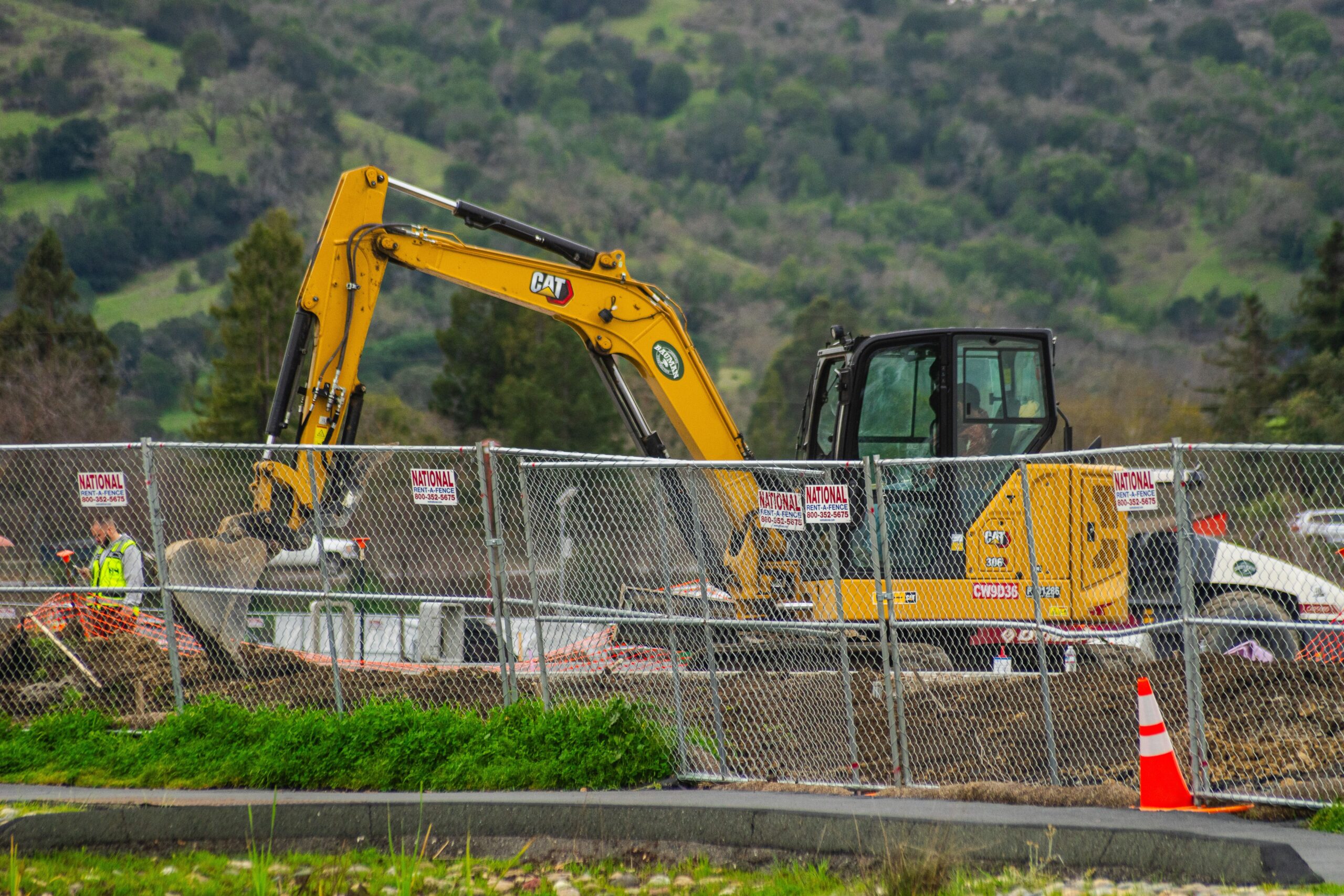
The Cat 340 and 330 excavators have been equipped with 2D Grade Assist and Cat E Fence. Grade assistance can help operators work towards target levels with fewer corrective passes, while E Fence allows working boundaries to be established around the machine’s movement.
On infrastructure and earthworks sites, those systems can address different problems. Grade control is primarily a productivity and accuracy tool, whereas geofencing can help prevent the boom, stick or bucket entering defined areas around structures, overhead restrictions or other hazards.
The 966 XE wheel loader brings a separate efficiency focus through Caterpillar’s continuously variable transmission. Miller is also targeting reductions in unnecessary fuel use through advanced idle management during repetitive loading and material handling cycles.
Managing Director Ian Miller said the company expects the integrated technology to improve both productivity and operating efficiency, with reduced idle time and fuel consumption among the areas it intends to monitor once the fleet is working across projects.
All seven machines are connected through Caterpillar’s VisionLink platform, providing information on location, utilisation, condition and service requirements. Fuel consumption and idle time can also be reviewed across the fleet.
That data becomes more useful when machines are distributed between several contracts. Plant utilisation can be affected as much by waiting time, poor haul planning and servicing delays as by the theoretical output of the machine itself.
Telematics gives fleet managers a clearer view of those losses. Excessive idle time, unexpectedly low utilisation or an approaching service interval can be identified before the resulting downtime becomes embedded in a project programme.
The same principle applies to safety systems. Articulated trucks often operate on temporary haul roads whose geometry changes as earthworks progress, while excavators may work close to structures, services or restricted zones. Integrated alerts can add another layer of control alongside site planning and operator competence.
They do not replace trained operators or safe systems of work. Their value lies in providing additional information where repetitive machine cycles can allow inefficient or unsafe operating patterns to develop gradually.
The investment also reflects the whole-life economics of modern construction plant. Purchase price is only one part of the cost of ownership, with fuel use, maintenance, downtime, utilisation and residual value affecting the commercial performance of a machine over thousands of operating hours.
A £1.7 million order across seven machines therefore gives Miller Plant both additional production capacity and a larger flow of operational data. Trucks and excavators increase earthmoving capability, while compactors and the wheel loader support later parts of the material cycle.
The company expects the equipment to be deployed across civil and infrastructure work in north-east Scotland. Actual project data should provide a clearer measure of the efficiency gains than headline specifications alone, particularly where fuel use, idle time and service intervals can be compared against existing fleet performance.
For Miller Plant, the investment is consequently as much about managing equipment as owning it. The machines will still be judged by tonnes moved, levels achieved and hours available, but those measures can now be monitored in considerably more detail while work is under way.