IN Brief:
- Modular Systems will manufacture bathroom pods for McLaren Construction’s Sizewell C worker accommodation campus.
- The units will be produced offsite in Hull before delivery to the Suffolk nuclear construction programme.
- The package adds specialist factory-built components to the infrastructure required to support Sizewell C’s expanding workforce.
Modular Systems has secured a contract to manufacture bathroom pods for the worker accommodation campus being delivered by McLaren Construction at Sizewell C, extending the use of factory-built components across the infrastructure supporting the Suffolk nuclear project.
The Hull manufacturer will produce completed bathroom units for the accommodation being created for Sizewell C’s construction workforce. The contract value and number of pods have not been disclosed, but the appointment places Modular Systems within a programme that must provide housing, welfare, offices, education facilities, and emergency infrastructure alongside the main power-station works.
McLaren is managing a three-year package covering the worker accommodation campus and several supporting buildings. Its wider scope includes amenity facilities, project offices, an emergency response building, and a permanent post-16 college in Leiston, creating a substantial building programme around the nuclear island and heavy civil engineering works.
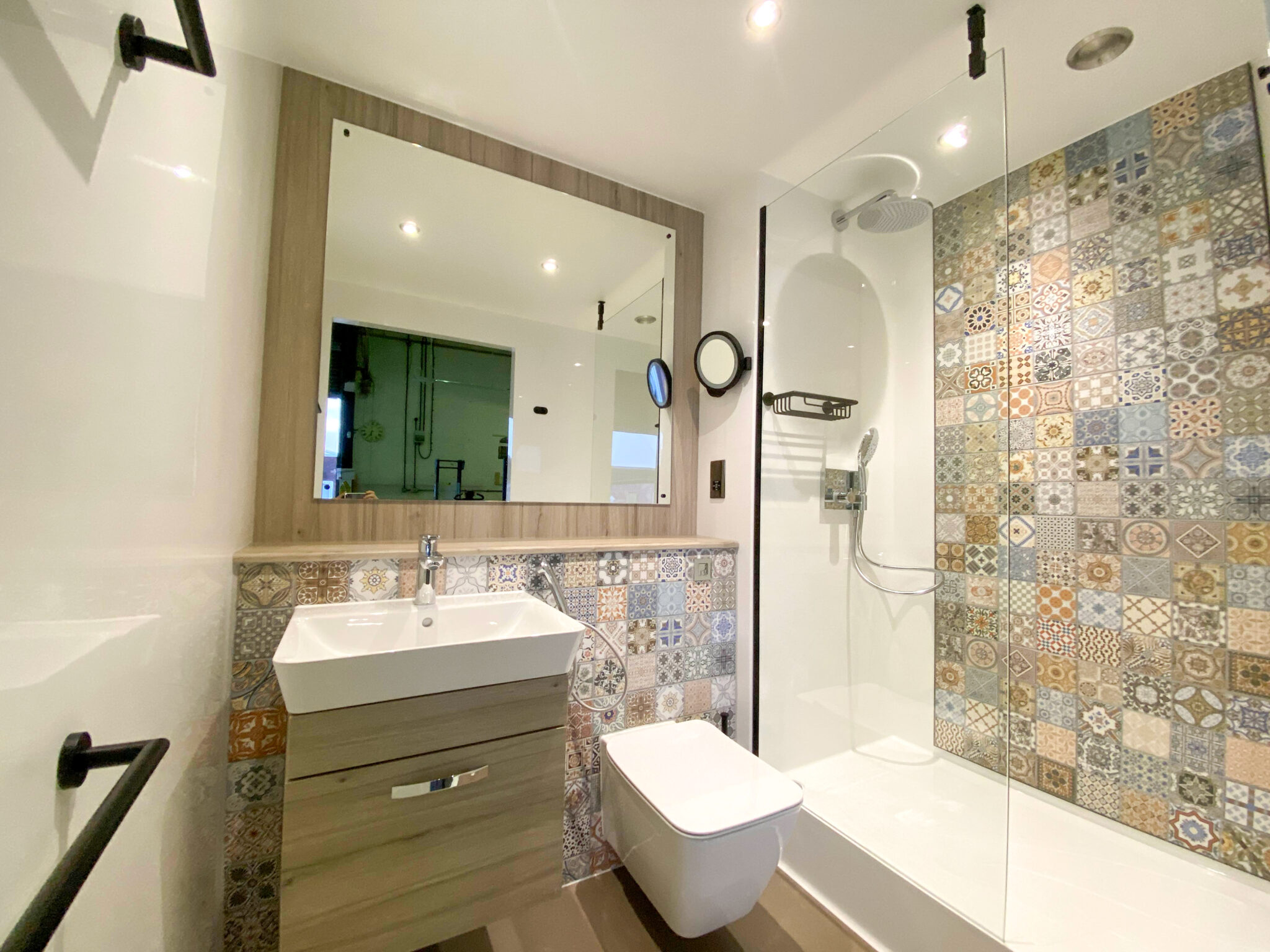
The bathroom package converts part of that workload into a repeatable factory process. Modular Systems manufactures GRP and steel-framed pods in Hull, with sanitaryware, finishes, plumbing, electrical systems, and associated components assembled before the units are transported to site.
Factory production is well suited to accommodation schemes where room types and service layouts are repeated in large numbers. Consistent designs allow materials, labour, inspection, and testing to follow a controlled sequence, while reducing the volume of wet trades and finishing work that has to be coordinated within individual rooms after the building structure is complete.
The approach also transfers risk. A bathroom pod arriving as a finished assembly can remove several site activities, but only where dimensions, service positions, structural openings, fire requirements, finishes, and lifting arrangements have been coordinated before production begins.
Errors are correspondingly easier to reproduce at scale. A connection or tolerance issue incorporated into a factory sequence can affect numerous units before the problem becomes visible on site, making design freeze and early interface checks central to the programme rather than administrative preliminaries.
Transport and installation then become part of the manufacturing plan. Pods must arrive in the correct order, with lifting access available and the receiving structure ready for installation; premature delivery creates storage and protection requirements, while late deliveries can interrupt room completion and subsequent services or finishing works.
McLaren’s construction management appointment for the Sizewell C campus already places those interfaces under a wider coordination role. The contractor is responsible for managing accommodation and support buildings while construction activity elsewhere on the project continues to increase.
Sizewell C has simultaneously been expanding its rail and road logistics network, including the opening of its Green Rail Route for construction freight. The accommodation campus serves a different function, but both programmes address the same delivery constraint: a nuclear scheme of this scale needs workforce, materials, transport, welfare, and support infrastructure to mature before peak construction can be sustained.
Temporary accommodation has become a substantial construction package in its own right on major infrastructure schemes. Large workforces can place pressure on local rental markets and road networks where workers are spread across a wide area, while dedicated campuses allow project teams to bring more people closer to the job without relying entirely on existing housing stock.
The buildings still have to perform as accommodation rather than simply providing beds. Bathrooms, services, ventilation, fire safety, maintenance access, and finishes have to withstand intensive occupation over a long construction programme, making repeatability valuable only if the underlying product remains robust.
Offsite manufacturing can help maintain that consistency because inspections take place in a factory environment instead of across numerous rooms at different stages of site completion. Production teams can work from fixed jigs and standardised processes, while completed units can be checked before transport rather than waiting for several trades to finish their individual elements in sequence.
The arrangement can also reduce congestion on the main construction site. Every operation moved into a factory removes some combination of operatives, materials, waste, tools, and temporary storage from a location where logistics will become increasingly constrained as the Sizewell C programme grows.
That does not automatically shorten a project. The benefit depends on design information being released early enough for manufacture and on the building programme remaining sufficiently stable for completed units to be installed when planned.
Modular Systems’ Hull base gives the contract a manufacturing dimension beyond Suffolk. The company has developed its pod operation around sectors including residential, hotels, healthcare, and student accommodation, and has also been expanding apprenticeship activity with Hull College.
Sizewell C places that capability into a project with a markedly longer construction horizon and a more complex logistics environment than a conventional commercial building. The package may be physically removed from reactor construction, but workforce accommodation is part of the same delivery system: if the project cannot house the people building it, progress on the main works eventually feels the constraint.
The pod contract therefore adds another specialist manufacturer to a supply chain extending well beyond nuclear engineering. For Modular Systems, the test will be consistent production and coordinated delivery at scale; for McLaren, it is another interface that has to arrive in the right configuration and sequence as the campus moves through construction.