IN Brief:
- Torbay Council is preparing 25 social-rented apartments on the former St Boniface Church site in Paignton.
- Site preparation includes moving an electricity substation and demolishing the existing 1950s buildings before the main build.
- Homes England grant funding and council borrowing will finance the scheme, with occupation expected in late 2028.
Torbay Council is preparing to redevelop the former St Boniface Church site in Paignton into 25 social-rented apartments, with enabling and demolition work expected to start during autumn 2026.
The project sits on Belfield Road in the Foxhole area and will provide homes for local households, including accessible accommodation intended to support older residents. Planning permission was granted earlier in 2026, and the council currently expects residents to move into the completed development in late 2028.
Before the main residential build can proceed, the site team has to relocate an electricity substation and demolish the existing church buildings. Those activities create a defined enabling phase in which utility work, demolition sequencing, temporary access, and clearance have to be completed before foundations and permanent construction can occupy the site.
The church was built in the 1950s and closed in 2024 after the Diocese of Plymouth cited the deteriorating condition of the building and a declining congregation. The site was never consecrated and contains no burials, removing one of the specialist constraints that can complicate redevelopment of former religious property.
Its location within an established residential area gives the scheme a different set of construction considerations. The site sits next to Foxhole Community Centre and close to local services and public transport, so deliveries, demolition, noise, dust, temporary boundaries, and contractor access will have to be managed around neighbouring homes and an active community facility.
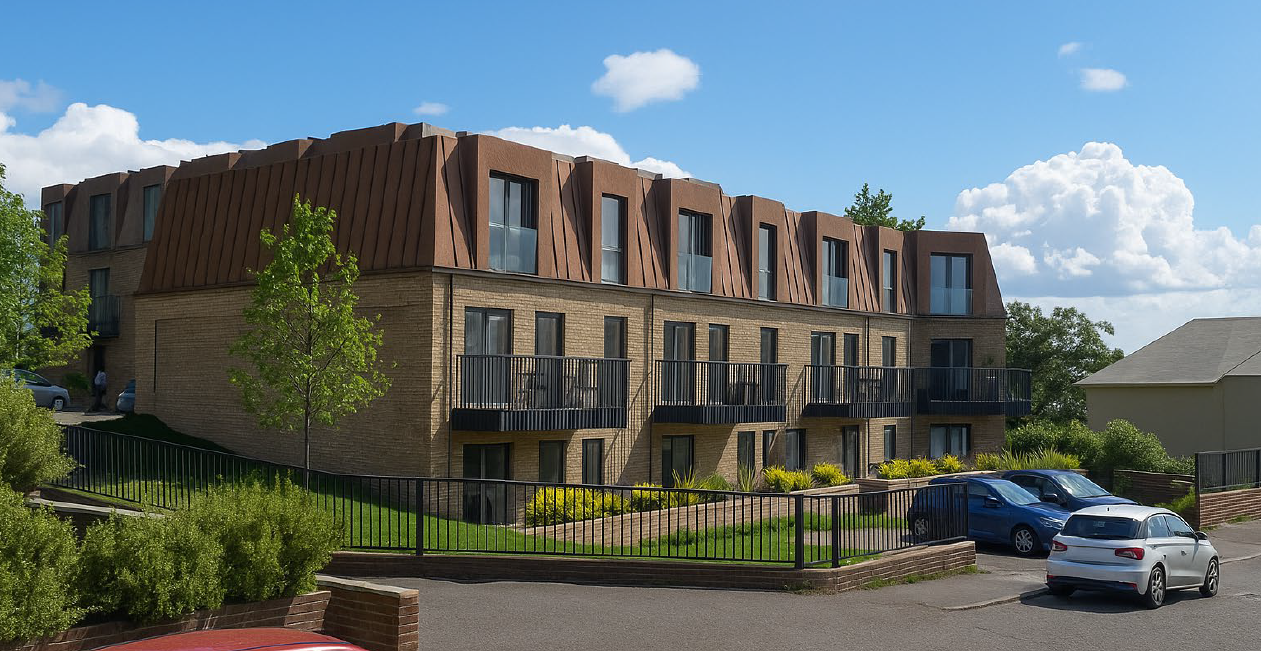
The approved design combines traditional architectural cues with modern materials and includes landscaped communal gardens, parking, and mobility-scooter storage. Some apartments will be wheelchair adaptable, while the energy package includes a communal solar-panel system and efficient heating intended to reduce household running costs.
Torbay Council has secured Homes England grant funding for the development, with the balance supported through council borrowing funded by future rental income. The financing structure gives the authority a continuing interest in both construction cost and the operating performance of the completed homes because the properties will remain within the social-rented programme.
Boniface Community Homes Ltd and Armada Property (UK) Ltd are named by the council as partners on the scheme, while the authority says a Torbay-based contractor will be involved in delivery. The current release does not identify the complete construction-contract structure, so the project should not be presented as a named main-contractor award until that procurement position is confirmed.
The electricity substation is one of the clearest early programme risks. Moving an operational utility asset requires coordination beyond the normal demolition package, and the work can govern when areas become available for foundations, services, and external works. Delays at that interface would leave the approved residential scheme unable to move cleanly into its main construction phase.
Demolition also has to be planned around an established neighbourhood. Removing the 1950s buildings will create vehicle movements and material handling before residential construction begins, making site boundaries, working hours, dust control, and delivery routes important well before the first new structure rises.
St Boniface forms part of Torbay Council’s expanding direct housing programme. The authority transferred its original housing stock to a housing association in 2001 but has since returned to direct development, completing its first 36 new council homes between October and December 2025.
That initial programme included 14 apartments created through the Brampton House Hotels to Homes project in Torquay. The council is also expecting to take handover of 23 social-rented homes for older residents at the former St Kilda’s care home in Brixham in October 2026.
Further construction is planned at the former Crossways Shopping Centre in Paignton, where 91 social-rented extra-care homes are due to move into delivery after the October half-term. Two additional Hotels to Homes projects have also been approved in Torquay, while a construction tender for redevelopment of the former Seabury Hotel site is due during autumn 2026.
The growing pipeline increases the value of repeatable procurement and client-side project management. A series of relatively modest sites can create as many interfaces around utilities, planning conditions, demolition, contractors, and local communities as one larger development, particularly when several schemes overlap at different stages.
Torbay says more than 70% of capital investment on its two most recent housing schemes was spent within Torbay and surrounding areas through materials and employment of local trades. That figure relates to completed schemes rather than St Boniface, so the economic effect of the new project will depend on the packages ultimately placed with local businesses during construction.
The immediate programme remains centred on site preparation. Planning consent and funding allow the development to proceed, but physical residential construction still depends on the electricity substation being moved and the former church being cleared. Completion of those enabling works will determine when the 25-home project can shift from an approved council-housing scheme into sustained construction towards its current late-2028 occupation date.