IN Brief:
- The Scottish Government has conditionally pledged up to £14m towards the People's Palace and Winter Gardens refurbishment.
- The revised programme is costed at £50.86m, with £33.55m currently secured.
- Further council and lottery decisions could bring the project to 94% funding before the main restoration programme advances.
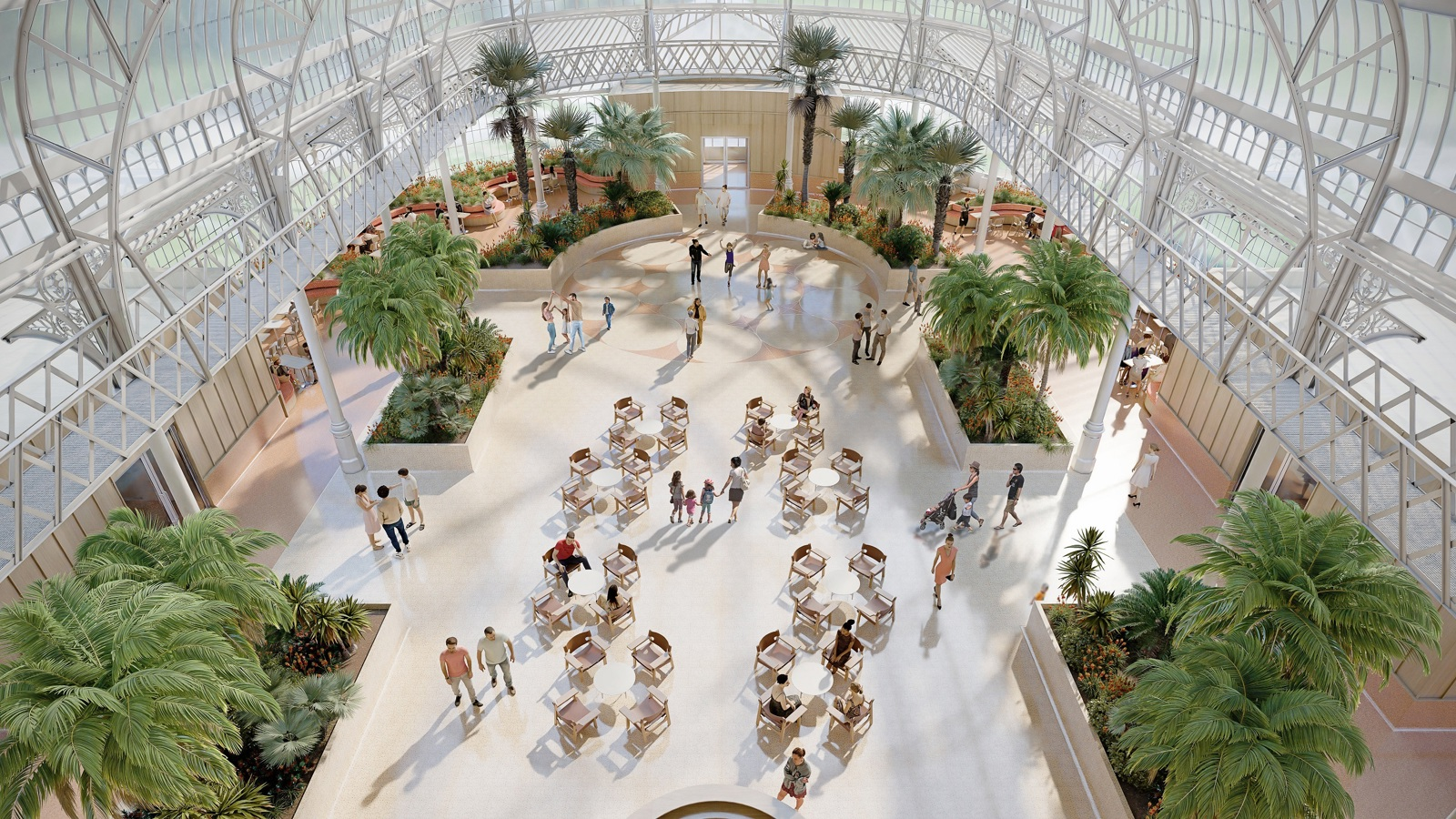
The Scottish Government has conditionally pledged up to £14m towards the £50.86m refurbishment of Glasgow’s People’s Palace and Winter Gardens, moving Glasgow Life and Glasgow City Council closer to funding the revised heritage construction programme.
The commitment lifts secured funding to £33.55m, or 66% of the current requirement. The project is now targeting reopening in December 2029 after its budget and programme were revised from earlier plans that anticipated reopening in 2027.
Further decisions are due in September. Glasgow City Council is expected to consider an additional £5m capital contribution on 3 September, while Glasgow Life is seeking £9.15m through a Stage 2 application to the National Lottery Heritage Fund, with a decision expected later in the month.
If both are approved, the project would reach approximately 94% funding, leaving around £3.16m to be secured from other public, charitable, trust, foundation, corporate, and philanthropic sources. The remaining gap is comparatively small against the overall programme but still needs to be closed as the project moves towards its major works packages.
The Scottish Government support is conditional rather than a final unrestricted grant. It is capped at £14m and remains subject to due diligence, submission of a final business case by Glasgow Life, compliance with the Scottish Public Finance Manual, funding conditions, and assessment under the Subsidy Control Act 2022.
Those conditions keep finance and construction closely linked. The design and investigation work can continue, but larger procurement commitments need enough certainty that the project will have the capital available to complete what it starts rather than allowing the restoration to become dependent on repeated emergency funding decisions.
Physical preparatory work has already begun. The museum collection has been removed into storage so that surveys can proceed, while an initial strip-out has exposed more of the historic building fabric and created access for investigation before the principal repair and refurbishment scopes are finalised.
Inside the Winter Gardens, soil and planting beds have also been removed as part of the enabling programme. Plants with horticultural or heritage significance have been propagated through cuttings, while original landscape stone is being retained for later reuse.
The glasshouse structure is intended to be repaired and retained rather than replaced wholesale. That approach places considerable importance on condition surveys because historic glazed structures can conceal localised corrosion, failed seals and connections, movement, water penetration, and components replaced at different periods with varying remaining life.
Establishing which elements can be retained affects both conservation strategy and cost. Repairing original material may reduce replacement work but require more specialist labour, while components that prove beyond economic repair can increase the procurement requirement for bespoke metalwork, glazing, and interfaces with surviving fabric.
The museum building presents a parallel coordination problem. New accessibility, circulation, environmental, fire-safety, exhibition, retail, community, and visitor requirements have to be introduced into a historic asset without removing the features that give the building its architectural and cultural value.
Mechanical and electrical services are likely to be among the more difficult interfaces. Modern museums require controlled environments for collections and visitors, but new ducts, pipes, cables, plant, and controls cannot simply be distributed through historic interiors in the same way as a new building designed around generous service zones.
The construction team also has to accommodate the relationship between the museum and Winter Gardens, treating them as connected but technically different structures. Temperature, moisture, glazing, public circulation, fire compartmentation, accessibility, and maintenance access all behave differently across a conventional masonry museum and a large historic glasshouse.
The revised £50.86m cost reflects the scale and complexity established through design development and investigation. Heritage projects are particularly exposed to changes as surveys progress because deterioration, previous alterations, concealed structures, and obsolete services can remain uncertain until the building is opened up.
That makes the current enabling phase more than a preliminary clearing exercise. Every piece of reliable survey information gathered before major contracts are let reduces the number of assumptions that contractors have to price into tenders and lowers the risk of discovering significant additional scope after mobilisation.
More than 7,000 people have taken part in consultation on the project, influencing exhibitions, accessibility, interpretation, and environmental design. Those decisions eventually become physical requirements for fit-out, circulation, services, and public spaces, adding another layer to a project that already combines structural conservation and specialist building systems.
Glasgow Life expects the restored attraction to receive around 600,000 visitors and generate more than £8m of economic impact during its first year after reopening. That level of use will demand robust circulation, accessible facilities, servicing, maintenance, and visitor accommodation rather than a conservation scheme designed principally to preserve the buildings.
The immediate programme risk remains financial rather than physical. Survey and strip-out work can improve the technical definition, but the project still needs its September funding decisions, final business case, and remaining capital to align before the larger restoration packages can advance with confidence.
By the end of September, the funding position should be considerably clearer. The buildings are already being opened up and surveyed; the less romantic task now is ensuring that the money catches up with what those surveys reveal before contractors are asked to price the restoration in earnest.