IN Brief:
- Orkney Islands Council has awarded Heddle Construction a £14.05m balance-of-plant contract.
- The works cover final design, civil engineering, electrical infrastructure, and preparation for turbine installation.
- Six 149.1m turbines will provide 28.8MW of capacity, with Nordex supplying the generating equipment.
Heddle Construction has secured the £14.05m balance-of-plant contract for Orkney Islands Council’s Quanterness wind farm, taking responsibility for the civil and electrical works required before six Nordex turbines can be installed.
The Kirkwall contractor was awarded the package following a restricted procurement process in which two tenders were received. Public Contracts Scotland records the contract value at £14,053,315.27 excluding VAT and confirms that subcontracting is expected.
The balance-of-plant scope includes final design as well as the civil and electrical construction required to prepare the site for turbine installation. Work will cover the infrastructure between the raw development site and the point at which the turbine supplier can begin erecting and commissioning the generating equipment.
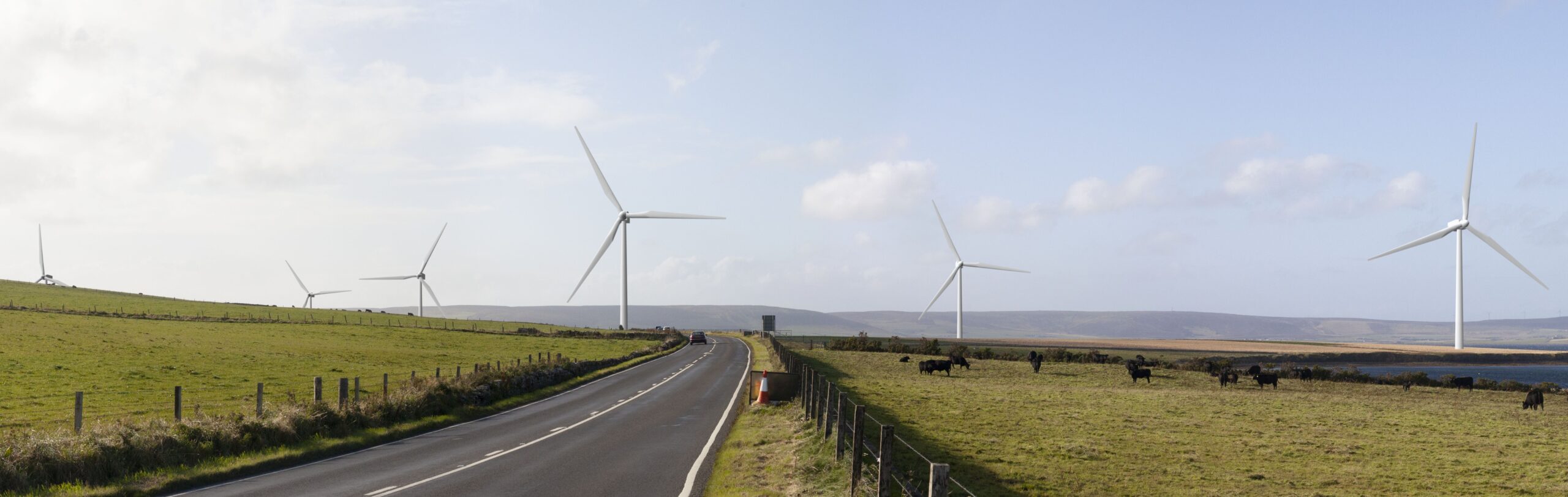
Quanterness is being developed at St Ola, between Kirkwall and Finstown, and comprises six turbines approximately 149.1m high. Each machine is expected to provide around 4.8MW, taking total installed capacity to 28.8MW.
The award places Heddle at the centre of the project’s site-delivery sequence. Roads and working areas have to accommodate abnormal loads and heavy lifting equipment, foundations must meet the turbine supplier’s dimensional and structural requirements, and the electrical infrastructure has to be available before final commissioning can proceed.
Wind turbine foundations impose demanding concrete and reinforcement programmes even before the towers arrive. Excavation, reinforcement cages, anchor assemblies, concrete placement, curing, quality inspections, and dimensional checks have to be completed to tight tolerances because subsequent erection work has limited ability to compensate for errors below ground.
Crane access carries similar dependencies. Heavy-lift operations require stable working platforms with sufficient bearing capacity and geometry to accommodate large mobile or crawler cranes, while approach roads have to carry turbine blades, tower sections, nacelles, and other abnormal loads without interrupting later construction traffic.
The electrical scope brings civil and services work together. Cable routes, ducts, substation infrastructure, and associated installations must be coordinated with roads, foundations, drainage, and turbine locations, preventing one package from advancing at the expense of access needed by another.
Nordex has already been appointed to supply the turbines, separating the project into clearly defined principal interfaces. Heddle will prepare and connect the site infrastructure, while Nordex will deliver, install, and commission the generating equipment and provide long-term turbine maintenance.
The handover between the two contractors will be one of the programme’s more sensitive points. Turbine delivery dates depend on foundations, roads, crane areas, and electrical interfaces being ready in sequence, while a late civil package can leave expensive transport and installation resources without productive work.
Orkney’s geography gives logistics an additional edge. Materials and specialist equipment that are routinely sourced across mainland projects cannot always be replaced quickly once delivery dates have passed, increasing the value of procurement planning and local capacity.
Heddle is based in Kirkwall and employs more than 20 people locally. The business began with agricultural buildings before expanding into civil engineering, crane hire, and renewable-energy work, giving the council a contractor that already operates within the island construction and heavy-lift market.
Local appointment does not remove the technical exposure attached to a 28.8MW wind farm, but it reduces some of the mobilisation distance for personnel, equipment, and management. The contract notice also anticipates subcontracting, creating further opportunities for specialist suppliers as individual civil and electrical packages are released.
The project has been in development since 2019 and was backed by elected members in 2025. Electricity will be exported through Orkney’s new interconnector, allowing the council-owned project to generate revenue rather than acting solely as an enabling development for a private energy company.
That ownership structure makes construction performance part of the council’s long-term financial case. Delays, cost growth, defects, or reduced availability affect not only the capital programme but the timetable for electricity revenues expected to support local services.
The scheme already has turbine supply, finance, planning, and its principal balance-of-plant contractor in place, narrowing the remaining risk increasingly towards execution. Detailed design now has to translate consented layouts and equipment requirements into construction information that can be built through Orkney’s weather and logistics constraints.
Heavy civil works are likely to define the first visible phase, followed by the electrical infrastructure and eventual arrival of turbine components. Each stage depends on the previous one being handed over sufficiently complete for the next specialist team to work safely and efficiently.
The £14.05m award therefore covers far more than roads around six wind turbines. Heddle is responsible for creating the physical platform on which the generating equipment will stand, move, connect, and operate — and the turbine-installation programme cannot meaningfully begin until that platform is ready.