IN Brief:
- Morgan Sindall has started the first of three planned expansion phases at Abbeyfield School in Chippenham.
- The 55-week package includes a sixth-form building, new access, parking, drainage, and futureproofed MEP plant.
- The full programme is intended to increase the school population by up to 450 pupils.
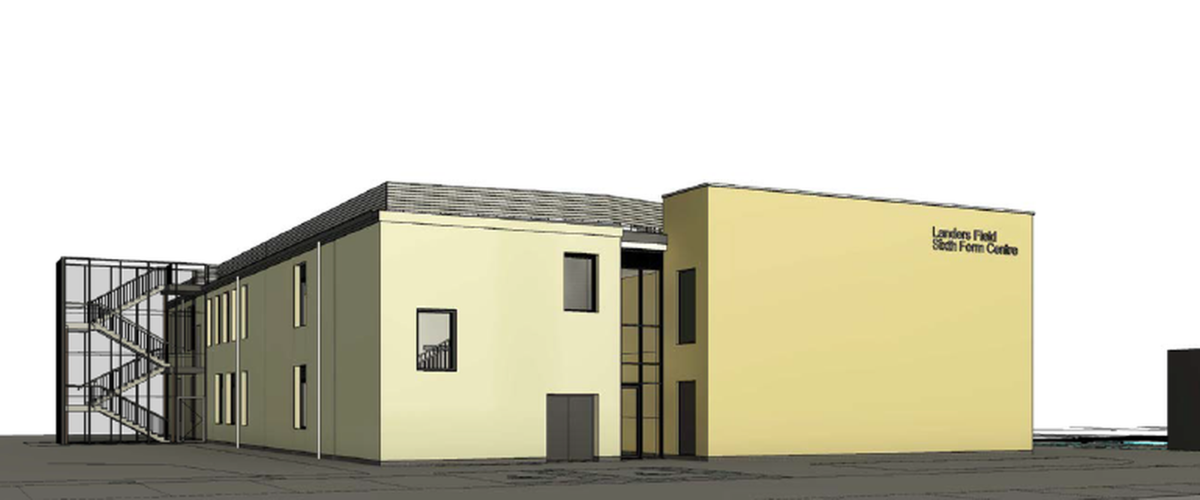
Morgan Sindall Construction has started the first phase of Abbeyfield School’s expansion in Chippenham, beginning a 55-week programme that will provide new sixth-form accommodation and prepare the site for two later stages of development.
Wiltshire Council appointed Morgan Sindall through the Pagabo-managed Medium Works Framework after planning permission was secured in March. Completion of the first phase is targeted for September 2027.
The new building will contain four classrooms and teaching spaces, a main hall with auditorium seating, social areas, a dedicated sixth-form study room, staff accommodation, changing facilities, and supporting sanitary provision.
It is being constructed on land adjacent to the existing school, allowing sixth-form provision to operate separately from the main secondary facilities while remaining connected to the wider campus.
First-phase infrastructure carries later capacity
A separate road entrance will be created from Stanley Lane, while a small bridge across a drainage ditch will connect the existing and new school sites for pupils and staff. The first package also includes 46 parking spaces, four of which will provide electric vehicle charging and two of which will be accessible bays.
The mechanical and electrical plant rooms are being designed with later phases in mind. That decision places some future capacity into the initial project so subsequent expansion can be accommodated without replacing or substantially altering infrastructure installed during the first phase.
The approach carries a familiar trade-off in phased construction. Providing additional plant space and service capacity early can reduce disruption and cost when later buildings proceed, but it requires the initial client brief to anticipate future loads with enough accuracy to avoid either under-sizing or unnecessary over-provision.
The current building is the first of three planned phases that are expected to increase Abbeyfield School’s student population by as many as 450 pupils. Roads, utilities, drainage, circulation routes, and landscaping therefore have to be considered as parts of an expanding campus rather than solely against the requirements of the first sixth-form building.
Surface-water management forms part of that enabling work. Morgan Sindall will install sustainable drainage systems and attenuation crates designed to retain rainwater and slow discharge into local waterways, while topsoil removed during site preparation is being retained for later landscaping.
Tree planting is also planned as part of the biodiversity work. Before main construction began, the contractor undertook site clearance and ecological mitigation, including relocation of slow worms, grass snakes, and orchids.
Those activities can have a direct programme effect because protected species and seasonal ecology constraints determine when parts of a site can be cleared. Completing mitigation before the main building programme reduces the risk of construction encountering unresolved ecological restrictions after mobilisation.
The school will remain operational during the works, adding another layer of site management. Contractor access, deliveries, safeguarding, noise, dust, temporary routes, and working hours all have to be controlled around pupils and staff.
The separate Stanley Lane access provides a clearer route for construction and, later, the sixth-form facility, while the bridge maintains a connection with the existing campus. The arrangement reduces some interaction between work traffic and existing school circulation without creating a completely isolated site.
Procurement through Pagabo’s Medium Works Framework gave Wiltshire Council an existing route to appoint the main contractor. Framework procurement can reduce the time required to establish a contractor competition, although project-specific design development, commercial agreement, risk allocation, and mobilisation still have to be completed before work starts.
The scheme also includes employment and skills activity through Wiltshire Council’s Community Learning and Skills Service. Morgan Sindall intends to provide work experience and employment opportunities linked to the construction programme.
The immediate delivery target is the September 2027 completion of phase one, but the effectiveness of the current design will also be tested by what follows. Access, drainage, service capacity, and plant installed now have been configured partly to support later construction, so those decisions will remain embedded in the campus long after the first building opens.
Phased education projects can avoid building capacity too far ahead of demand, but they leave interfaces between successive contracts that need to be anticipated early. Abbeyfield’s first phase therefore has two jobs: deliver the new sixth-form accommodation on programme, and avoid creating infrastructure constraints for the expansion still to come.