IN Brief:
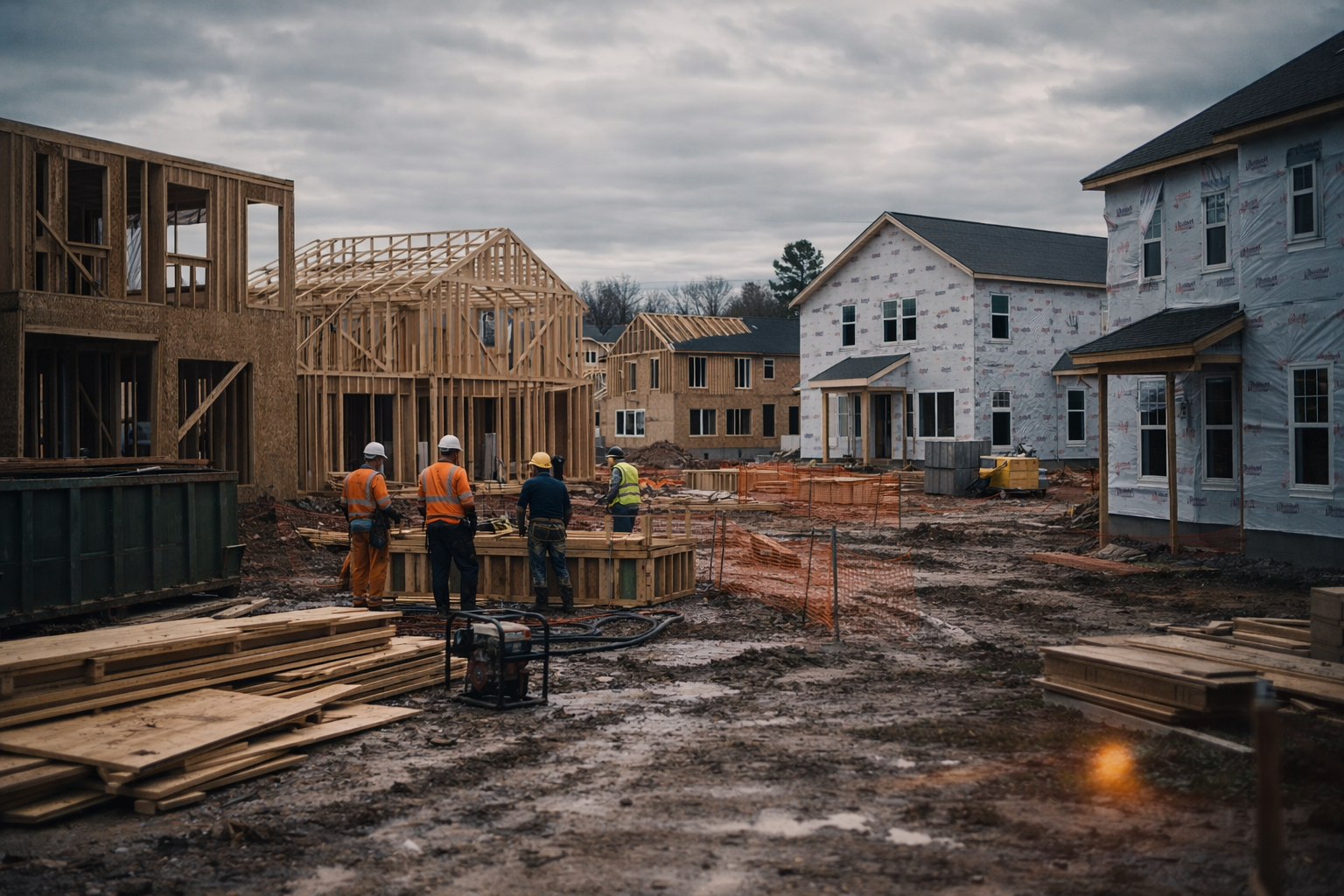
- Eastbourne Borough Council has started preparatory works at the former Magistrates’ Court site in Old Orchard Road.
- The brownfield scheme has consent for 30 social-rented flats, including two fully accessible homes.
- Delivery follows earlier cost and viability delays, with completion currently expected in autumn 2028.
Eastbourne Borough Council has started preparatory works at the former Magistrates’ Court site in Old Orchard Road, moving a delayed brownfield housing project towards delivery after previous construction-cost and viability problems.
The town-centre scheme has consent for 30 flats intended for social rent, including two fully accessible homes at ground-floor level. Completion is currently expected in autumn 2028.
The present activity is an enabling stage rather than evidence that the main construction programme is already at full production. That distinction is important on a project whose route to site has previously been interrupted, although physical preparation represents a clear step beyond planning, funding, and business-case work.
The former court occupies a brownfield site close to Eastbourne town centre and has been identified by the council as one of its direct housing opportunities. Its location supports a relatively low-car development approach because shops, employment, services, bus routes, and the railway station can be reached without relying entirely on private vehicles.
Planning permission covers a three- to four-storey apartment building with one- and two-bedroom homes, private balconies, and communal landscaping. The accessible properties are located on the ground floor.
The project has had a difficult commercial history despite its modest scale. Earlier council records show that delivery was delayed first by the pandemic and later by construction-cost increases that weakened the previous business case.
A newer Homes England funding route focused on social-rented housing subsequently allowed the authority to revisit the scheme. The sequence illustrates the exposure of council-led development to many of the same viability pressures affecting private construction, even where the public sector already owns the land.
Land ownership can remove one major source of development cost, but it does not eliminate inflation, financing, design development, procurement risk, utilities, abnormal ground conditions, or unforeseen work during construction.
Brownfield sites add their own uncertainties. Existing foundations, buried services, previous site uses, demolition remains, contamination, restrictive access, and neighbouring properties all have to be understood before the main structure can settle into a predictable programme.
The former court has already been cleared, but preparatory works still need to convert the plot into a construction-ready site. Ground investigation, drainage coordination, temporary access, service arrangements, setting-out, logistics, and any remaining enabling packages will influence how smoothly structural work can begin.
Direct council delivery also creates a different commercial position from disposing of the site to a private developer. Eastbourne retains greater exposure to development risk, but it also keeps control over tenure and the eventual use of all 30 homes.
That is important because the scheme is intended entirely for social rent rather than depending on individual market sales. The project still needs to meet building regulations, fire-safety requirements, warranty standards, accessibility expectations, energy-performance targets, and the council’s operational requirements as landlord.
The two fully accessible properties demonstrate how even a relatively small residential scheme requires coordination across multiple technical disciplines. Level access, circulation, doors, bathrooms, controls, external routes, thresholds, gradients, and parking all have to function together if accessibility is to survive beyond the planning drawings.
The project also contributes to Eastbourne’s wider council-house delivery programme. Earlier council reporting identified Old Orchard Road as one of the schemes expected to support the authority’s ambition to increase direct affordable housing supply during the corporate-plan period.
That puts additional weight on programme certainty. Delays to a private development principally affect the developer and its funders; delays to a council-owned social-rented scheme also affect the authority’s ability to respond to housing need and reduce dependence on other forms of accommodation.
The autumn 2028 completion date gives the project a defined endpoint, but the more useful short-term measure will be how quickly preparatory activity moves into the main build. Ground conditions and services will need to match the assumptions made during design and procurement if the programme is to avoid another round of cost pressure.
The scheme is small compared with national housebuilding programmes, yet it carries many of the same issues found on larger regeneration projects: public-sector governance, brownfield risk, grant dependency, accessibility, planning, inflation, and the requirement to keep a viable project viable long enough to build it.
Preparatory works do not guarantee that the remaining programme will be straightforward. They are nevertheless significant because the site has already spent several years moving between approval, funding, and cost discussions.
The next judgement will be a construction one rather than another committee paper: whether Eastbourne can turn the cleared former court into 30 occupied social-rented homes by autumn 2028 without allowing the cost and delivery problems that stalled the earlier scheme to return.