IN Brief:
- The refused development included up to 3,500 homes, a football stadium, commercial space, and community facilities.
- Robins Wharf imports and processes aggregates used by construction and infrastructure projects across the South East.
- No equivalent replacement was identified, while contamination, public health, and existing employment also weighed against the scheme.
Kent County Council has welcomed the refusal of the Northfleet Harbourside development after the Secretary of State gave substantial weight to the permanent loss of Robins Wharf, an operational aggregate facility on the River Thames.
The called-in application sought outline permission for a phased mixed-use scheme around Ebbsfleet United Football Club. It included up to 3,500 homes, a new football stadium, commercial space, community facilities, public open space, and associated infrastructure.
Following a public inquiry, the Planning Inspector recommended refusal. The Secretary of State agreed, concluding that the proposal conflicted with the development plan and that its adverse effects outweighed the benefits advanced by the applicant.
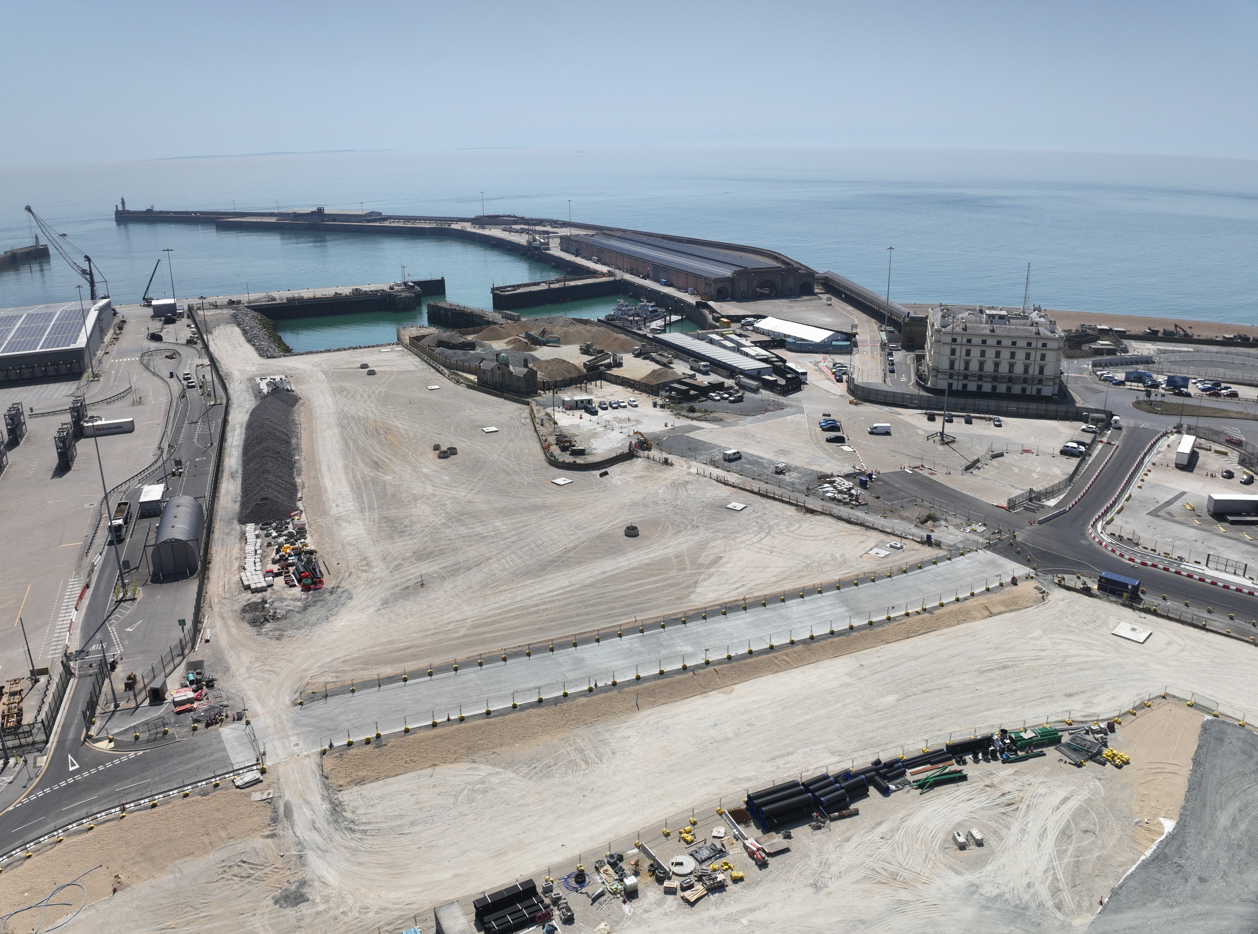
Robins Wharf was central to the decision. The safeguarded site receives aggregates by water, provides land for storage and processing, and produces construction materials including concrete, mortar, and asphalt. Its jetty can serve self-discharging vessels, non-self-discharging vessels, and barges, giving it an operational capability that is difficult to reproduce elsewhere.
The inquiry found that the development would extinguish the wharf and its processing operations. No suitable alternative site had been identified, and no firm evidence showed where the lost importation and production capacity would be replaced.
The Secretary of State concluded that the loss was very likely to create adverse economic effects for construction and infrastructure activity across Kent, London, and the South East. That harm carried substantial weight in the planning balance, alongside public health concerns connected with contamination and lead pollution.
The proposal still offered benefits. Market housing received significant weight, while affordable housing, the stadium, job creation, health and community facilities, public open space, biodiversity net gain, and the site’s accessible location received varying degrees of support. The decision did not dismiss the need for housing or regeneration; it found that the scheme failed to overcome the consequences of removing protected industrial infrastructure.
Employment formed part of the same balance. The proposal was expected to create around 1,500 net jobs, but the loss of approximately 650 existing jobs and related businesses also counted against it. Many of the existing operations relied on specialist skills, equipment, river access, and industrial relationships that could not simply be transferred to conventional commercial floorspace.
The ruling exposes a practical contradiction in large development proposals. Housing and regeneration require vast quantities of aggregate, concrete, mortar, asphalt, and other materials, yet the sites that receive and process those materials are often under pressure from higher-value land uses. Removing a wharf may release land for development while making the wider regional building programme more dependent on longer road journeys and more distant supply points.
Waterborne aggregate infrastructure is especially constrained. A replacement requires suitable river depth, berthing, unloading equipment, processing land, storage capacity, road access, environmental controls, and planning protection. Allocating an equivalent area elsewhere does not recreate those characteristics, and the inquiry found no credible alternative in this case.
The decision therefore strengthens the role of minerals safeguarding in development management. Such policies can appear secondary beside housing targets, but they protect the facilities that keep construction supplied. Once a working wharf is lost to incompatible development, recovering equivalent capacity is likely to be expensive, slow, and politically difficult.
Developers assembling major brownfield schemes will need to test safeguarded uses earlier and more rigorously. A masterplan can accommodate roads, homes, public space, and commercial buildings on paper, but it cannot assume that an operational minerals site will be displaced merely because surrounding land values favour residential development.
Public health concerns also prevented the planning balance from becoming a single-issue argument about the wharf. The Secretary of State found that future residents could face unacceptable exposure to lead pollution and that no credible mitigation plan had been provided. The proposal also raised questions over existing businesses, public rights of way, and nearby electricity infrastructure.
Those findings narrow the options for any revised scheme. A future proposal would need to preserve Robins Wharf, provide a genuinely equivalent operational replacement, or establish a different development footprint that avoids the safeguarded area. It would also need a more convincing response to contamination, deliverability, employment displacement, and neighbouring industrial uses.
Kent County Council has described the outcome as a landmark ruling, although its wider effect will depend on how inspectors and planning authorities apply the reasoning elsewhere. The decision is nevertheless unusually explicit: the long-term supply of construction materials can outweigh a substantial housing and regeneration package when the industrial asset is protected, operational, and effectively irreplaceable.