IN Brief:
- The programme combines a €14m EU grant with a €56m European Investment Bank loan.
- Works will improve water services for approximately 300,000 people.
- Investment covers treatment plants, distribution systems, reservoirs, untreated outfalls, and network resilience.
Severočeská vodárenská společnost will deliver a €77m programme of water and wastewater infrastructure upgrades across the Ústí nad Labem region of north-west Czechia.
The investment combines a €14m European Union grant with a €56m European Investment Bank loan, while the remaining project cost will be met through the utility’s wider financing arrangements.
Both elements are being provided through the Public Sector Loan Facility under the Just Transition Mechanism, which supports regions adapting their economies and infrastructure as coal and other carbon-intensive industries decline.
Ústí nad Labem has a long history of mining, heavy industry, and coal-based activity, and the modernisation programme is intended to improve essential services while supporting the region’s wider economic transition.
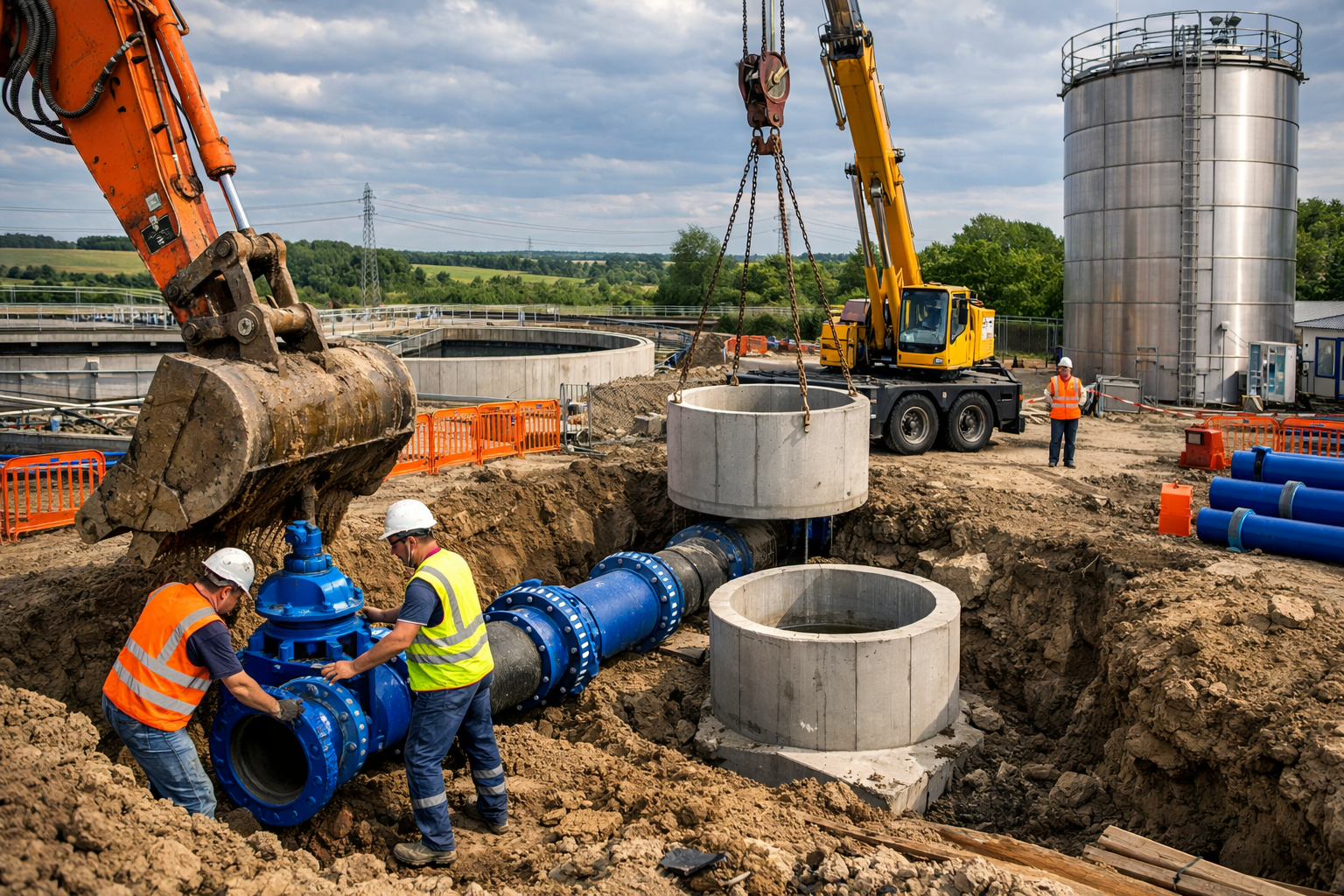
Planned work includes reconstruction of drinking-water and wastewater-treatment plants, upgrades to distribution infrastructure, modernisation of water mains and storage reservoirs, and the elimination of untreated sewer outfalls.
Approximately 300,000 people are expected to benefit from improvements in drinking-water quality and service reliability. The programme will also reduce leakage, strengthen network performance, and increase the proportion of wastewater receiving appropriate treatment before discharge.
Environmental benefits extend through the Bílý Potok and Elbe catchments, with improvements made in Czechia also affecting downstream water quality in Germany and drinking-water resources serving Dresden.
The programme is expected to reduce carbon emissions by approximately 1,300 tonnes a year through more efficient treatment processes, reduced losses, modern equipment, and lower energy demand across water operations.
SVS will also strengthen cyber and physical security as sensors, communications, automated controls, remote monitoring, and operational technology become more deeply integrated with mechanical and civil assets.
Finance connects renewal with resilience
Water networks across Europe face ageing assets, tighter environmental standards, higher energy costs, climate variability, and stronger expectations around service continuity. Investment must address treatment facilities alongside the less visible mains, sewers, chambers, controls, and connections spread across large areas.
Grant support allows environmental and resilience measures to progress alongside conventional renewal without placing the entire repayment burden on customer charges or public budgets. Without that support, utilities may prioritise immediate failures while delaying adaptation and efficiency work.
The European Investment Bank is increasing its role in water-sector programmes, with separate financing supporting treatment, network, and resilience investment on Spain’s Costa del Sol, where drought exposure and population growth are placing additional pressure on supply systems.
Delivery in Ústí nad Labem will require the overall programme to be divided into practical construction packages while normal water and wastewater services continue. Treatment-plant upgrades often need to be sequenced around live process streams, leaving limited periods for isolation and commissioning.
Mains renewal creates different pressures because contractors must manage traffic, existing utilities, temporary supply, customer communication, excavation support, contaminated ground, reinstatement, and connections to ageing pipework whose condition may not match available records.
Removing untreated outfalls can involve sewer separation, storage, pumping, additional treatment capacity, and controls for heavy rainfall. Closing one discharge point without sufficient alternative capacity may simply move flooding or pollution elsewhere within the catchment.
Energy performance will influence equipment selection because pumps, blowers, aeration systems, sludge treatment, and disinfection operate for long periods. Relatively small efficiency improvements can produce substantial lifecycle savings when applied across an entire programme.
Cybersecurity requirements will also reach construction and commissioning teams. New control systems need to be configured, tested, documented, and handed over without creating unauthorised routes into operational networks, while temporary remote access requires the same control as permanent connections.
The Just Transition mechanism connects these technical works with regional economic change because reliable water infrastructure supports housing, industry, tourism, and inward investment, particularly where former industrial land is being prepared for new uses.
The €77m programme gives SVS a funded route to address treatment, distribution, environmental compliance, security, and climate resilience together. Maintaining that integrated scope through design, procurement, construction, commissioning, and operation will determine the quality of the final network improvements.