IN Brief:
- National Highways has cancelled Skanska’s £297m A46 Newark Bypass contract.
- The scheme had been set to dual 6.5km of the A46 between Farndon and Winthorpe.
- The decision places a consented East Midlands road improvement back under procurement review.
National Highways has cancelled Skanska’s contract for the A46 Newark Bypass, removing a £297m roads package from the contractor’s order book and placing a long-delayed East Midlands improvement scheme back into uncertainty.
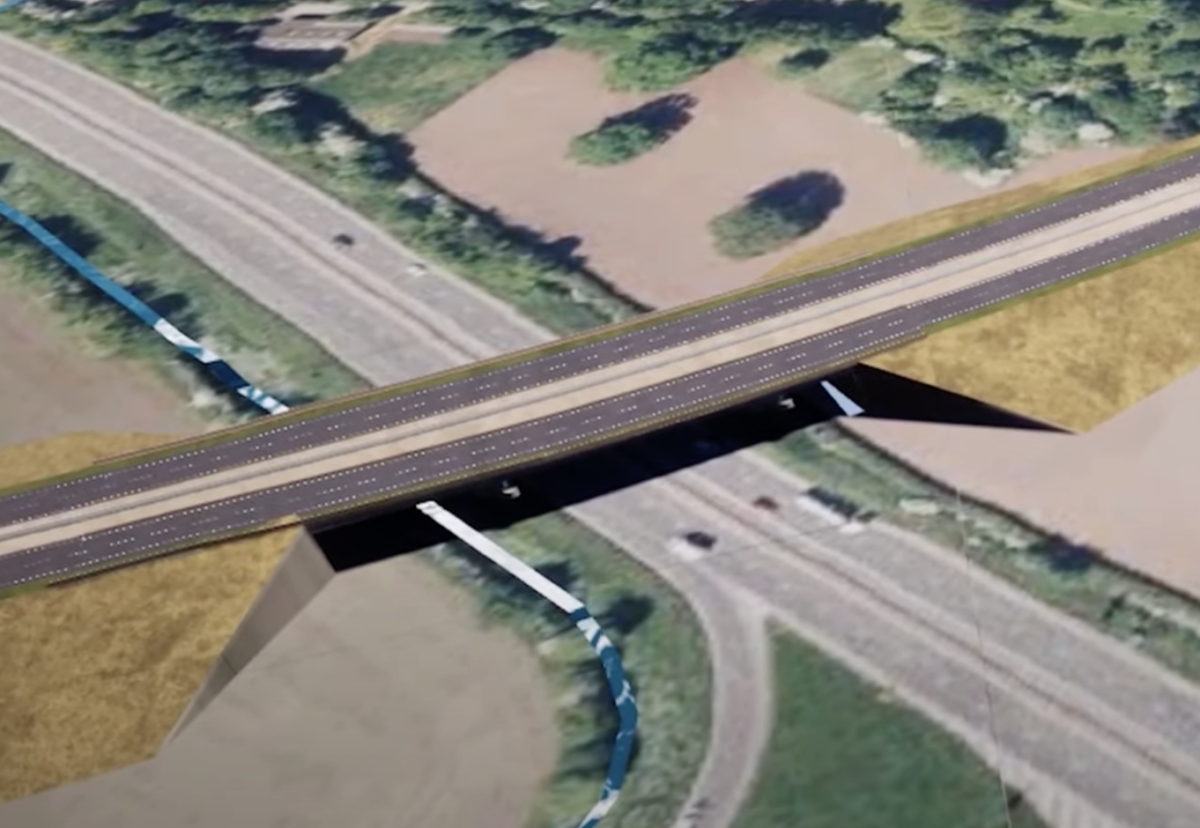
The contract covered the planned dualling of around 6.5km of the A46 between Farndon and Winthorpe in Nottinghamshire. The project was designed to improve safety, ease congestion, and strengthen regional connectivity on a road corridor linking the M1, A1, Leicester, Lincoln, and the Humber ports.
Skanska had been lined up to deliver a package that included widening existing carriageway, constructing new offline sections, and carrying out major junction and bridge works around the A1 and Newark area. The company has confirmed that the cancellation will reduce its European order bookings for the second quarter of 2026.
The bypass had already passed a major planning milestone, with development consent granted in October 2025. The earlier scheme scope included a new bridge over the A1, a flyover at the Cattle Market junction, a five-arm roundabout at Winthorpe, and changes to the Farndon junction.
For local authorities, hauliers, contractors, and the wider civil engineering supply chain, the decision removes a near-term delivery route for a road section long regarded as a constraint on regional movement. The A46 around Newark carries strategic and local traffic, with congestion and journey-time reliability forming central parts of the case for improvement.
Major road schemes are now facing closer scrutiny over cost, environmental impact, carbon, and deliverability, particularly where public spending settlements remain tight. Consent, once a strong signal of delivery momentum, no longer guarantees that a project will move cleanly through procurement and into construction.
The decision will be felt beyond Skanska’s own order book. Civil engineering suppliers, groundworks companies, traffic management providers, plant hirers, designers, and specialist subcontractors had expected the scheme to move into a more active delivery phase. When a large public infrastructure project is paused or reworked, sunk bid costs and lost workload visibility are spread across a wide supply chain.
Public clients are increasingly re-testing large capital schemes against budget, policy, and delivery assumptions before committing to construction. Cost growth on major programmes has sharpened attention on traffic management, structures over live highways, land acquisition, environmental mitigation, and risk allowances. Projects with complex junctions and live-road interfaces can quickly become exposed when affordability is reassessed.
For contractors, the immediate pressure is pipeline confidence. Large roads projects support multi-year planning for people, plant, temporary works, compounds, aggregate supply, surfacing capacity, and specialist labour. When schemes are delayed or withdrawn after procurement activity, companies have fewer secure reference points for investment and recruitment decisions.
The East Midlands still needs resilient transport infrastructure, particularly where growth corridors depend on reliable access to national networks. National Highways must now decide whether the A46 Newark scheme is rescoped, reprocured, deferred, or moved through another delivery model.
The cancellation does not remove the congestion, safety, and connectivity pressures around Newark. It does, however, underline how exposed major roads work has become to public spending discipline, procurement reassessment, and the rising burden of proving that a consented project remains deliverable at an acceptable cost.