IN Brief:
- CITB has announced the finalists for the SkillBuild 2026 National Final.
- The final will take place at Arena MK in Milton Keynes in November.
- The competition highlights trade skills, training pathways, and the need to strengthen construction’s future workforce.
CITB has announced the finalists for the SkillBuild 2026 National Final, following regional qualifiers held across the UK.
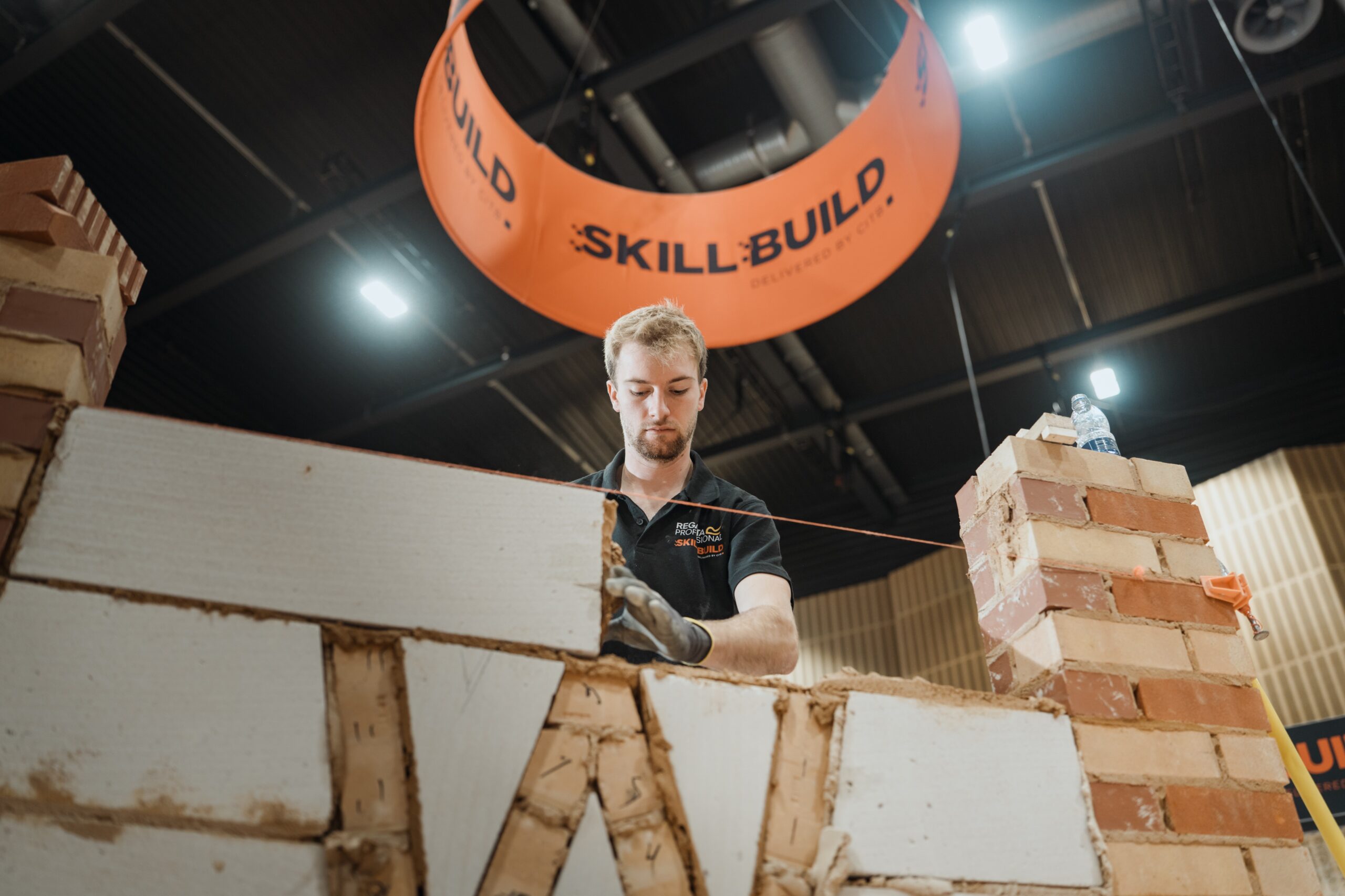
The finalists will compete at Arena MK in Milton Keynes from 17 to 19 November, bringing together the highest-scoring performers from this year’s SkillBuild Regional Qualifiers. The competition covers construction trade categories including bricklaying, carpentry, and other practical disciplines.
Around 700 students competed across 17 regional qualifiers this year. Each qualifier ran over one day, with participants completing a task relevant to their chosen trade under competition conditions.
The top eight highest scorers in each category will now compete at the national final, where 10 winners will be named top of their trade. The final runs over three days and will see competitors construct a project within 18 hours.
Competitors will be assessed by expert judges on technical ability, time management, problem solving, performance under pressure, and compliance with health and safety requirements. The competition is delivered by CITB and is the UK’s largest and longest-running industry skills competition.
Robert Smith, Product Manager for Careers at CITB, said: “A huge congratulations to all the competitors that have earned their place at the 2026 SkillBuild National Final, it’s a great achievement and a testament to their hard work.
“As an industry, we need to get better at positioning construction as an attractive career option. With the increased demand for construction skills, events like SkillBuild are more important than ever to highlight the industry and wide variety of career choices and our shared role in building a stronger workforce.
“The quality of the participants this year is truly amazing, I am looking forward to the National Final and wish all the competitors the best of luck.”
The announcement follows CITB’s Industry Picture 2026, which called for greater investment in people, modernised training approaches, and stronger collaboration across the sector. Construction’s skills base remains under pressure from retirements, changing site requirements, and sustained demand across housing, infrastructure, retrofit, maintenance, and public-sector building work.
CITB’s recent grant activity shows the scale of ongoing support for training routes. More than 30,000 apprentices were supported through CITB apprenticeship grants in 2025–26, with small and micro businesses making up a large share of the employers receiving support.
Skill competitions do not resolve labour shortages on their own, but they give technical excellence a visible platform. Construction has long struggled to present trade careers with the same status as academic or office-based routes, despite the skill, judgement, and discipline required on site.
For colleges, independent training providers, and employers, competition preparation can also sharpen standards. Learners are tested beyond routine assessment environments, while employers gain a clearer view of accuracy, resilience, sequencing, and pride in workmanship.
The workforce challenge is wider than recruitment alone. Construction needs to attract new entrants, retain apprentices, support career progression, and help existing workers adapt as technology, building safety, carbon, retrofit, and modern methods of construction change site requirements.
Traditional trades remain central to housing, refurbishment, heritage, and public-sector construction. Bricklayers, carpenters, roofers, plasterers, and tilers are often discussed only when shortages become acute, but future capacity depends on sustained investment long before demand peaks.
The SkillBuild finalists now move into a national competition that will test speed, precision, and composure under pressure. Their progression gives the sector a practical reminder that future delivery capacity depends on trained hands and technical standards as much as funding, planning, and procurement pipelines.