IN Brief:
- Hyundai will showcase its next-generation excavator range at Hillhead 2026.
- The line includes full electro-hydraulic controls, updated cabs, smart visibility systems, and automation-ready features.
- The launch reflects growing demand for productivity, safety, and operator-support technology in mainstream plant fleets.
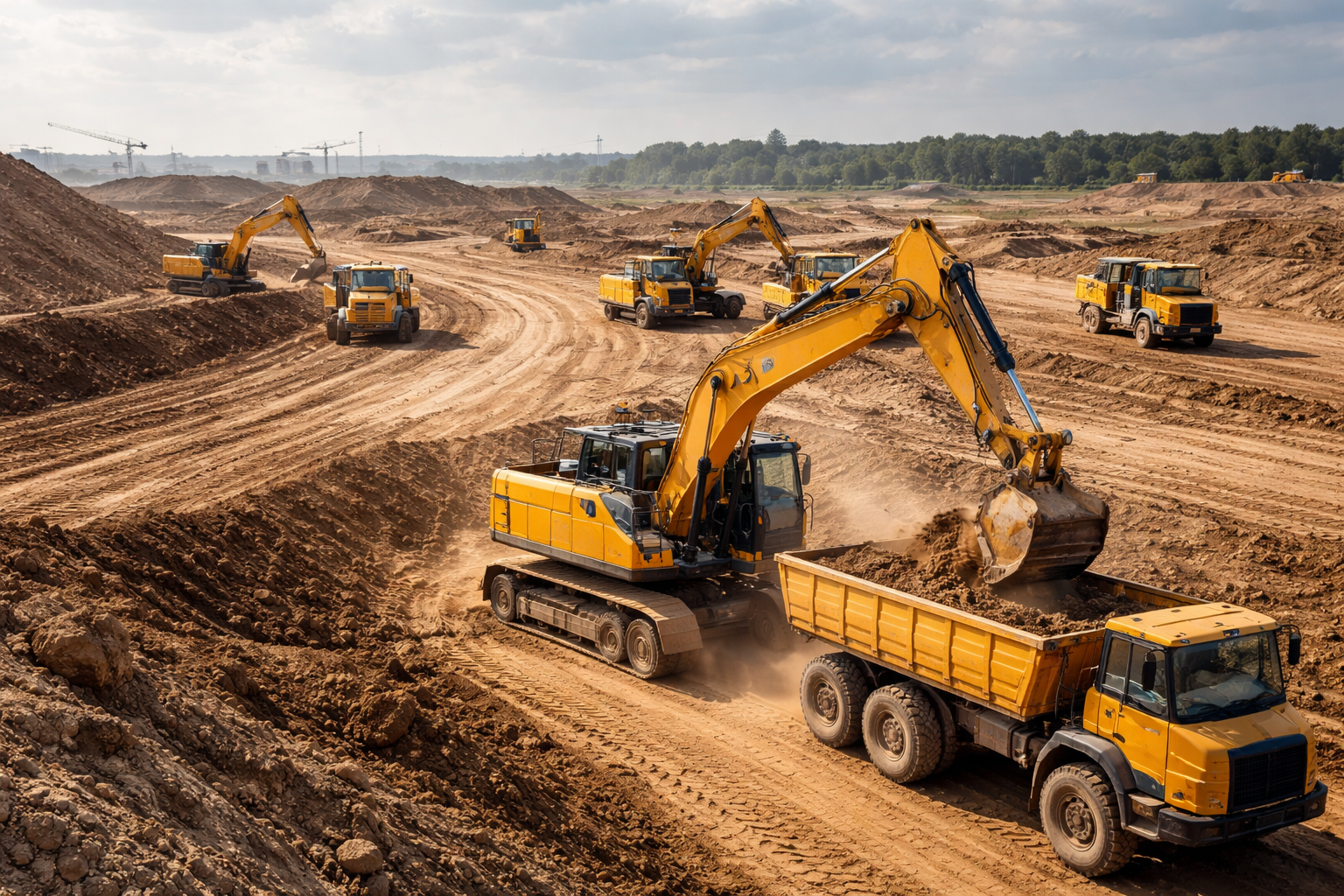
Hyundai Construction Equipment Europe will showcase its next-generation excavators at Hillhead 2026, including models aimed at the UK plant hire and rental market.
The manufacturer’s latest crawler excavators were launched at bauma, beginning with the 36-tonne HX360 and 40-tonne HX400 models. Further models, including the HX300, HX260, and HX230, have since joined the range.
The new machines use full electro-hydraulic controls, updated engines, redesigned cabs, improved ventilation, new control levers, enhanced interior lighting, and a 12.8-inch full HD touchscreen monitor. The larger models will be shown in the UK for the first time at Hillhead.
Hyundai has also added a four-corner beacon system, white noise buzzer, and its Smart Around View Monitoring system as standard. SAVM uses six cameras around the machine to give operators 360-degree visibility.
The company’s Intelligent Pack can add features including Lift Assist, Grade Assist, Auto Stop, automatic weighing, and E-Boundary. Other equipment scheduled for Hillhead includes wheel loaders, wheeled excavators, dozers, the HA45A 4×4 articulated dump truck, and the HX10A Z micro-excavator.
Hillhead gives heavy plant suppliers a demanding setting for product launches because quarrying and bulk earthmoving expose machines to real productivity, durability, visibility, and safety expectations. Demonstration conditions allow buyers to assess equipment in work rather than only on static display.
Hyundai’s latest excavators arrive as equipment manufacturers push more intelligence into standard machine ranges. Contractors and hire companies still judge plant on reliability, uptime, fuel use, residual value, dealer support, and service access, but operator-assistance technology is becoming a stronger part of the buying decision.
That shift is already visible in the UK market. Komatsu’s PC220LCi-12 intelligent excavator brought integrated machine control and payload technology into a core excavator class, showing how automation and digital assistance are moving beyond specialist applications.
For hire companies, the commercial calculation differs from that of an owner-operator. Rental fleets need machines that can be used across varied sites by different operators, with features that improve safety and productivity without requiring excessive familiarisation.
Visibility systems, automation-ready controls, operator comfort, and boundary functions can help reduce misuse, improve consistency, and support operators with differing levels of experience. Those features become particularly useful where machines move between housing, infrastructure, utilities, quarrying, demolition, and general construction work.
Operator availability remains another pressure point. Construction and quarrying continue to face skills constraints, and experienced plant operators are difficult to replace quickly. Assistive systems do not remove the need for judgement, but they can reduce avoidable error, improve repeatability, and make demanding tasks easier to control.
Fuel efficiency and emissions also remain central to fleet decisions. As contractors monitor plant carbon more closely, machines that combine productivity with lower fuel burn are easier to justify commercially. Digital and hydraulic improvements are increasingly tied to operating cost as much as performance.
Hyundai’s Hillhead launch will therefore be judged on practical benefits in safety, visibility, fuel use, productivity, comfort, and fleet versatility. The strongest machines in this part of the market are no longer only powerful and durable; they also need to help operators work accurately, safely, and consistently across changing site conditions.