IN Brief:
- Four former SkillBuild finalists are among the 28 competitors selected for Team UK at WorldSkills Shanghai.
- Joseph Shingler, Stanley Mackintosh, Shelby Fitzakerly, and Jamie Matthews will compete in construction-related skills.
- CITB forecasts an average requirement for 41,200 additional UK construction workers annually from 2026 to 2030.
The Construction Industry Training Board is preparing to see four former SkillBuild finalists represent the UK at WorldSkills Shanghai, putting bricklaying, cabinet making, painting and decorating, and joinery into international competition later this month.
Joseph Shingler, Stanley Mackintosh, Shelby Fitzakerly, and Jamie Matthews have been selected for the 28-strong Team UK competing across 25 skills. The WorldSkills competition takes place in Shanghai from 22 to 27 September.
Each of the four construction competitors progressed through SkillBuild before entering the wider WorldSkills UK selection and training programme. SkillBuild is CITB’s national construction skills competition for apprentices and trainees and provides one route into the intensive international programme.
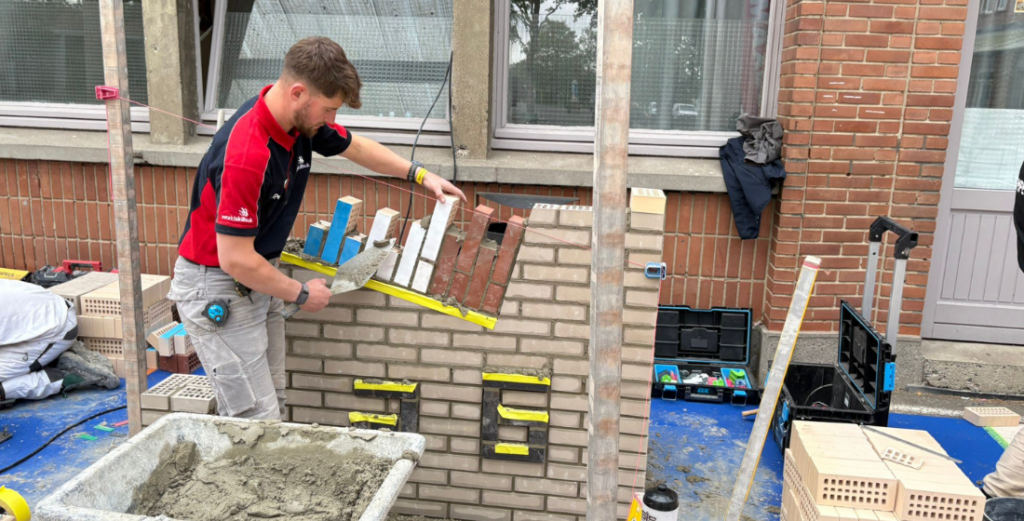
Shingler will compete in bricklaying. He progressed from regional competition to the SkillBuild final before winning gold and subsequently joining the WorldSkills development pathway, where preparation has included training alongside international competitors.
He said: “I went down to my first competition and just thought I’d give it a go. A couple of months later I found out I’d made it through to the finals, and then to go on and win gold was unbelievable. It’s opened opportunities I never expected.”
Mackintosh will represent Team UK in cabinet making. He works for Bill Cleyndert and Company and has described how competition training changed the way he plans normal production work, particularly around sequencing, organisation, precision, and time management.
When given responsibility for his first project at work, Mackintosh said he applied methods developed through WorldSkills preparation and estimated that the more structured approach reduced the completion programme by around 100 hours.
That transfer into normal employment is one of the practical arguments for competition-based training. WorldSkills tasks are deliberately artificial in some respects because they compress technical work into tightly controlled time periods, but they place unusually high emphasis on preparation, dimensional accuracy, finish, and self-checking.
Fitzakerly is Team UK’s painting and decorating competitor. Her preparation has included an extended training programme and international pressure testing, following progression through SkillBuild and subsequent selection for WorldSkills UK.
Matthews will compete in joinery after following the same route from domestic competition into the international programme. The four trades sit among a wider Team UK selection covering disciplines including electrical installation, mechatronics, Industry 4.0, mechanical engineering CAD, and other technical skills.
The inclusion of both traditional construction trades and more technology-led disciplines reflects the changing skills profile of project delivery. Site work still depends on high-quality trade competence, but construction also increasingly relies on digital design, automated systems, controls, modern building services, and manufacturing methods that overlap with engineering.
WorldSkills provides a benchmark against training systems outside the UK. Competitors are required to interpret detailed tasks, manage materials and time, and produce work assessed against defined international standards, exposing differences in technique and training that may be less visible inside individual employers or colleges.
For construction, the skills question extends far beyond the relatively small number of people capable of reaching international competition. CITB’s Construction Workforce Outlook 2026–2030 forecasts that the industry will require an average of 41,200 additional workers each year over the five-year period.
That equates to approximately 206,000 additional workers, reflecting both forecast growth and the need to replace people leaving construction. CITB expects the overall UK construction workforce to reach around 2.68 million by 2030.
The scale makes recruitment important, but numbers alone do not solve the workforce problem. New entrants have to develop competence quickly enough to contribute to projects where regulatory, technical, and quality expectations are becoming more demanding.
Bricklaying illustrates that tension. It remains one of construction’s most recognisable trades, yet masonry work must still satisfy increasingly detailed requirements around tolerances, thermal performance, movement, moisture, fire safety, interfaces, and aesthetic quality.
Joinery and cabinet making combine similar craft demands with modern manufacturing and installation methods, while painting and decorating involves substrate preparation, material compatibility, safety, environmental controls, and increasingly specialist finishes.
Skills competitions concentrate attention on measurable quality. Participants do not simply have to complete a task; they have to plan it, maintain accuracy under time pressure, and present completed work against standards that judges can compare between competitors.
Worksites present additional complications that competition halls cannot fully reproduce. Real construction teams work around delayed materials, incomplete preceding work, design changes, weather, restricted access, and other trades operating within the same areas.
The relevant crossover is therefore discipline rather than imitation. Planning a sequence before starting, checking dimensions, managing materials, identifying mistakes early, and maintaining standards under programme pressure are useful whether the work is being assessed by international judges or incorporated permanently into a building.
WorldSkills UK is also using international competition to inform wider technical education and apprenticeship standards. Team members and training managers gain exposure to methods used in other countries, giving colleges and employers an additional benchmark for what high-level vocational performance looks like.
WorldSkills Shanghai will feature around 1,500 young people from more than 80 countries, with Team UK selected and trained by WorldSkills UK in partnership with Pearson. For Shingler, Mackintosh, Fitzakerly, and Matthews, the event represents the end of a training cycle that began well before their selection for the final team.
The construction industry will not close a 41,200-person annual workforce requirement through competitions, but the four former SkillBuild finalists provide a useful counterpoint to a debate often dominated by headcount. Recruitment determines how many people enter the industry; training quality determines what they are capable of delivering once they arrive.