IN Brief:
- Scotland’s build-to-rent sector is expected to regain momentum after rent control exemptions came into force.
- Ryden says the change could help unlock nearly 10,000 stalled homes.
- No large-scale BTR schemes are currently under construction in Scotland despite an approved development pipeline.
Ryden has said Scotland’s build-to-rent sector could be set for a revival after new regulations exempted qualifying BTR schemes from rent control measures.
The property consultancy, part of the Lambert Smith Hampton group, said the change has the potential to unlock nearly 10,000 homes and restart investment after several years of stalled activity. Its Scotland-focused analysis forms part of LSH’s Live & Kicking Build to Rent Report 2026.
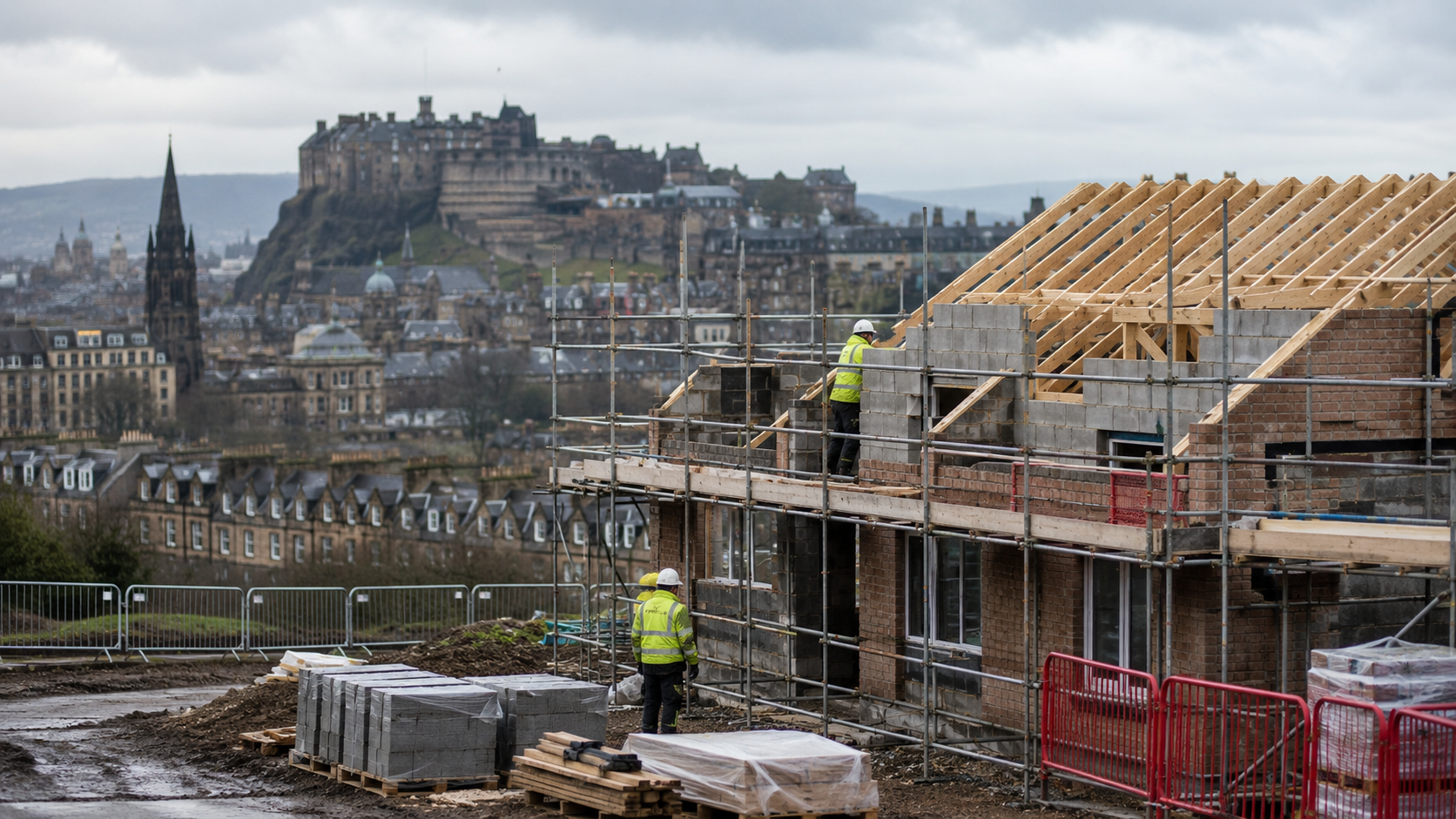
The slowdown has been substantial. Despite a pipeline of approved developments, there are currently no large-scale BTR schemes under construction anywhere in Scotland. Development activity effectively halted after emergency rent controls were introduced during the cost-of-living crisis, weakening investor confidence and delaying new projects in major cities.
The Private Housing Rent Control (Exempt Property) (Scotland) Regulations 2026 came into force in April and confirm that qualifying BTR developments will not be subject to rent control measures. The exemption gives investors and developers greater certainty over future rental income, which is central to the financing model for purpose-built rental schemes.
Activity is expected to focus first on Glasgow and Edinburgh, where demand for rental housing remains strong and where consented or advanced pipelines are more likely to move once funding conditions improve. Delivery will still be shaped by construction inflation, planning capacity, funding scrutiny, operational performance requirements, energy efficiency, and resident amenity standards.
The policy shift reflects the tension between rent regulation and housing supply. Rent controls can provide political and social reassurance in overheated markets, but institutional investors require predictable income streams before committing capital to large-scale rental developments. When that predictability weakens, projects can quickly become unfinanceable, even where planning permission is in place and demand is clear.
A return of BTR activity would add useful depth to the Scottish building pipeline. Large rental schemes generate demand for groundworks, structural frames, facades, mechanical and electrical packages, modular components, internal fit-out, landscaping, and long-term maintenance planning. The sector also supports repeatable building types, with standardised layouts and systems often used to manage cost, programme, and operational performance.
Scotland’s wider housing market remains constrained. Public-sector housing budgets are under pressure, private-sale housing has been hit by affordability constraints, and higher build costs have weakened development viability. Purpose-built rental housing cannot solve those issues alone, but a functioning BTR market can bring institutional capital into urban housing supply and create another tenure route for major cities.
The exemption now gives Scotland a clear policy test. If investor confidence returns and stalled schemes begin moving, targeted regulatory carve-outs may help support supply while leaving rent control protections elsewhere in the market. If delivery remains slow, attention will shift back to planning speed, grid capacity, construction costs, and finance availability. Scotland’s BTR sector has regulatory clarity again, and developers now have a stronger basis for revisiting schemes that had been left on hold.