IN Brief:
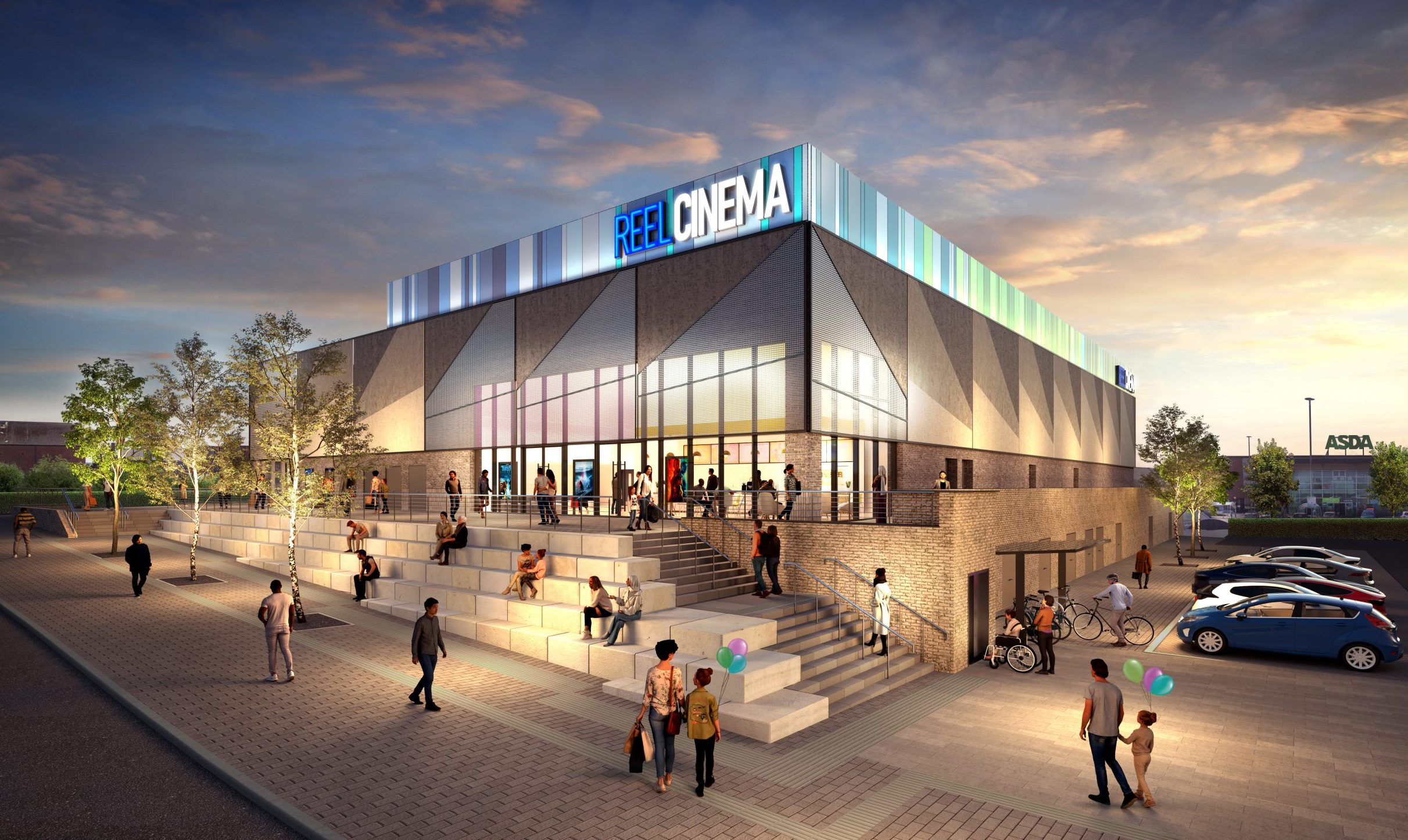
- Robertson Construction North East will deliver a five-screen cinema and leisure complex at Portland Park in Ashington.
- The project forms part of a wider £36m town-centre transformation and includes restaurants and competitive socialising space.
- The award reflects the continued use of leisure-led schemes to anchor town-centre regeneration where rail, education, and civic investment are moving in parallel.
Robertson Construction North East has been confirmed to deliver a new cinema and leisure complex at Portland Park in Ashington, in a design-and-build award that adds another live project to the North East’s regeneration pipeline.
Northumberland County Council’s cabinet has backed the appointment by Advance Northumberland, with the development forming part of a wider £36m programme to reshape the town centre. The scheme includes a five-screen cinema, two restaurant units, and a family-focused competitive socialising venue, extending the project beyond a single leisure box and into a broader mixed-use evening economy offer.
Independent operator REEL Cinemas is due to run the venue. Forecasts attached to the project suggest the complex could attract between 125,000 and 157,000 visits a year, making it one of the more substantial footfall drivers now moving into delivery in the region. Planning approval was secured previously, and construction is expected to begin shortly, giving the award a firmer delivery profile than many town-centre schemes that remain stuck between planning consent and a workable start on site.
The contract has been procured through the Procure Partnerships Framework, with funding support from central government, Northumberland County Council, and Advance Northumberland. For contractors, that combination is often a useful sign that a scheme has moved beyond broad regeneration language and into a more deliverable phase. In the present market, where many town-centre masterplans are still wrestling with viability gaps, that distinction matters.
What gives the Ashington project extra weight is the broader regeneration setting around it. Local authorities and development agencies have spent several years trying to work out what can realistically replace the retail patterns that once underpinned many town centres. In some places, the answer has been residential conversion. Elsewhere, it has been public-sector relocation, health provision, or education investment. Here, the approach is more layered, with leisure, transport, and civic renewal intended to reinforce one another rather than operate as isolated interventions.
The inclusion of a first-run cinema is notable in itself. Cinema-led regeneration is no longer treated with the confidence it carried a decade ago, and the economics of leisure development have become more selective. Operators are choosier, lenders are more cautious, and local authorities have had to take a harder look at catchment, repeat visits, and the relationship between food, entertainment, and public realm. That has not stopped schemes coming forward, but it has changed the type of projects that can move. Those that do proceed tend to be tied to wider placemaking objectives and supported by realistic assumptions about how the surrounding town centre will function.
Ashington fits that model. The cinema and leisure complex sits alongside wider investment, including town-centre improvements and improved connectivity, giving the scheme a stronger chance of supporting evening and weekend activity. For the supply chain, the project is more than a regional contract announcement. It offers a live example of where local authority-backed regeneration is still translating into new-build work, despite the tougher financing and occupancy assumptions now shaping commercial development.
For Robertson, the award reinforces the continuing value of regional delivery capability in markets where stakeholder management can be as important as construction sequencing. Regeneration work of this kind is rarely simple. It demands careful interface planning, political sensitivity, and a delivery model that can operate under local scrutiny as well as programme pressure. In return, it offers something increasingly prized in the current market: funded work with a clear civic purpose, visible local backing, and a construction start that does not appear to be drifting into the distance.