IN Brief:
- Panattoni has acquired a 23-acre Wakefield Europort site for a 500,000 sq ft speculative logistics development.
- The scheme will include 56 dock doors, eight level access doors, and a 2.5MVA power supply.
- Construction is scheduled to start this quarter, with the project targeting BREEAM Outstanding.
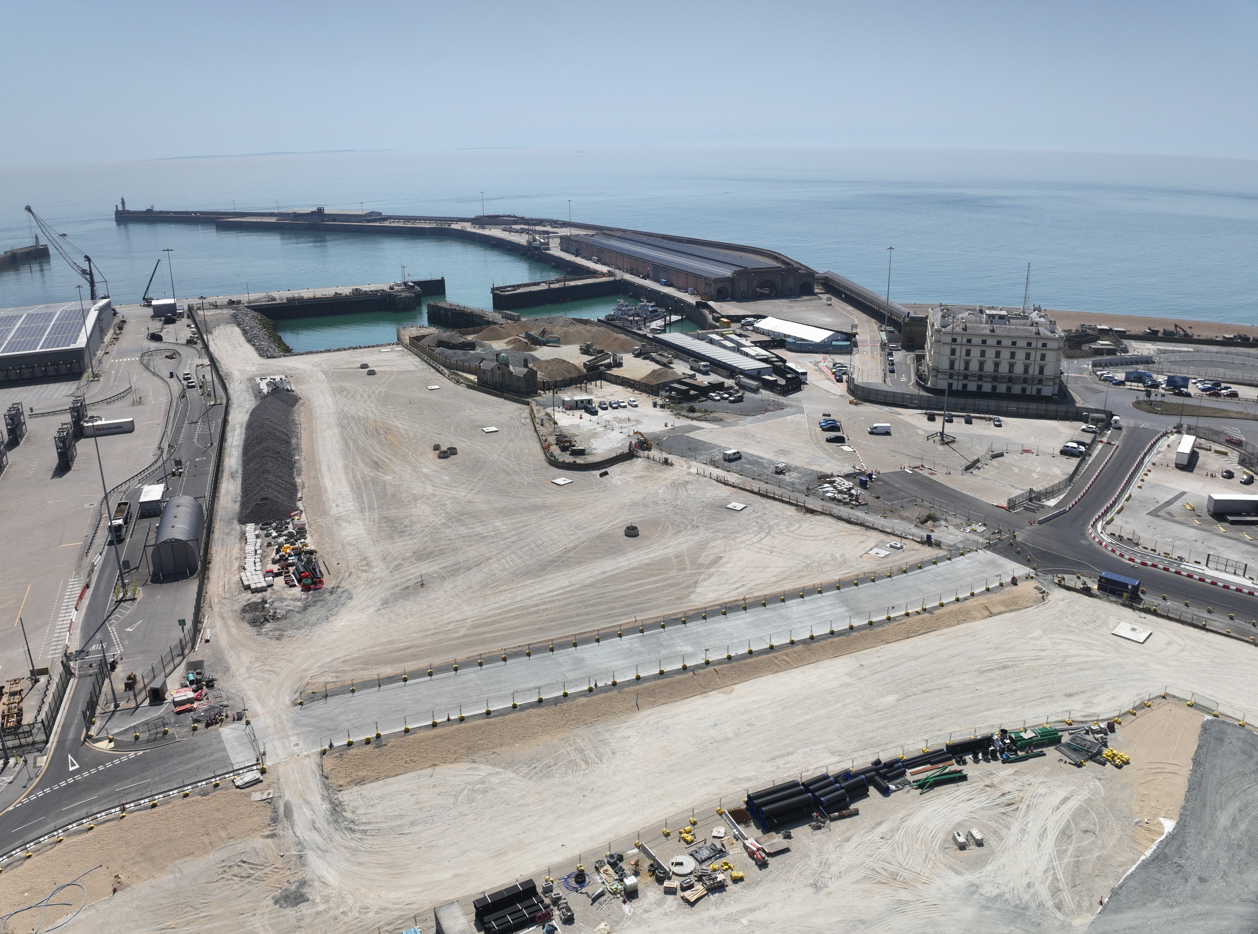
Panattoni has acquired a 23-acre site at Wakefield Europort in West Yorkshire for a 500,000 sq ft speculative logistics and warehousing development.
The industrial developer will deliver Panattoni Wakefield 500 in joint venture with Newport by Panattoni, creating a single cross-docked logistics unit at one of Yorkshire’s established distribution locations. Construction is scheduled to start this quarter.
Designed for large-scale logistics and distribution use, the facility is planned with 56 dock doors, eight level access doors, yard depths of up to 50m, 62 HGV spaces, 384 car parking spaces, and a 2.5MVA power supply. Panattoni is targeting a BREEAM Outstanding rating and net zero carbon in construction.
The site sits within Wakefield Europort, with direct access to Junction 31 of the M62 and links to the M1 and A1(M). It is also connected to a rail freight terminal operated by Maritime, giving future occupiers an intermodal option alongside road distribution.
According to Panattoni, there are currently no speculative units of around 500,000 sq ft under construction in the Yorkshire region. The company is positioning the scheme around motorway access, rail freight connectivity, labour availability, and relatively competitive occupancy costs compared with other major UK logistics locations.
Large speculative warehouses are still moving forward, but occupier requirements have become more exacting since the peak of the e-commerce development cycle. Location alone is no longer enough. Power capacity, sustainability credentials, automation readiness, labour access, yard configuration, and long-term operating cost are becoming more decisive in whether a building can compete.
IN Site has recently reported on Winvic leading April’s contract-awards league with a logistics win and on Northumberland approving a 1m sq ft employment park. Taken alongside Panattoni’s Wakefield scheme, those developments point to a market where logistics construction remains active, but more selective, particularly around power, specification, and transport resilience.
Rail freight access gives the Wakefield project a stronger position than a road-only logistics site. Many occupiers will continue to rely heavily on HGV distribution, but intermodal options can influence site selection for businesses seeking to reduce trunking emissions, diversify transport routes, or strengthen regional supply chains.
The BREEAM Outstanding target also reflects the increasing commercial role of environmental performance in industrial development. Energy efficiency, embodied carbon, drainage, biodiversity, renewable energy readiness, and operational performance are no longer only planning or corporate reporting concerns. They affect leasing prospects, institutional investment appetite, and the long-term liquidity of logistics assets.
Construction delivery will still have to navigate the usual pressures around steel, cladding, concrete, M&E, utilities, drainage, and grid connection. Power capacity is becoming one of the defining constraints on industrial and logistics development, especially where occupiers are considering automation, electric vehicle charging, refrigeration, or more energy-intensive warehouse operations.
The scheme therefore enters a market shaped by both demand and discipline. Developers are still willing to build speculatively where location and specification are strong enough, but weakly connected or underpowered stock is harder to justify. Panattoni Wakefield 500 is aimed at the more resilient end of that market: large, power-ready, sustainability-led logistics space in a region where supply at that scale remains limited.