IN Brief:
- McPhillips is delivering a purpose-built fleet and council services facility at Hickman Avenue on the former Wolverhampton wholesale market site.
- The published construction contract value is approximately £13.2m excluding VAT; current work includes ground preparation and drainage.
- The relocation will release the existing Culwell Street depot and former Loxdale Primary School location for future housing projects.
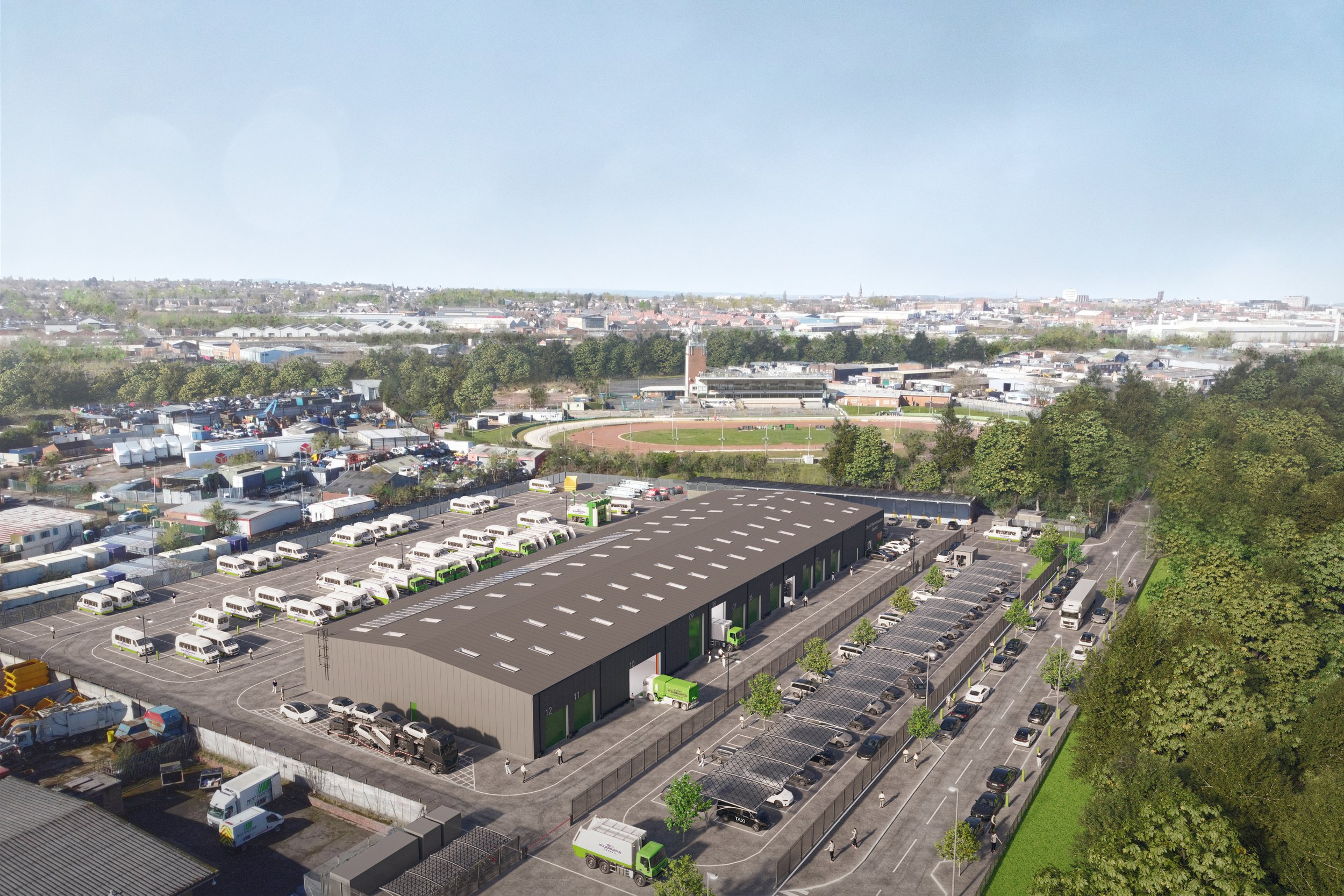
McPhillips is undertaking ground improvement and drainage work at the site of City of Wolverhampton Council’s new fleet and services depot on Hickman Avenue. Demolition of former light industrial premises has already been completed, allowing preparatory civil engineering work to progress before construction of the principal workshop building. The replacement depot is planned to accommodate vehicle maintenance, taxi licensing and other council services in one location.
The council announced the start of construction on 14 October 2026, after appointing McPhillips earlier in the year. The November site update concerns the continuing groundworks programme, not a fresh main contract award or a newly commenced project. Staff are expected to begin transferring to the completed facilities from the end of 2027, leaving a substantial period for foundations, building works, service installation and commissioning.
The awarded construction contract is recorded at £13,200,823 excluding VAT in procurement data. Trade reporting has described the depot as a £13.5m project, but the awarded works value is the more precise figure available for the construction contract. It should not be treated as a final outturn cost or conflated with spending on housing sites that the depot relocation will later release for redevelopment.
The Hickman Avenue accommodation will combine fleet workshops, vehicle parking, taxi licensing, a travel unit and facilities supporting other council services. Procurement records identify an authorised testing facility lane and provision for electric vehicle charging. The vehicle testing, servicing and parking functions need separate operating and circulation zones, while office and welfare facilities require safe pedestrian access within a site used by maintenance vehicles and other fleet traffic.
Preparing a former industrial site for a heavily trafficked municipal depot requires the finished yards and building foundations to be designed around the loads expected from service vehicles and workshop operations. Drainage has to be coordinated with paved surfaces and the existing site connections. McPhillips is currently working on ground improvement and drainage, but the available evidence does not specify the foundation design, groundwater conditions or any particular contamination treatment, so no unreported method should be attributed to the contractor.
Vehicle charging is included within the stated depot scope to support the council’s move towards an electric fleet. The final number and power rating of chargers have not been published, making it premature to claim a particular capacity or charging rate. Their installation will need to be arranged alongside workshop access, maintenance parking, electrical distribution and the vehicle movement plan. The new building will also have to accommodate conventional servicing while the composition of the municipal fleet changes.
Vehicle workshops have requirements that differ from those of a standard warehouse or office. Inspection and servicing spaces must be arranged for appropriate vehicle clearances, safe traffic separation and the location of fixed equipment, while staff welfare and administrative areas need protected access. The agreed design will determine the detailed ventilation, drainage and fire-safety arrangements. No project-specific performance figures for these building systems have been released.
The scheme is being managed on the council’s behalf with project and cost management support from Virtus Consult. The consultancy identifies McPhillips as the principal construction contractor and describes the job as a public-sector development project linking operational consolidation with longer-term regeneration. Its role includes coordinating procurement, commercial controls and the construction requirements of services that cannot simply cease operating while the new site is being built.
The existing fleet depot at Culwell Street is intended to be vacated once Hickman Avenue is operational. The council plans to demolish the old buildings and remediate the brownfield land for later housing work within the Brewers Yard regeneration area. Relocation of taxi licensing from the former Loxdale Primary School will also free that location for possible redevelopment. These future housing projects remain separate from McPhillips’ depot contract and require their own planning and delivery decisions.
Brewers Yard is being developed as a wider city-centre regeneration proposition, involving new homes and other uses near Wolverhampton’s transport interchange. References to hundreds of prospective homes describe a future programme made possible by relocating municipal operations. No particular number of completed dwellings can be derived from the £13.2m depot contract, and the availability of the land depends on the new facility being suitable for council services to occupy.
The relocation introduces a sequencing dependency between the municipal project and later housing work. Existing council services need a suitable operational replacement before their current premises can be released, demolished and redeveloped. Delays to depot completion could therefore affect the timing of land availability, although the council has not published a revised timetable for the subsequent residential phases.
The civil engineering work now taking place precedes the main workshop construction and installation of the depot’s vehicle and building systems. The council expects services to relocate from the end of 2027; only after the operational transfer can it release the existing sites and begin the associated demolition and redevelopment processes. No change to that council timetable has been confirmed in the November update.