IN Brief:
- JRL has submitted Gateway 2 for a £75 million, 359-home build-to-rent scheme near Manchester Piccadilly.
- The 10-to-28-storey project combines apartments, townhouses, residential gardens, and an all-electric services strategy.
- Building Safety Regulator approval is now the critical stop/go stage before higher-risk building work can begin.
JRL Group has moved its Sparkle Street build-to-rent scheme in Manchester into the Building Safety Regulator’s Gateway 2 process, pushing the £75 million project toward a summer start on site. The application is the latest major programme milestone for a development that has already cleared planning and is now moving through the higher-risk building control regime introduced by the Building Safety Act.
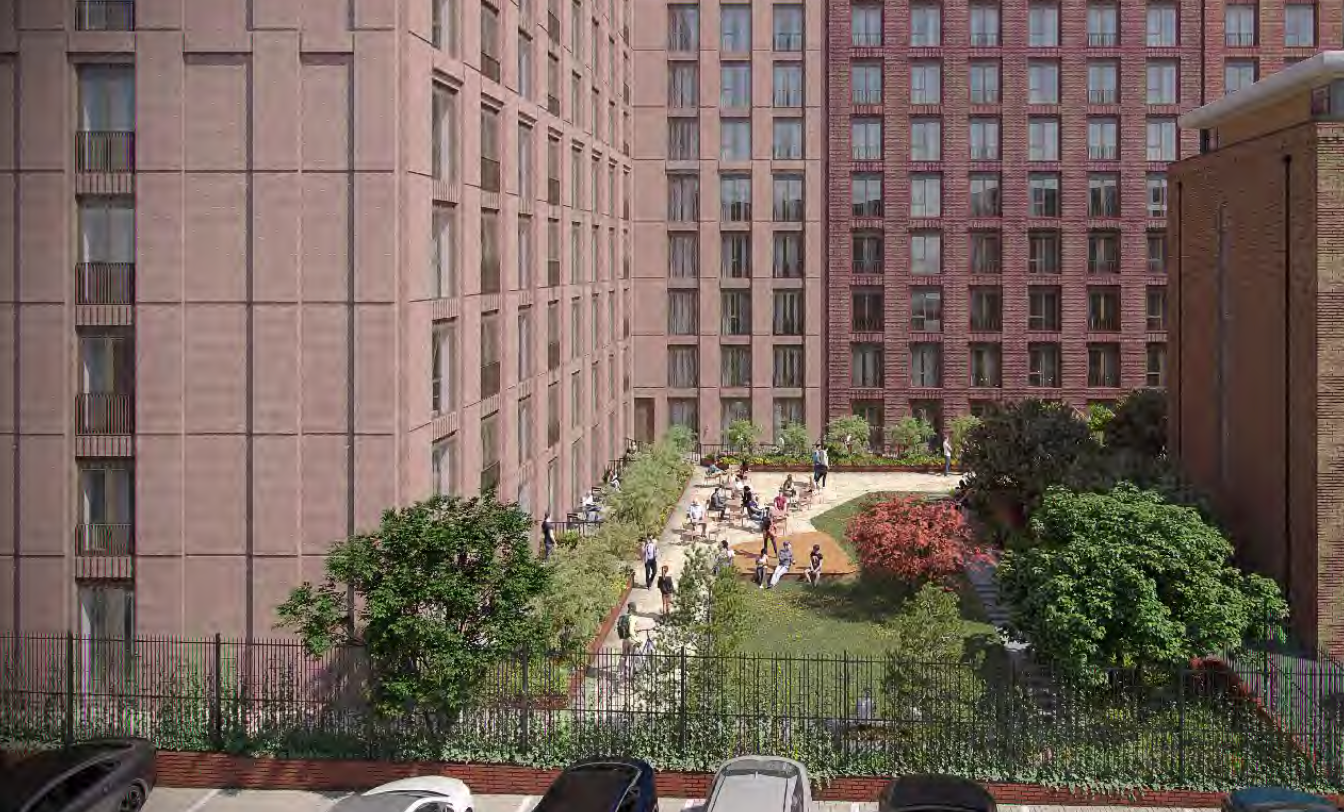
The scheme, being progressed with Central and Urban, will deliver 359 homes in a building rising from 10 to 28 storeys, alongside townhouses, residential gardens, and new street frontage on a disused city-centre plot about 100 metres from Manchester Piccadilly. Designed by SimpsonHaugh, the project has been framed as an urban infill residential scheme intended to repair the streetscape as well as add supply in a tightly developed part of the city.
Gateway 2 is not a formality. Under the current regime, higher-risk building work cannot begin until building control approval has been granted by the Building Safety Regulator, and Sparkle Street clearly crosses the threshold as a multi-storey residential building well above seven storeys and 18 metres. That makes the submission a genuine stop/go point for programme certainty, procurement sequencing, and contractor mobilisation.
Technical details published by the wider project team point to an all-electric services strategy, including air-source heat pumps for hot-water generation and whole-house mechanical ventilation with heat recovery for background ventilation. Those choices place the scheme squarely in the current direction of travel for tall residential development, where building-services coordination and compliance evidence increasingly need to be resolved well before site setup.
The project’s decision notice followed planning approval and a section 106 agreement, which recorded that the scheme could not currently support affordable housing or an equivalent contribution, with viability to be reassessed later. That leaves Gateway 2 approval as the principal hurdle before construction can move, and underlines how tall residential delivery in England now depends as much on regulatory readiness as it does on land assembly or planning consent.