IN Brief:
- Underlying project starts worth less than £100m fell 11% over three months and remained 29% below 2025.
- Residential starts dropped 25% quarter on quarter, while civil engineering activity increased 34%.
- Offices, industrial work, infrastructure, and utilities improved, but most sectors and regions remained below last year.
Glenigan recorded an 11% fall in the value of underlying construction projects starting on site during the three months to the end of July 2026, leaving activity 29% below the same period last year.
The August Construction Index covers projects worth less than £100m and applies seasonal adjustment to the three-month comparison. Its latest reading shows a smaller decline than the previous edition, but little evidence of a broad recovery in work reaching site.
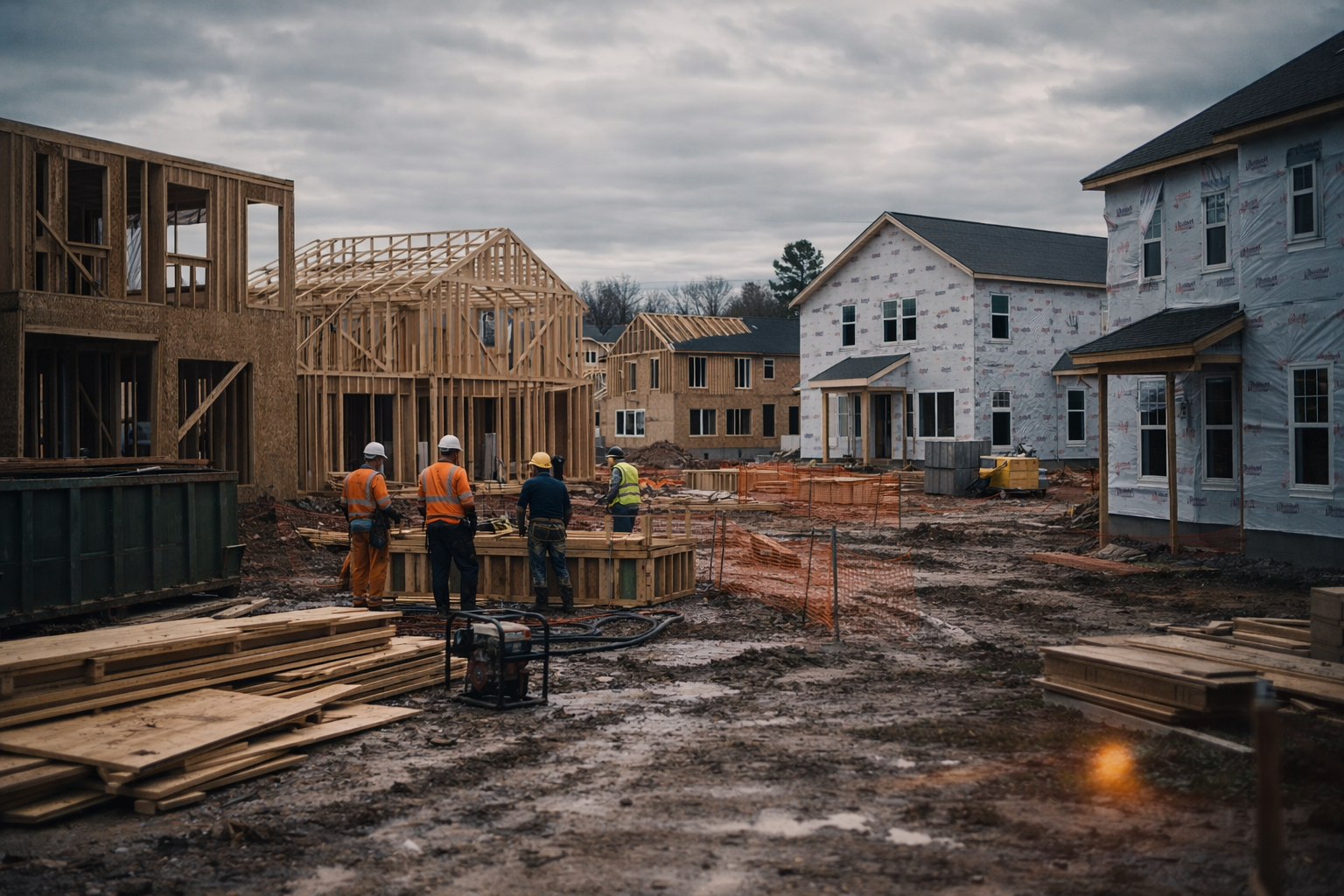
Residential construction remained the main drag. Project starts fell 25% against the preceding three months and 46% year on year, with private housing down 21% and 49% respectively.
Social housing starts declined 34% against the preceding period and 38% compared with 2025. The figures indicate that neither market housing nor affordable delivery has yet converted policy attention into a stronger flow of projects entering construction.
Civils rises from a weak base
Non-residential starts fell 4% over three months and stood 11% below the previous year. Offices were the clear exception, increasing 25% against the preceding period and 34% year on year.
Industrial starts rose 30% over three months, helped by a £74m storage and distribution project in Leicestershire, but remained 6% lower than a year earlier. Community and amenity work increased 18% over the quarter while finishing 22% below 2025.
Health activity was broadly stable, declining 1% over three months and 4% year on year as projects associated with the New Hospitals Programme began to support the pipeline. Education starts fell 42% against the preceding period and 37% compared with last year.
Retail declined 30% over three months and 16% year on year. Hotel and leisure activity fell 4% and 26% respectively, extending the weakness in sectors dependent on consumer confidence and discretionary investment.
Civil engineering delivered the strongest quarterly movement. Starts increased 34% against the preceding three months, with infrastructure up 24% and utilities rising 51%.
The £74m Culham River Crossing in Oxfordshire and a £68m flood-protection scheme in Dumfries were among the projects supporting the increase. Even after that improvement, overall civils activity remained 15% below 2025, including year-on-year falls of 16% for infrastructure and 14% for utilities.
The figures describe a rebound from a weak first half rather than a return to sustained growth. A small number of substantial starts can move a three-month measure sharply, particularly when the comparison period contained fewer schemes.
Regional performance was equally uneven. The West Midlands rose 23% against the preceding period, supported by a £53m refurbishment and alterations programme for the West Midlands Police Authority, but remained 24% below last year.
The East of England increased 7% over three months and the South West rose 8%, while remaining 22% and 45% below 2025. Yorkshire recorded a 13% quarterly rise but stood 36% lower year on year.
London was comparatively resilient. Project starts declined 5% against the preceding period but were 1% above the same period last year, making the capital one of the few regions to hold broadly level annual activity.
The South East fell 27% over three months and 46% year on year. Scotland declined 20% and 31%, Wales fell 37% and 28%, and Northern Ireland recorded a 52% quarterly fall to finish 22% below 2025.
Glenigan’s index measures projects reaching the start-on-site stage, rather than planning approvals, tender enquiries, or business sentiment. It therefore tracks the point at which demand begins to translate into work for contractors, plant providers, materials suppliers, and specialist trades.
The reading can differ from survey indicators such as the construction purchasing managers’ index, which measures month-to-month changes reported by businesses. A slower PMI contraction can coexist with weak project starts because the datasets cover different periods and different points in the delivery pipeline.
The August figures leave contractors facing a narrow market. Offices, selected industrial schemes, utilities, and civil engineering provided areas of growth, while housing, education, retail, leisure, and most regions remained materially below last year.
The civil-engineering rise will become more convincing only if public spending commitments continue to pass through procurement, contract award, and mobilisation. Residential recovery requires the same conversion from targets and funding announcements into viable schemes with contractors on site.
An 11% quarterly decline is less severe than the previous reading, but the annual comparison remains the harder measure: underlying starts are still 29% below 2025. The sector has found pockets of work, not a general recovery.