IN Brief:
- Geda’s new IoT-Box Premium links transport platforms into Geda Machine Management and Geda Central.
- The system combines diagnostics, usage tracking, API integration, and RFID/NFC-based access control.
- The launch reflects a wider move toward plant and access equipment that is managed as connected site infrastructure rather than stand-alone hardware.
Geda has launched its IoT-Box Premium for transport platforms, adding a deeper layer of connectivity, access control, and remote diagnostics to a category of equipment that is becoming steadily more integrated with digital site management.
The new system links Geda transport platforms to the company’s Machine Management environment and on into Geda Central, where users can access real-time machine data, usage reports, notifications, and configuration tools. Compared with the earlier IoT-Box Standard, the Premium version folds diagnostics and access management into a single device, reducing the need for more fragmented oversight and multiple systems on site.
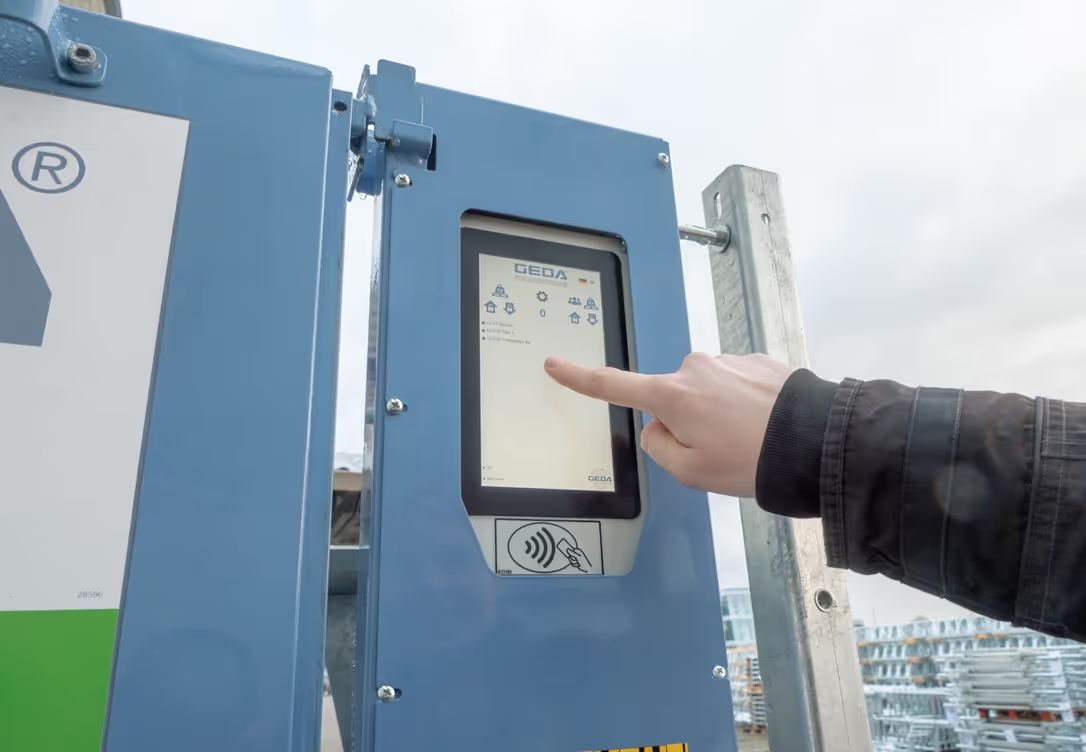
Among the headline additions are RFID and NFC compatibility for user access, API-based integration with wider site systems, a touchscreen interface, detailed activity logging, remote fault diagnostics, and historical machine monitoring. The box is also designed to support time-based access controls and user-related management without requiring separate software installations. On the service side, the aim is straightforward: reduce the number of unknowns around who used the machine, what state it is in, and when a problem first emerged.
That may sound incremental, but it touches on several growing pressures in vertical access and site logistics. Transport platforms are no longer treated solely as temporary lifting assets. On larger projects, they sit inside a broader operational picture that includes workforce movement, security, traceability, utilisation, service response, and digital reporting. The more complex the site, the more valuable it becomes to know not only whether a platform is available, but how it is being used and whether it is drifting towards failure.
That is where connected systems have started to move beyond novelty. Access control is one part of the appeal, particularly where multiple subcontractors, rotating labour, and strict competency requirements need to be managed. Diagnostics are another. Being able to identify a fault remotely, or spot a pattern before it becomes a stoppage, changes the maintenance conversation from reactive attendance to more planned intervention. On congested sites, that can affect programme certainty as much as equipment uptime.
There is also a data angle that is becoming harder to ignore. Contractors and principal contractors are under increasing pressure to evidence competence, equipment control, and safe operation more consistently. Plant that can provide an auditable record of access, alerts, and machine status fits more comfortably into that environment than equipment that depends on local memory, handwritten logs, or manual downloads after the event. Geda’s emphasis on traceability and integration speaks directly to that shift.
None of this means digital overlays solve every practical problem. Connected systems still depend on disciplined implementation, reliable communications, user buy-in, and service teams that know how to act on the data they receive. Poorly configured digital tools can generate almost as much confusion as clarity. But the broader direction of travel is plain enough. Plant and access equipment are gradually being drawn into the same operational architecture that already covers workforce control, logistics planning, and asset reporting.
That is why this launch matters. It is not only about one product upgrade. It reflects a wider expectation that equipment on site should be visible, manageable, and accountable in real time. In an industry still prone to treating digitalisation as a back-office exercise, connected plant may end up being one of the more practical ways that change takes hold.