IN Brief:
- The proposed financing programme targets at least €10bn for European arena infrastructure.
- International investment organisations including Apollo, Blackstone, Ares, and J.P. Morgan are involved.
- Individual construction projects remain subject to financing arrangements, site selection, planning, and development agreements.
The National Basketball Association (NBA) is developing an investment programme targeting at least €10bn to finance construction and refurbishment of sports arenas and associated commercial developments across Europe.
The initiative accompanies plans by the NBA and the International Basketball Federation (FIBA) to establish a professional European basketball competition in 2027, creating potential demand for new venues and improvements to existing infrastructure.
Investment organisations involved in the proposed programme include Apollo Sports Capital, Blackstone, Ares Management, Arctos, HPS Investment Partners, J.P. Morgan, Sixth Street, and Stonepeak.
The financing structure is intended to bring institutional capital together with prospective club ownership groups, developers, and other organisations involved in delivering individual projects.
The NBA expects aggregate capital commitments to exceed €10bn over time as additional participants become involved. Financing arrangements will depend on the economic characteristics and development opportunities associated with individual locations.
Britain is among the markets being considered for the proposed competition, with London and Manchester identified as potential host cities. Other prospective markets include France, Germany, Italy, Spain, Greece, and Turkey.
No construction contracts or individual arena funding allocations have been confirmed through the initiative.
A study conducted by The Sports Consultancy and cited by the NBA estimates that the proposed competition could generate more than €24bn in gross value added across Europe during its first decade, supporting approximately 15,000 full-time-equivalent jobs annually and attracting almost 70 million spectators.
These projections incorporate anticipated activity associated with new and refurbished venues, although their realisation will depend on the scale of the competition, its commercial performance, and the development programme ultimately delivered.
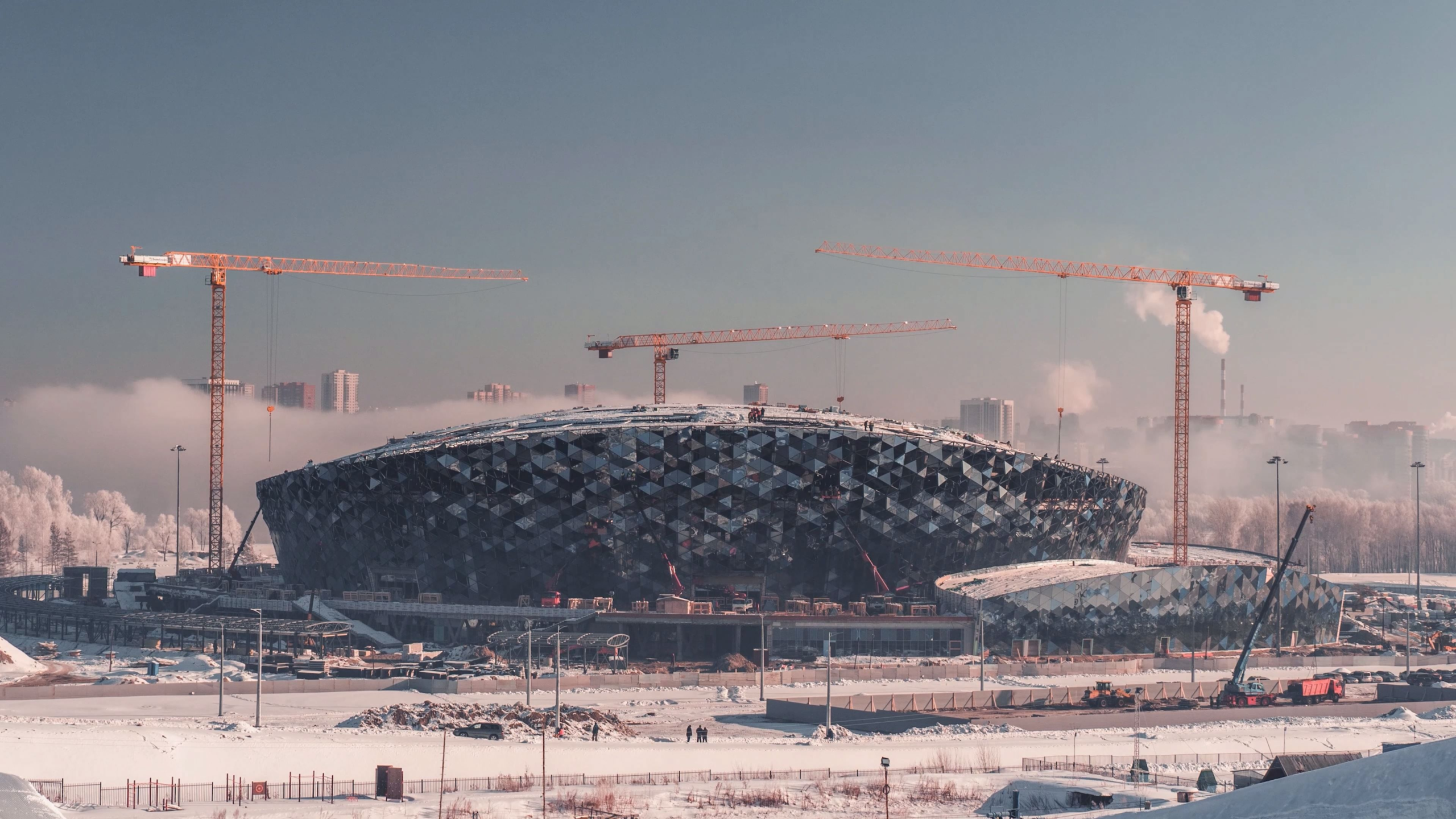
Arena construction presents a combination of structural and operational requirements that differ from those associated with conventional commercial buildings.
Maintaining uninterrupted spectator sightlines generally requires large structural spans across the principal arena space. Roof systems must accommodate their own weight alongside lighting, production equipment, suspended services, and other loads associated with the building’s intended uses.
The dimensions of individual structural components can influence fabrication, transport, and installation arrangements. During construction, temporary stability must be maintained before roof assemblies and their connections achieve the performance established within the permanent structural design.
Developing venues capable of accommodating several event types introduces further requirements. Basketball competitions, concerts, exhibitions, and other entertainment activities can involve different seating arrangements, floor configurations, access requirements, and production infrastructure.
The building’s structural and services systems must accommodate those changes without requiring extensive alterations between events. Loading capacities, service connections, storage facilities, and internal circulation routes influence how readily an arena can be converted between uses.
Mechanical and electrical infrastructure must also respond to substantial variations in occupancy. A venue operating with relatively few maintenance personnel can subsequently need to provide ventilation, electrical services, water supply, and sanitary facilities for thousands of spectators.
Designing systems around these changing operating conditions requires consideration of their efficiency at partial loads as well as peak demand. Equipment selected exclusively around maximum occupancy may operate inefficiently during less intensive periods unless its capacity can be appropriately controlled.
The proposed financing programme incorporates refurbishment of existing venues alongside new construction.
Retaining established buildings can preserve existing transport connections and elements of the structural fabric, while allowing development expenditure to concentrate on improvements to seating, accessibility, building services, and commercial facilities.
The extent to which that approach remains viable depends on the structural condition and adaptability of each building. Extensive alterations to major roof structures, circulation systems, or mechanical and electrical infrastructure can increase expenditure and prolong periods during which venues cannot operate normally.
The NBA also intends to support developments surrounding arenas. These could incorporate hospitality, retail, leisure, and other commercial buildings, broadening the construction requirements associated with individual projects.
Developing such districts requires coordination between the principal venue and shared infrastructure, including transport connections, utilities, public spaces, and pedestrian routes capable of accommodating concentrated movements during major events.
Where construction takes place within existing urban areas, the availability of land and infrastructure capacity will influence whether surrounding development can proceed alongside the arena or must be delivered through subsequent phases.
The commercial arrangements will also differ between locations. Revenue from events and surrounding property developments may support financing, but construction expenditure, operating costs, land acquisition, and the allocation of commercial risks must be established for each scheme.
The NBA will continue discussions with prospective investors and arena developers while finalising the initiative. The next substantive construction milestones will depend on the identification of individual projects, their financing structures, and the planning and procurement arrangements necessary to progress them towards delivery.