IN Brief:
- Fifteen projects will share €134.9m through the Public Sector Loan Facility.
- Czechia receives the largest allocation, including support for six railway schemes.
- The programme combines EU grants with institutional lending for transition-region infrastructure.
The European Commission has signed grant agreements worth €134.9m for 15 public infrastructure projects across Czechia, Germany, Greece, and Slovakia.
Investment will cover transport, education, healthcare, urban renewal, water networks, and other public services in regions managing the economic effects of the transition away from carbon-intensive industries. The grants are being awarded through the Public Sector Loan Facility, part of the European Union’s Just Transition Mechanism.
By combining EU grants with European Investment Bank lending, the facility is intended to make projects viable where public authorities cannot support the full capital cost through conventional borrowing. The structure allows regional and municipal bodies to proceed with infrastructure that carries substantial social or environmental value but limited direct commercial return.
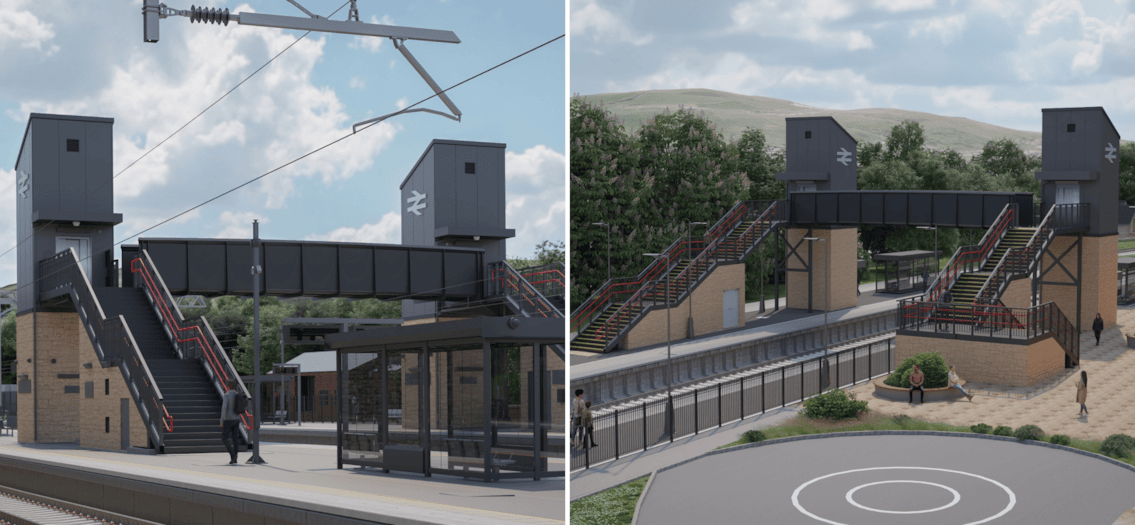
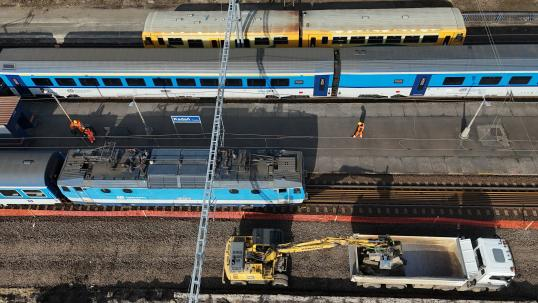
Czechia accounts for the largest share of the latest package, receiving €67.2m across eight projects. Six railway schemes will share €55.8m for work covering approximately 12km of track, eight passenger stations, two fire stations, and associated safety improvements.
Other Czech projects include social infrastructure in the Ústí region and the modernisation of a public swimming pool in Kopřivnice. The mix extends the programme beyond transport, linking regional transition with public amenities and services intended to support communities affected by industrial change.
Four Greek projects have secured €38.3m. Western Macedonia will receive funding for 18 public infrastructure investments covering roads, energy-efficient street lighting, pedestrian routes, and water networks, while schemes in the Peloponnese include road works, an agricultural school, an administrative building, and a centre for neurodivergent children.
Germany has been allocated €20.1m for one project, and two Slovakian schemes will share €9.3m. Collectively, the agreements create a distributed construction pipeline spanning civil engineering, utilities, refurbishment, public realm, building services, and specialist fit-out.
Grant approval provides a financial foundation, but public authorities must still complete procurement, design, permitting, land agreements, and utility coordination. Smaller administrations may have limited capacity to manage several funded projects simultaneously, particularly where EU reporting and audit requirements run alongside national procurement rules.
Former coal and carbon-intensive regions require more than replacement employment if they are to retain residents and attract investment. Reliable transport, schools, healthcare, water infrastructure, public buildings, and attractive urban environments all influence whether economic transition produces viable communities.
Construction programmes therefore sit directly within the industrial transition rather than following it. Roads and railways connect new employment sites, education facilities support changing skills requirements, and utilities determine whether businesses and housing can occupy redeveloped land.
European investment is also extending into the energy systems that will supply those regions. An EU funding programme for grid and storage projects is progressing alongside place-based infrastructure, increasing competition for electrical engineers, project managers, civil contractors, and specialist equipment.
Rail represents the largest clearly identified element in the latest agreements. Station and track upgrades must often be delivered around live operations, restricted possessions, passenger access, signalling, power systems, and legacy structures, requiring close integration between civil, architectural, and railway systems contractors.
Municipal schemes carry a different coordination challenge because roads, lighting, water, schools, and public buildings may be procured as separate contracts even when they form part of one regional programme. Inconsistent standards or tender schedules can fragment the investment and place avoidable pressure on local supply chains.
Authorities releasing several packages at once will need to account for labour availability and realistic bid capacity. Construction companies across Europe continue to face skills shortages, wage pressure, and volatile material costs, while smaller regional markets can become overloaded quickly when publicly funded work accelerates.
Risk allocation will influence the level of competition. Contracts that transfer unresolved ground conditions, inflation, utility conflicts, or permitting delays to contractors may attract higher prices or limited bids, reducing the value created by the grant support.
Phased tendering could help smooth demand and allow local businesses to participate, although excessive fragmentation can increase interface risk and administrative cost. Procurement models will need to reflect the scale, technical complexity, and capacity of each regional market.
The €134.9m grant allocation is intended to mobilise a substantially larger volume of investment once loan finance and national contributions are included. Its effectiveness will ultimately depend on whether the funded authorities can convert signed agreements into deliverable designs, competitive contracts, and completed assets within the required programme.