IN Brief:
- Ecocem is expanding its Dunkirk facility with a €50m ACT low-carbon cement plant.
- The new line is due to add 300,000 tonnes of annual ACT capacity by the end of 2026.
- The project shows how cement decarbonisation is becoming an industrial capacity story as much as a technology story.
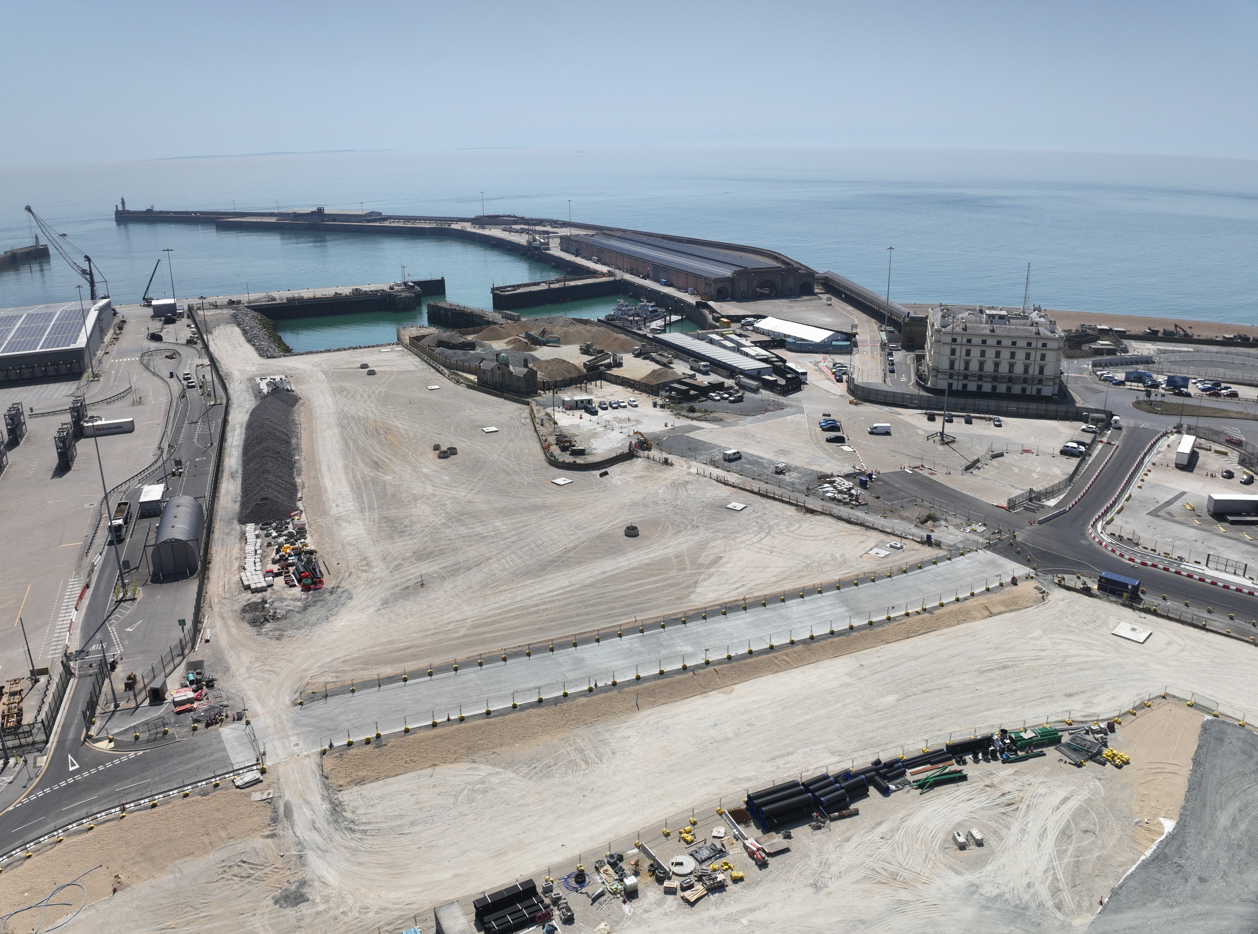
Ecocem has used a visit by EU climate commissioner Wopke Hoekstra to underline the scale of its Dunkirk expansion, where a €50m production unit for ACT low-carbon cement technology is due to come on stream by the end of 2026.
The numbers attached to the project are increasingly difficult to ignore. Ecocem says the new line will add 300,000 tonnes of annual ACT capacity on top of the 700,000 tonnes of low-carbon products already produced at Dunkirk each year. Earlier project detail indicates the expansion forms part of a wider European investment push, making the facility one of the clearest indicators yet that low-carbon cement is moving from specialist proposition to industrial-scale output.
ACT is the company’s headline technology for cutting the carbon intensity of cement, with Ecocem stating that it can reduce CO2 emissions by up to 70% compared with conventional European cement. For the construction market, the importance lies not only in the percentage reduction but in the manufacturing footprint behind it. The sector has seen no shortage of promising cement claims over the years. The harder test is whether those claims can be supported by plant, tonnage, distribution, and repeat supply.
Dunkirk points to a more advanced phase. The facility is not being framed as a pilot. It is being positioned as a commercial production base serving northern France and wider European markets. That matters to contractors and specifiers because availability is one of the main constraints on embodied-carbon reduction in concrete. Design teams can write lower-carbon intent into a scheme, but that intent only becomes buildable when there is dependable supply behind it.
The commissioner’s visit adds a second layer to the story. Cement decarbonisation is no longer being discussed only as a technical challenge for producers. It is increasingly being treated as a strategic industrial question for Europe: how to cut emissions in a hard-to-abate sector while retaining manufacturing capacity, investment, and competitiveness. That is why the policy language around plants like Dunkirk has become more direct. The issue is not simply whether lower-carbon cement can be made, but whether Europe will create market conditions that allow it to be used at scale.
For UK readers, the project remains relevant even though the facility sits in northern France. Construction materials supply chains do not stop neatly at national borders, especially in cementitious products, slag-based systems, and specialist low-carbon technologies. At the same time, UK clients are facing many of the same pressures around whole-life carbon, planning expectations, procurement standards, and investor scrutiny that are driving the debate in continental Europe. A large production base coming on line across the Channel is therefore more than a continental side note. It forms part of the wider availability story for the products that may be written into UK building and infrastructure schemes over the next few years.
The harder question is whether demand will move quickly enough to match the manufacturing push. The answer will depend on procurement behaviour as much as on technology. If lower-carbon cement continues to be treated as a premium exception, capacity growth will be slower. If clients begin to specify against carbon with the same seriousness they apply to cost and programme, the supply side will respond more quickly. Dunkirk suggests producers are preparing for that change. The next stage is whether the market is ready to meet them.