IN Brief:
- A bricklayer fell around eight feet through a fragile polycarbonate roof sheet onto concrete.
- HSE found no adequate risk assessment or safe system for the repair work.
- Len Smith & Son Building Contractors was fined £20,000 and ordered to pay £5,744 costs.
Len Smith & Son Building Contractors Limited has been fined £20,000 after a bricklayer fell through a fragile roof during repair work at a farm in Northumberland, suffering two broken vertebrae and a fractured sternum.
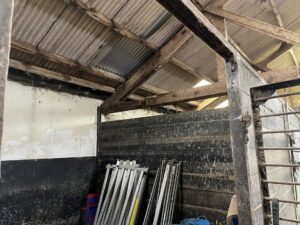
The 24-year-old worker was part of a team carrying out repairs at East Fleetham Farm in Seahouses on 5 February 2025. He stepped onto a polycarbonate roof sheet and fell approximately eight feet onto the concrete floor below.
His injuries required surgery. The Health and Safety Executive subsequently investigated the work and found that adequate measures had not been put in place to protect employees and contractors from the risk of falling while working at height.
According to the regulator, there was no suitable risk assessment or safe system of work for the activity being undertaken. Len Smith & Son pleaded guilty to breaches of sections 2(1) and 3(1) of the Health and Safety at Work etc. Act 1974.
North Tyneside Magistrates’ Court fined the company £20,000 on 6 August and ordered it to pay £5,744 in costs. HSE announced the prosecution on 10 August.
The case centres on one of construction’s most persistent hazards. Fragile roof surfaces can look capable of supporting a worker while having insufficient strength to carry a person’s weight, particularly where translucent sheets, rooflights, ageing fibre cement, corroded metal, or deteriorated materials form part of the covering.
HSE guidance takes a deliberately cautious starting position: sheeted roofs should be treated as fragile until a competent person has established otherwise. That is especially important on older agricultural and industrial buildings where different roof materials may have been installed, repaired, replaced, or weathered over several decades.
The distinction between a structural member and a weak sheet can also be difficult to judge from roof level. Polycarbonate panels may blend into the surrounding covering in some light conditions, while dirt, coatings, ageing, or previous repairs can make rooflights and other fragile zones less obvious than they appear from below.
Planning has to begin before workers gain access. The regulator’s hierarchy is to avoid work on fragile surfaces where reasonably practicable, for example by completing the task from below or by using a suitable mobile elevating work platform.
Where roof access cannot be avoided, the method needs engineered controls proportionate to the risk. Depending on the building and task, those may include staging that spreads loads, guardrails, protected working platforms, fall-restraint systems, safety nets, and fall-arrest equipment positioned to reduce both the likelihood and consequences of a fall.
The choice of equipment is only one part of the method statement. Roof condition, access route, working height, duration, weather, materials being carried, available anchor points, and rescue arrangements all affect whether a proposed system is suitable.
Collective protection generally sits above measures dependent on individual behaviour. Guardrails, working platforms, and safety nets can protect multiple workers without relying on each person remaining attached correctly as they move around the roof.
Harness systems still have a role where other measures cannot remove the risk, but they depend on suitable anchorages, compatible equipment, correct adjustment, training, supervision, and a workable rescue plan. Preventing impact with the floor is only part of the control because a worker suspended after a fall can still be in danger.
The Northumberland prosecution is especially clear because investigators identified shortcomings before reaching those more detailed equipment decisions. HSE found that an adequate risk assessment and safe system of work had not been established, removing the management process that should have determined how people reached and moved around the roof.
That makes the case relevant well beyond specialist roofing contractors. General builders encounter similar risks during maintenance, agricultural repairs, refurbishments, extensions, demolition, and small alterations, where the modest value or duration of the job can encourage informal access arrangements.
The consequences do not become smaller because the contract is small. An eight-foot fall was enough in this case to cause multiple spinal fractures and a serious chest injury, while national statistics continue to show that falls from height remain one of the leading causes of workplace death.
For site managers, the practical controls are well established. Roof condition has to be assessed, fragile areas identified, access planned, suitable collective or personal protection selected, and workers briefed and supervised before the task starts.
Older agricultural and industrial roofs deserve particular care because apparent familiarity can create false confidence. Experience of similar buildings does not establish the strength of a particular sheet, rooflight, fixing, or supporting element, especially where maintenance history is incomplete.
The prosecution also underlines the difference between recognising a hazard and controlling it. Most experienced construction workers understand that roof work can be dangerous; the legal and practical requirement is to convert that general awareness into a documented and workable method that prevents exposure to the fall in the first place.
That includes managing subcontractors and employees to the same standard. Where several people are involved in repair work, responsibility for access, supervision, equipment, and exclusion zones cannot be left to individual judgement once they are on the roof.
The fine and costs are the formal outcome for the contractor, but the worker carried the physical consequences. The method that would have prevented the incident was not unusual or technically novel — it was the absence of a properly planned safe system that allowed a routine repair task to become a serious injury.