IN Brief:
- The Hague agreement has a maximum value of €61.2m.
- Moerdijk’s maintenance contract is valued at up to €35m.
- Both programmes can operate through long-term extension periods.
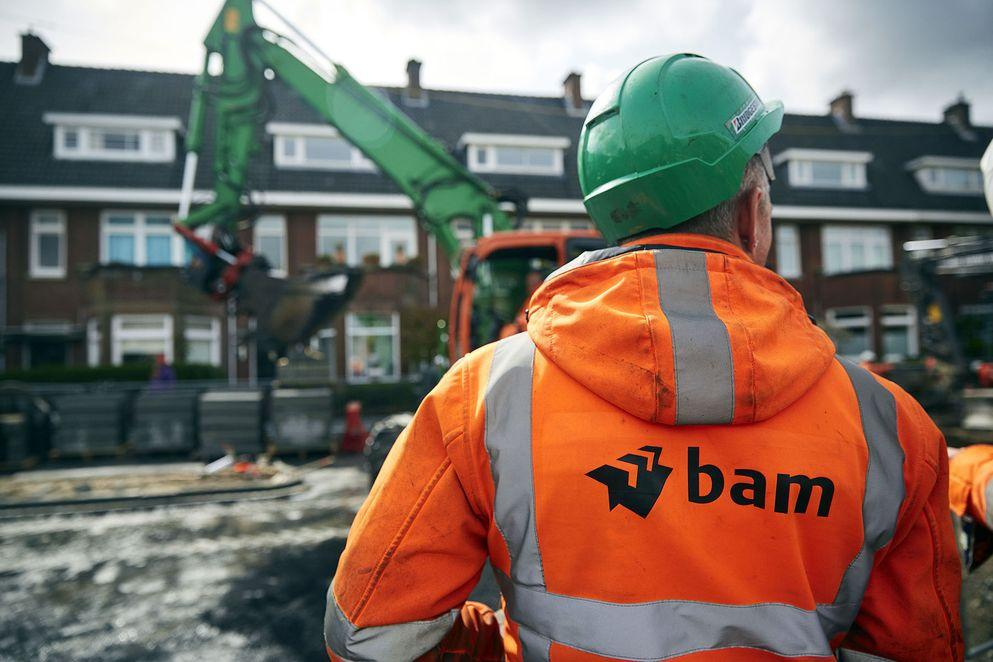
Royal BAM Group has secured asphalt-maintenance contracts from the municipalities of The Hague and Moerdijk with a combined maximum value of €96.2m.
The Hague agreement is valued at up to €61.2m and will initially run for three years, with three possible one-year extensions. Work is expected to begin after the summer and will cover resurfacing, repairs, preventative maintenance, pavement investigations, road markings, and temporary traffic management.
Operations around tram tracks are also included, requiring surfacing activities to be coordinated with rail infrastructure, public transport, utility assets, and restricted urban working hours. Traffic marshals and other operational controls form part of the delivery scope.
Bidders were required to address lower-temperature asphalt and zero-emission equipment across the asphalt value chain. Production, transport, laying, compaction, and site logistics will therefore be assessed within the environmental performance of the agreement rather than treated as separate activities.
Moerdijk’s contract has a maximum value of €35m and is scheduled to begin in August 2026. It will run for four years, with two possible two-year extensions, while BAM will work with the municipality on technical solutions, planning, risk, budget control, and sustainability across the programme.
Jeroen Wijnen, executive director of BAM Infra Netherlands, said: “These contracts align with our focus on maintaining a balanced portfolio of long-term maintenance and renewal programmes for a range of public-sector clients. At the same time, they support our ambition to deliver future-proof infrastructure, where quality, sustainability, and careful execution go hand in hand.”
Asphalt contracts increasingly cover the whole delivery chain
Road authorities are placing greater emphasis on how asphalt is produced and installed, rather than assessing only whether the finished surface meets technical standards. Warm-mix materials can reduce production temperatures and associated fuel use, although the overall saving depends on plant efficiency, haulage distances, paving logistics, and compaction performance.
Zero-emission equipment introduces another set of practical considerations. Electric rollers, pavers, loaders, and site vehicles are becoming available, but their deployment depends on charging capacity, duty cycles, transport arrangements, and the ability to operate through extended shifts.
Municipal contracts can provide the stable workload required to justify investment in that equipment. Similar pressures are visible in the UK, where a North Yorkshire asphalt framework combined long-term maintenance demand with material supply, network resilience, and delivery-capacity requirements.
Long-duration agreements also allow contractors to coordinate production and paving resources across a programme rather than mobilising separately for each road. Reclaimed asphalt recovered from one scheme can be processed and allocated across later work, provided material quality, storage, and mix-design controls are maintained.
Urban delivery will remain difficult in The Hague. Tram corridors and dense streets require coordination with public transport, residents, businesses, cyclists, pedestrians, and utilities, while possession windows may be short and failed handbacks can disrupt the wider transport system.
Preventative maintenance therefore carries considerable economic weight. Timely surface treatments and localised repairs can prevent water ingress and structural deterioration, extending pavement life before full-depth reconstruction becomes necessary.
Condition surveys, traffic volumes, defect histories, drainage performance, and maintenance records will guide the programme. Contractors able to combine physical delivery with reliable asset information can help clients prioritise sections where intervention provides the strongest whole-life return.
Commercial mechanisms will need to account for agreements extending through potentially six years in The Hague and eight in Moerdijk. Bitumen prices, energy costs, carbon requirements, equipment technology, and labour rates may all change substantially during those periods.
The two contracts give BAM a sizeable long-term platform within Dutch municipal maintenance. Their value will depend on how effectively materials, equipment, traffic management, asset data, and environmental performance are integrated across the full programme.