IN Brief:
- The 1370 Tigon G2 increases battery capacity from 44 kWh to 61 kWh, an increase of nearly 40%.
- Huddig attributes 96,306 operating hours and 56.68% electric operation to 41 first-generation machines, not the new G2.
- The new model supports crane, lifting, remote operation and Huddig Echo fleet monitoring options.
Huddig has introduced the second generation of its 1370 Tigon hybrid excavator-loader, increasing battery capacity and widening the attachment options available on a multifunctional construction machine. The Swedish manufacturer unveiled the 1370 Tigon G2 on 8 September 2026. Its main electrical change is a 61 kWh battery, up from 44 kWh on the preceding model; the machine also supports more lifting equipment, radio remote operation and a connected fleet management platform. The new specification offers an opportunity to examine the operating trade-offs of hybrid machinery rather than implying a fresh November launch.
The development draws on Huddig’s first series-produced Tigon machines. According to the company’s fleet records, 41 earlier machines accumulated 96,306 operating hours, with electric operation accounting for 56.68% of that time. Huddig estimates that this displaced 531,621 litres of diesel and about 1,372 tonnes of carbon dioxide. Those are manufacturer estimates from the previous generation, not controlled trial results from the G2, and the figures cover different duty cycles, operators and site conditions. The manufacturer has not published an equivalent operating dataset for the new 61 kWh version.
The new battery uses nickel manganese cobalt chemistry and carries almost 40% more nominal energy than the previous 44kWh pack. Battery capacity is not equivalent to uninterrupted working time, however: excavator hydraulics, travel, lifting loads, ambient conditions and accessory consumption place different demands on the system. Huddig says the updated machine can work electrically for up to two and a half hours, a maximum operating figure that should not be read as the duration of every site shift or heavy digging cycle. Actual endurance will depend on how frequently the machine requires peak hydraulic output and how much time is spent travelling between tasks.
The manufacturer also links the larger battery to better recovery of energy when the machine decelerates or travels downhill. Regeneration changes the electrical energy available to the drive system, but it cannot replace the energy consumed by every hydraulic operation. Huddig identifies a battery operating region of approximately 20–80% charge as favourable for routine use; a larger pack gives the controller more usable energy within that band and could reduce the frequency of charging cycles under comparable conditions. No separate G2 field consumption results have yet been published alongside the earlier fleet totals.
Weighing approximately 14.6 tonnes, the G2 combines a Stage V Cummins diesel engine rated at 115 kW with four electric wheel motors, according to the technical specifications reported for the model. Huddig quotes 190 hp in its power mode. The hybrid arrangement is designed to allocate different parts of the operating cycle to stored electrical energy or the diesel engine, depending on demand; it should not be confused with a fully battery-electric excavator. As an excavator-loader, the carrier combines a front bucket with a rear excavating arm, potentially reducing separate machine movements where a site requires both loading and trenching. Ground pressure, lifting charts and attachment mass remain equipment-selection constraints irrespective of propulsion.
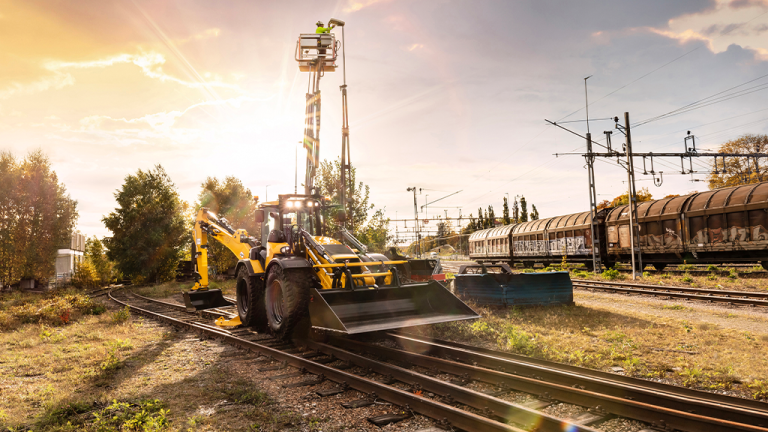
Newly supported equipment includes Huddig’s Loader Coupled Crane, its radio remote control system, LIFT Type II and the LIFT 2200C platform. The latter can be specified with an insulated work basket for designated utility applications. These options widen the work that one carrier may undertake, including excavation, loading and elevated access, although each attachment must be assessed within the manufacturer’s rated envelope. Access work and work near electrical assets introduce separate requirements for equipment certification, exclusion zones and trained operators; the manufacturer has not published a universal configuration that covers every task.
Huddig’s radio remote control option allows an approved operator to work from a position outside the cab, where conditions and the machine configuration permit. Its lifting and access attachments expand the machine’s intended applications but each requires the relevant capacity checks, protective measures and competent operation. An insulated basket, in particular, is not a substitute for a safe system of work around electrical infrastructure. Contractors assessing one machine for excavation, loading and access duties must account for the attachments they need to transport and the changeover time between operations.
The new machine is prepared for Huddig Echo, a web-based service intended to bring fuel levels, machine status and operating information into a central fleet view. That may help managers distinguish productive work from idle time and plan maintenance or deployment between jobs. Telematics data is not the same as a validated fuel-saving figure: different machine operators, soil conditions, idle periods and duty mixes would have to be taken into account to compare fleets fairly. Huddig has described the initial monitoring functions but has not established a verified whole-life operating-cost advantage for the G2.
Huddig’s September launch establishes the availability of the second-generation design, while the 96,306-hour dataset establishes experience with its predecessor. The claimed potential for longer electric working periods will be tested in ordinary operating conditions as G2 machines enter service. The most useful comparisons will separate charging demand, time spent using hydraulics, travel, idle periods and the actual attachment configuration, because each can change how much diesel a contractor uses during a shift. Published G2 fleet data is not yet available to make that comparison.