IN Brief:
- The Property Institute reports that 11% of developer-led projects in its latest dataset have completed remediation.
- Just six more developer-led projects moved into the completed category during the previous year, taking the count from 42 to 48.
- Around 40% of developer-led projects remain at survey, review or scope-agreement stages rather than active construction.
The Property Institute (TPI) has reported that only 11% of developer-led cladding remediation projects in its latest monitored dataset have reached the ‘works complete’ stage. The October findings came under renewed scrutiny when MPs heard evidence on the Building Safety (Remediation of Unsafe Cladding etc) Bill on 12 November, including testimony from TPI’s chief communications officer, Jaclyn Mangaroo.
Over the preceding year, the number of monitored developer-led projects recorded as complete rose from 42 to 48, an increase of just six. Around 40% were still waiting for surveys, reviews or agreement on the required scope of work. Such projects have yet to clear the technical and contractual steps needed to produce an executable repair package. The figures report the position across TPI’s monitored cases and must not be extended to every building in England.
Each percentage measures projects, not the proportion of individual developers meeting all their obligations. A single developer may be responsible for multiple buildings, each at a different stage of assessment or construction. Equally, TPI’s 11% completion figure says nothing by itself about the total number of buildings with contractors working on site. Its importance lies in the reported movement from identified defects through agreed remedial works to verifiable completion.
Remediation usually begins with an assessment of the external wall system and the risks arising from its materials, fixings and configuration. Where defects are identified, a suitable design must specify which elements need to be replaced, retained or modified. The work may involve combustible materials, cavity barriers, fire stopping, façade components and the interfaces around windows, balconies and structural connections, but the required intervention depends on the particular building and assessment findings.
Disputes over the required scope can prevent remediation from reaching tender. An external wall assessment may need intrusive investigation to identify concealed fire stopping, cavity barriers or how cladding components have been fixed; developers and building owners then have to settle the design, costs and responsibilities. Until these matters are agreed, contractors cannot reliably price access, sequencing or replacement materials. TPI’s finding that 40% remain at preparatory stages points to this obstacle before physical repairs begin.
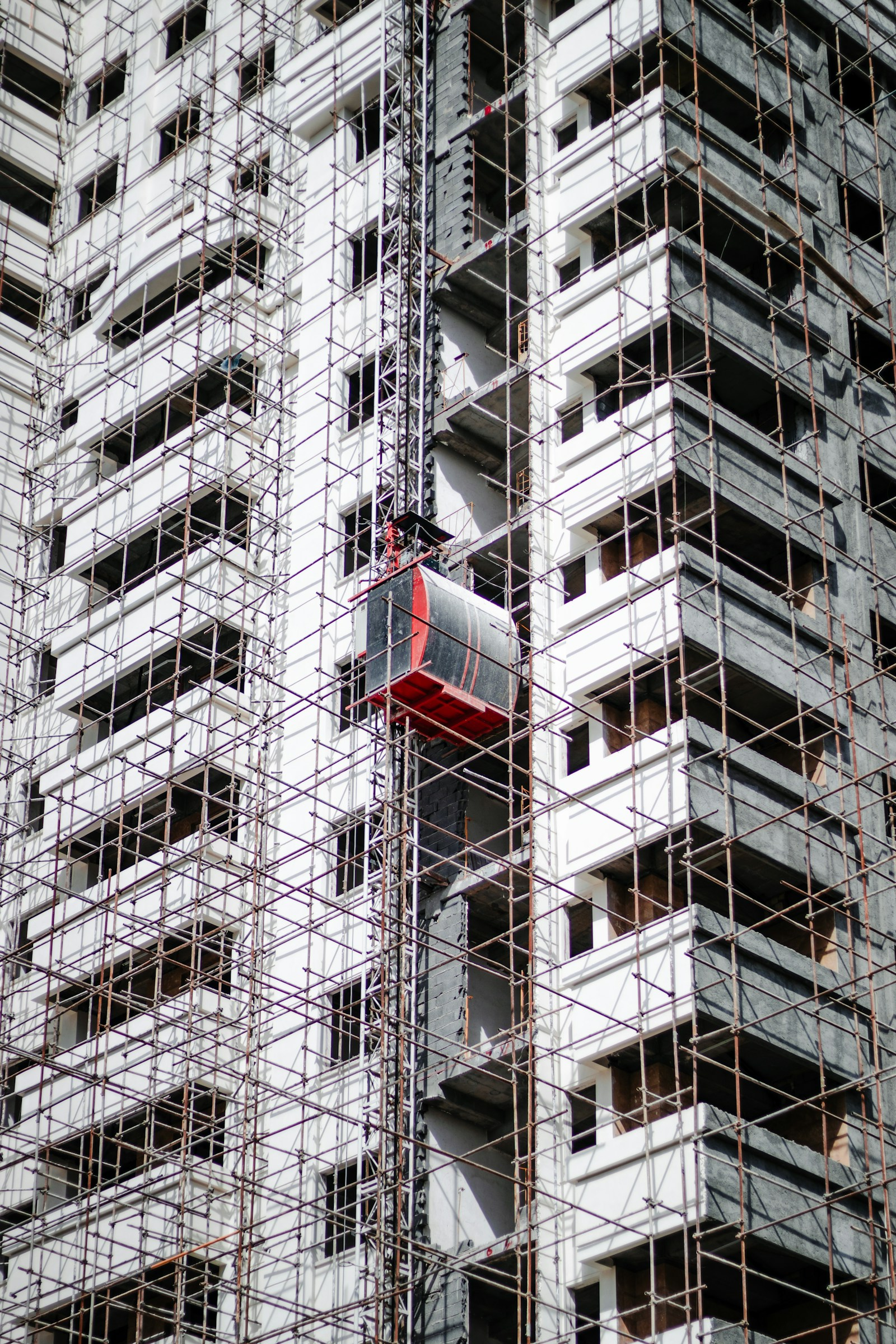
Once a scope is agreed, construction brings another set of constraints. External wall repairs can require scaffolding or other access systems around occupied buildings, staged removal of façade elements and protection against weather while sections are open. Contractors must preserve fire precautions and safe escape arrangements throughout the intervention, with the sequence influenced by the condition of the building, the selected replacement materials and residents’ continued occupation.
Six additional project completions across a year provide a measure of throughput, although the dataset does not disclose the duration or complexity of individual works. A building undergoing repairs is not yet recorded as complete, and defects exposed during façade removal can alter the remaining programme. Comparisons between completed, in-progress and awaiting-survey categories also require consistent reporting dates and definitions; neither an average completion time nor a nationwide construction-start rate can be inferred from the two headline counts.
On 12 November, Mangaroo gave evidence to the House of Commons Public Bill Committee examining the proposed remediation legislation. TPI has argued for stronger mechanisms to ensure developers meet their commitments and for clearer routes to progress where work has stalled. The committee was taking evidence on a Bill: proposed statutory duties and enforcement measures were not yet in force. Any future implementation will depend on parliamentary passage and the final legislation.
Liability disputes have consequences inside occupied buildings as well as in legal correspondence. A building owner cannot move smoothly from an assessment to a priced remedial contract when funding responsibility or the necessary intervention remains contested. Resident-controlled blocks can face particular difficulties financing technical advice and sustaining lengthy disputes. TPI’s evidence places these obstacles alongside construction delays, with residents waiting while surveys, design and contractual decisions proceed.
The institute’s latest findings follow its earlier research into differences between government-funded and developer-led schemes. Those earlier analyses identified unequal progress in bringing projects to site, while the November figures concentrate on actual completion and the amount of work still stuck at survey or scoping stage. They should not be presented as directly interchangeable percentages unless the underlying populations and reporting dates have been reconciled.
Parliament’s examination of the Bill also covers duties to remediate and potential recovery of costs, but a change in legal powers would not eliminate the technical steps involved. Every affected external wall system still requires a building-specific assessment, a defensible remedial design, appropriate approvals and a safe plan for work around residents. The scope can range from replacing discrete defective elements to more extensive dismantling and rebuilding of the façade, depending on the verified condition.
The next measurable improvement would be movement out of survey and scope-agreement categories, followed by a larger number of completed works. Those stages require different evidence: an agreed design does not show that a contractor has mobilised, and mobilisation does not demonstrate that repairs have been inspected and signed off. TPI’s next published dataset will indicate whether developer-led projects have progressed further through those distinct steps.