IN Brief:
- BAM UK & Ireland has secured a 12-month early contractor involvement appointment for the Tees Transporter Bridge.
- Structural testing and trials will inform design work led by AtkinsRéalis and the preparation of refurbishment options and costs.
- The Grade II* listed crossing has remained closed since 2019 because of structural and safety concerns.
BAM UK & Ireland has been appointed to carry out the next phase of engineering investigations into the restoration of Middlesbrough’s Tees Transporter Bridge, which has been closed since 2019 over structural and safety concerns. The 12-month early contractor involvement commission will combine testing and trials with the development of refurbishment options and cost estimates.
BAM will work alongside engineering consultancy AtkinsRéalis, which is responsible for the design work. Middlesbrough Council is seeking a practical route to preserve the 115-year-old Grade II* listed structure, but the latest appointment is for investigation and design development rather than the main restoration contract. No date for reopening the bridge has been established by this commission.
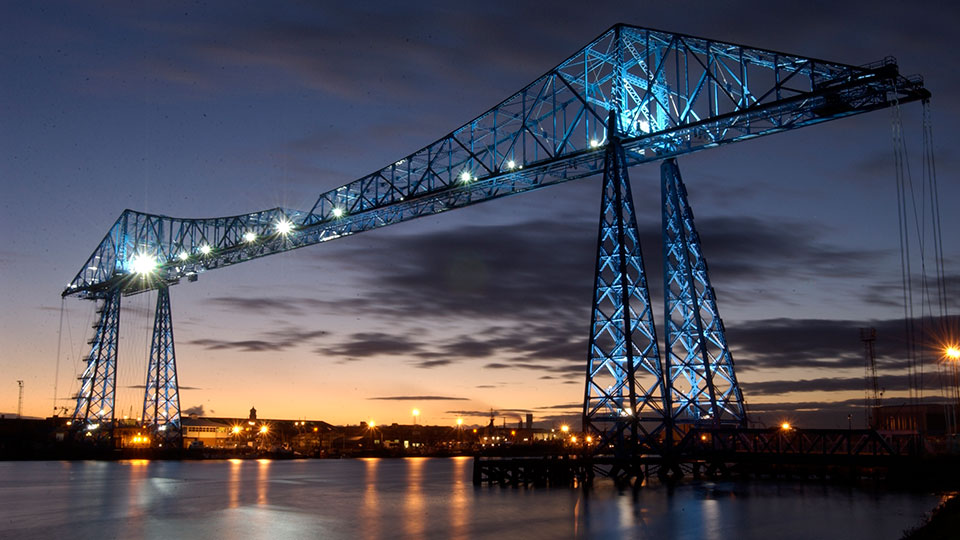
The Transporter Bridge links Middlesbrough with Port Clarence across the River Tees. Opened in 1911, the structure extends approximately 260 metres and rises around 69 metres above the river. Instead of a conventional road deck carried directly across the water, an elevated steel structure supports a suspended gondola that transports vehicles and pedestrians. The arrangement was designed to maintain clearance for shipping while providing a local crossing.
Because the crossing uses a moving gondola rather than a fixed road deck, the steel support structure and the suspended transport system have different loading and movement relationships from a conventional bridge. Forces must be carried through the frame and its supporting elements, and assessments of safe operation depend on the condition of individual members and connections. Testing can help establish where strengthening, repair or replacement may be needed; no particular permanent intervention has yet been chosen.
Middlesbrough Council has previously reported that structural assessment found some components to be overstressed. It also has enhanced digital movement monitoring in place to record how key parts of the bridge respond and to help manage safety while investigations continue. This information provides a basis for judging structural behaviour, but the council has not presented it as proof that an agreed restoration solution is already available.
The new investigation phase is intended to bring contractor knowledge into that design process before a full construction brief is fixed. Detailed testing can help establish the actual condition of elements and connections, while trials can test potential interventions against the structure’s physical constraints. BAM and AtkinsRéalis will use the results to develop refurbishment proposals and corresponding costs. The specific methods and scope of any permanent repair remain subject to this work.
Contractor involvement at the investigation stage allows proposed repairs to be tested against practical access and installation constraints before the designs are finalised. A structurally viable option must still provide safe access to damaged members and connections, allow for any temporary support and protect the elements being retained. Those factors can materially change the programme, sequencing and cost of a repair. BAM has not yet identified a selected construction method.
The Grade II* designation adds another constraint. Any eventual intervention will have to reconcile the bridge’s engineering requirements with the protection of its heritage significance. This does not rule out substantial repair or replacement of elements, but it means the design team cannot treat the structure as an unrestricted modern replacement project. Decisions about what can be retained and how new work is integrated will need to be informed by the investigations and relevant approvals.
The crossing’s position over a working river also affects how a restoration could be delivered. Temporary platforms, lifting operations and access from the banks are among the engineering issues that may have to be assessed, but the council has not announced a chosen solution or an approved construction sequence. The current work is intended to narrow those uncertainties before the authority commits to a larger programme.
The council plans to seek public views as the proposals take shape. Middlesbrough Mayor Chris Cooke has also emphasised the need to secure funding for the eventual works, indicating that an engineering recommendation on its own will not resolve the project’s financial position. The restoration programme must therefore pass through both technical appraisal and investment decisions before an on-site repair contract can be defined.
BAM has pointed to regional infrastructure work at Darlington Station and its involvement in investigations into the King Edward VII Bridge in Newcastle. At Middlesbrough, its 12-month appointment will produce tested restoration proposals and associated costs for council consideration. That package will inform decisions about the extent of repair and the funding required, rather than itself authorising a main works contract.
The Transporter Bridge remains closed because of structural and safety concerns. The investigations will establish which restoration options are technically achievable and what they may cost, while Middlesbrough Council considers public feedback and routes to funding. Any return to service depends on subsequent engineering, investment and delivery decisions.