IN Brief:
- C Watkins Plumbing Limited was fined £20,000 and ordered to pay £8,270 in costs after a 2024 roof fire.
- Welding sparks ignited exposed rigid foam insulation while four subcontractors worked on an air source heat pump installation.
- The prosecution centred on failures to assess, plan and control hot works, with no alarm or extinguishers available on the roof.
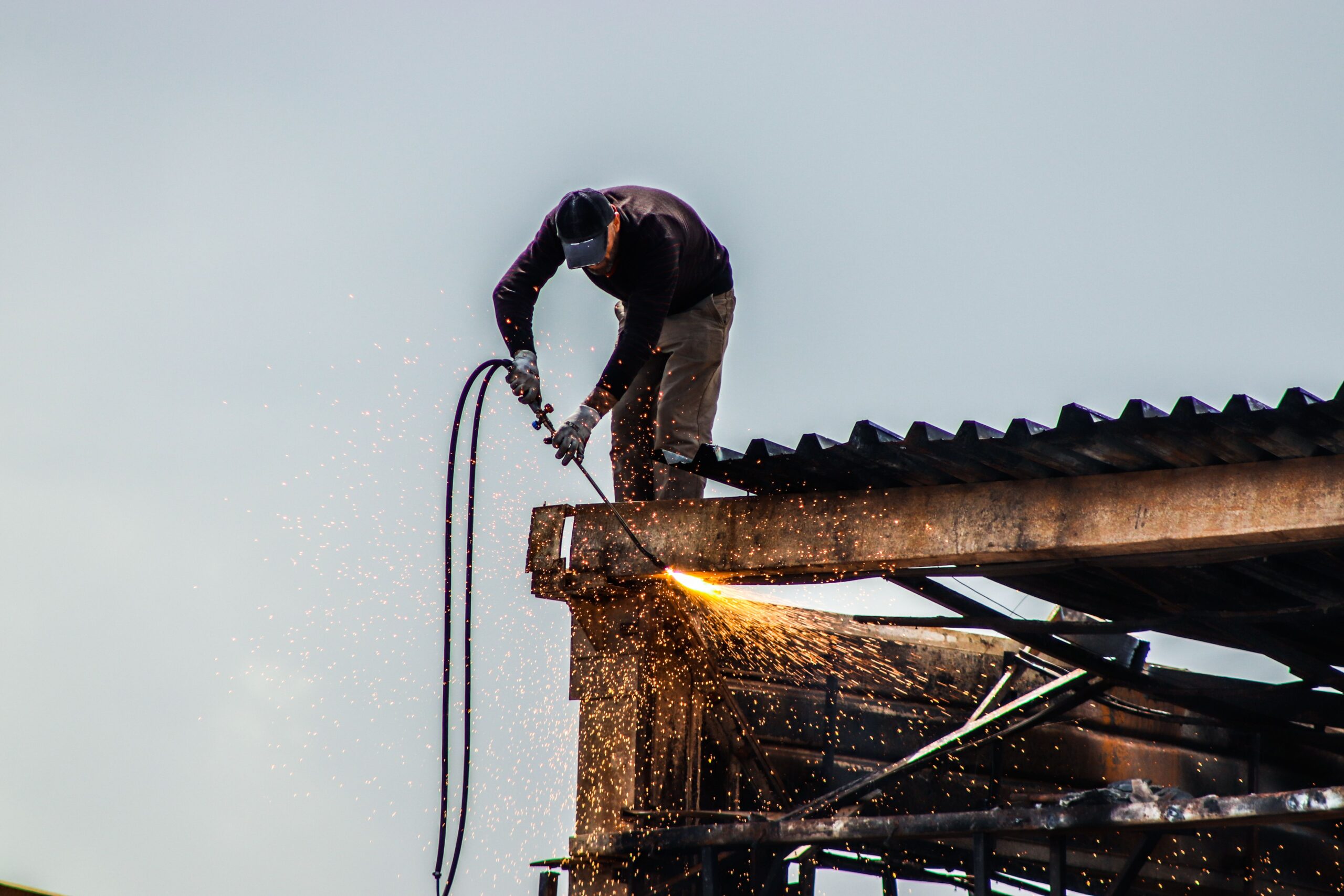
C Watkins Plumbing Limited has been fined £20,000 after four subcontractors escaped a fire on the roof of a 14-storey residential development in Staines-upon-Thames. Sparks from welding ignited exposed rigid foam insulation as the men installed an air source heat pump. The Health and Safety Executive found that the company had failed to assess and control the risks of the hot works despite having procedures that required these precautions.
The incident occurred on 26 July 2024 at the Old Telephone Exchange development in Surrey. Four men working under the company’s control were carrying out the installation when the insulation caught fire. Flames spread across the roof space before the fire eventually burned out after consuming the available fuel. The workers escaped through a single opening in the roof structure and descended one ladder to Level 14. There was no other escape route available at that location.
No fire extinguishers were available on the roof, and the men had no way to raise an alarm. Their only exit was an opening leading down a ladder to Level 14, which could have been blocked had the flames spread towards it. The workers escaped, but the combination of a single exit, exposed combustible material and an uncontrolled ignition source left very little margin for an evacuation as the fire moved across the roof.
The company pleaded guilty to breaching Regulation 15(2) of the Construction (Design and Management) Regulations 2015. At Staines Magistrates’ Court on 29 October 2026, it was fined £20,000 and ordered to pay £8,270 in prosecution costs. The charge concerned the contractor’s responsibility to plan, manage and monitor the construction work under its control. The court outcome followed the investigation into how welding was organised and supervised rather than a determination about the design of the air source heat pump itself.
C Watkins Plumbing’s own procedures required a risk assessment, a method statement and a permit to work before the welding began. None was in place, the HSE investigation found. A risk assessment should establish how sparks, heat and exposed materials could interact at the precise work location; a method statement sets out the safe sequence; and a permit should confirm that the specified precautions have been checked before work starts. The missing documents therefore corresponded to missing checks of the surrounding roof and the arrangements for responding to a fire.
Hot works create a foreseeable ignition hazard because welding, cutting and grinding can release heat or sparks into nearby combustible materials. HSE guidance for construction sites identifies the need to reduce ignition sources and keep combustible materials away from them where practicable. Suitable fire extinguishers and a maintained watch during work form part of the precautions described by the regulator. A permit to work can help coordinate those controls on larger projects, but a permit only has value where the physical precautions have also been checked and applied.
The rigid foam insulation was already laid across the roof while mechanical installation work continued above it. Sparks produced at a weld can travel beyond the connection being worked on, so the area requiring protection extends to adjacent materials and surfaces. HSE guidance identifies the separation or protection of combustibles as an important hot works control. Where the building sequence leaves combustible material exposed, the installation method and working location must be assessed together before an ignition source is introduced.
The physical location of the work increased the importance of emergency arrangements. A high roof can be reached through a limited number of openings, and equipment, materials or unfinished construction may restrict movement. Evacuation planning must account for how workers reach a place of safety if the normal access route becomes compromised. At the Staines development, the single ladder to Level 14 was the only way down, while the absence of a warning system and extinguishers removed other controls that might have reduced the danger as the fire developed.
HSE’s fire safety guidance, HSG168, requires fire precautions to be considered during design and procurement as well as the construction phase. It calls for risk assessments to identify high-risk activities and locations where evacuation arrangements are complex, with controls kept under review as the site changes. That continuing review is important on a live building project because insulation installation, plant positioning and access provisions can change from one stage of work to the next. Measures that are adequate before materials are brought onto a roof may need revisiting once combustible products are present.
The work brought together roofing materials, mechanical plant installation and site access at an elevated location. Those interfaces required the contractor directing the welding operation to check the conditions around the work and to coordinate emergency arrangements with the wider site. Construction phases can change quickly as insulation, equipment and temporary access are installed, so controls used earlier in the programme need to be reviewed against the roof as it stood on the day of the work. The prosecution concerned failures in that planning and management process.
The court fined C Watkins Plumbing Limited £20,000 and ordered £8,270 in prosecution costs on 29 October 2026. The case arose from the 26 July 2024 fire, in which sparks ignited insulation during heat pump installation and four men escaped by a single ladder. HSE’s findings centred on the absence of the company’s required hot works assessment, method statement and permit, compounded by the lack of firefighting equipment and an alarm on the roof.