IN Brief:
- VIVID has more than £300m in green and sustainability-linked loans through its existing relationship with Barclays UK Corporate Bank.
- Victory Quay will provide 835 homes on Portsmouth's former Tipner East site, with approximately 30% designated as affordable.
- The construction programme includes a new sea wall, land preparation, essential utilities and measures to protect coastal habitats.
VIVID and Barclays UK Corporate Bank are continuing their longstanding financing relationship as the housing association develops more sustainable and climate-resilient homes across southern England. The relationship includes more than £300m in green and sustainability-linked loans, supporting VIVID’s wider housing ambitions and its work on improving the environmental performance of residential developments.
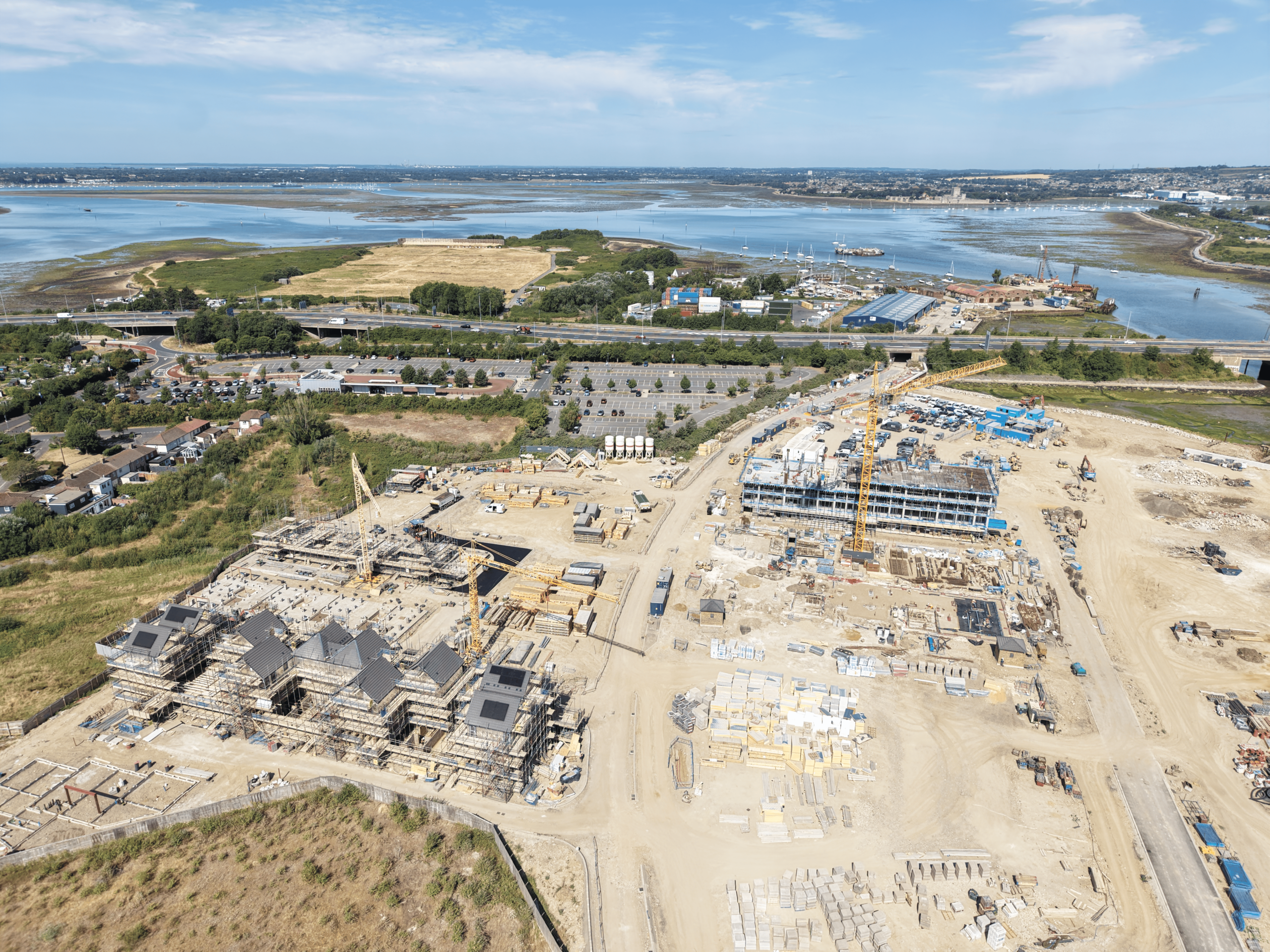
The partnership extends beyond lending, with the organisations also considering approaches to sustainability and resilience. VIVID’s Victory Quay development in Portsmouth illustrates the construction and infrastructure requirements involved, combining 835 planned homes with coastal flood protection, land remediation and improvements to the surrounding waterfront.
Approximately 30% of the homes at Victory Quay will be affordable. The development will provide different residential tenures alongside public spaces, community facilities and improved waterfront access, transforming the previously unused Tipner East site into a new neighbourhood at the northern entrance to Portsmouth.
The project is being progressed by VIVID in partnership with Portsmouth City Council and Homes England. Its location beside Tipner Lake has shaped the development proposals, particularly the arrangements for managing flood risk and protecting environmentally sensitive coastal habitats.
A new sea wall forms part of the infrastructure needed to support the neighbourhood. The flood defences are intended to protect the planned homes and improve protection for surrounding communities, including areas of Stamshaw, Tipner and North End.
The coastal works must be coordinated with the development’s residential layout and the infrastructure serving the properties. The position of flood defences influences ground levels, access arrangements and the relationship between the completed buildings and the waterfront.
Land raising and site preparation are included in the construction programme, allowing areas of the former industrial site to be brought into residential use. These activities form part of the enabling works that establish suitable conditions for subsequent building foundations, roads and permanent utility connections.
Tipner East has remained unused for an extended period, with its former industrial activities contributing to the need for land remediation. The development plans include extensive decontamination, alongside engineering works required to prepare the ground and establish the site’s new infrastructure.
Ground preparation must take account of the requirements of residential construction and the environmental characteristics of the location. The completed development will accommodate buildings, service networks, external spaces and a coastal path, with the infrastructure designed around the approved masterplan.
VIVID appointed Portsmouth-based PMC Construction as principal contractor for the first phase, with preparatory work progressing during 2025. The initial programme comprises 183 homes and substantial enabling infrastructure serving the wider development.
That first phase includes completion of the sea wall, land preparation, road construction and installation of essential services such as water and electricity. The work will establish infrastructure required by the first residents while supporting the delivery of additional homes in later phases.
Roads and utilities need to be incorporated into the development before the residential plots can become operational. Connections must be coordinated with the positions of buildings and the construction sequence, particularly where infrastructure installed during the initial works will also serve subsequent development areas.
The coastal path forms another component of the first-phase programme. It will contribute to improved public access along the waterfront, with the wider plans including pedestrian and cycling connections linking the neighbourhood with other parts of Portsmouth.
Those routes are intended to connect the new housing with existing transport and community facilities. Their installation will be coordinated with the road network, public spaces and coastal protection works, creating connections through a site that previously offered limited opportunities for residential or recreational use.
The environmental requirements extend beyond flood protection. Victory Quay adjoins coastal habitats used by wildlife, including bird species that spend the winter around the Solent. VIVID has incorporated seasonal restrictions into its construction arrangements to reduce disturbance during sensitive periods.
Previous sea wall and site preparation activities have been organised around those restrictions, with work paused during winter periods to protect local bird populations. This affects the sequencing of construction activities near the waterfront, requiring the project team to coordinate engineering work with the applicable environmental measures.
VIVID has worked with Natural England and the Hampshire and Isle of Wight Wildlife Trust on its ecological approach to the site. The development plans include habitat improvements, landscaping and measures intended to protect wildlife as the former industrial land is converted into a residential neighbourhood.
These commitments influence both the construction period and the completed environment. Groundworks, access arrangements and landscaping must be coordinated with the approved ecological measures, while the long-term management of public spaces and habitats will form part of the neighbourhood’s operation.
The infrastructure programme therefore combines activities with different delivery requirements. Flood defence construction, land remediation, utility installation and residential building work must progress within the physical and environmental constraints of the site, with the sequence influencing when individual areas can become available for development.
Alongside the construction work, VIVID is maintaining its relationship with Barclays UK Corporate Bank as a source of green and sustainability-linked finance. The more than £300m lending figure covers the housing association’s established relationship with the bank and supports its broader sustainability ambitions across its housing activities.
The organisations also use their relationship to discuss potential initiatives and approaches that VIVID could apply to its properties and development programme. These activities sit alongside the provision of finance as the housing association considers how homes and neighbourhoods can respond to changing environmental conditions.
Mike Shepherd, chief investment officer at VIVID, said: “Our relationship with Barclays is about more than funding.”
The housing association regards access to an established financial partner as an opportunity to consider different approaches to sustainability and resilience, including measures that may influence the development and long-term operation of its housing stock.
Mike Figg, head of social housing at Barclays UK Corporate Bank, said: “Victory Quay is a great example of VIVID’s focus on delivering new homes while thinking about sustainability and climate resilience for the future.”
The Portsmouth development brings those objectives together through its coastal engineering and residential construction programme. New homes will be supported by flood protection, prepared development land, utility infrastructure and access improvements, with environmental measures incorporated into the delivery arrangements.
The 835-home masterplan will be delivered through successive phases, beginning with the 183-home programme and its associated infrastructure. Those initial works establish important elements of the wider development, while subsequent housing construction will build on the site preparation and coastal protection measures being delivered.
VIVID’s continued relationship with Barclays provides financing and opportunities for collaboration as the housing association advances its sustainability objectives. At Victory Quay, the engineering requirements are already incorporated into the construction programme, with flood defences, remediation, infrastructure and environmental protection underpinning the creation of the new waterfront neighbourhood.