IN Brief:
- Mayo Civil Engineering has expanded its Wolffkran order from six to eight cranes, taking its completed fleet to 19 units.
- The order includes three WOLFF 166 B, two 235 B, two 275 B and one 355 B luffing jib crane.
- Two new WOLFF 166 B cranes are working at Manchester's £87.5m Phoenix Iron Works development alongside an existing Mayo unit.
Mayo Civil Engineering has ordered eight WOLFF luffing jib tower cranes from Wolffkran, expanding its lifting equipment fleet for construction projects across northern England. The Rochdale-based contractor increased an initial six-crane order by two units, with the completed investment taking its fleet to 19 WOLFF tower cranes.
Several machines from the original order have already been delivered, with the remaining units scheduled to arrive by the end of 2026. The two additional cranes will join the fleet during 2027, completing an investment covering four models with different lifting capacities and operating characteristics.
The order comprises three WOLFF 166 B cranes, two WOLFF 235 B machines, two WOLFF 275 B units and one WOLFF 355 B. All eight use luffing jib configurations, allowing the horizontal reach of the jib to be adjusted by raising or lowering it during operation.
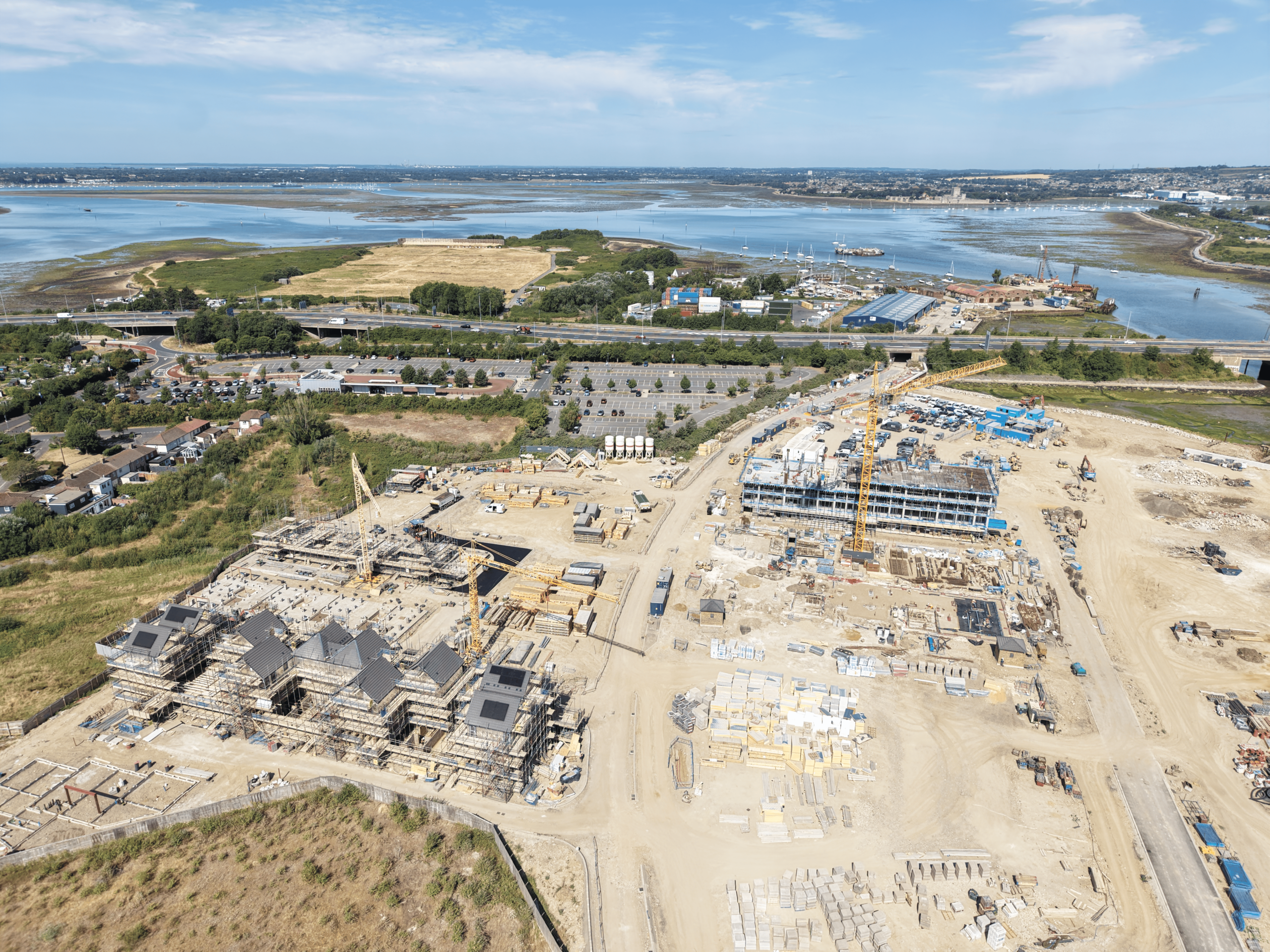
Two newly delivered WOLFF 166 B cranes are already operating at Phoenix Iron Works in Ancoats, Manchester. They are working alongside a third 166 B from Mayo’s existing fleet on the £87.5m mixed-use development, providing lifting capacity across a construction site where multiple tower cranes operate within adjoining working areas.
The WOLFF 166 B has a maximum lifting capacity of 12 tonnes and can be configured with a jib length of up to 55m. Its compact arrangement is intended for urban sites where crane positions and operating envelopes are constrained by surrounding buildings, roads and other construction activities.
Luffing jib cranes change their operating radius by altering the angle of the jib. Raising it reduces the horizontal distance between the tower and the jib head, allowing the crane’s working envelope to be adjusted around nearby structures.
That flexibility is useful when several cranes occupy the same development site. Their positions must be coordinated so that the movement of individual jibs and suspended loads can take place within the restrictions established for the lifting operation and the surrounding work areas.
At Phoenix Iron Works, three cranes of the same model are supporting the project. Their lifting programmes must be coordinated with the movement of materials around the site, particularly where loads need to be transferred between delivery areas and different parts of the developing structure.
The allowable lifting capacity also changes with operating radius. A crane’s maximum rated load applies under specified conditions, while its capacity at greater distances depends on the relevant load chart, jib configuration and supporting arrangements.
The different models included in Mayo’s order provide options for projects with heavier components or longer lifting distances. The WOLFF 235 B has a maximum lifting capacity of 16 tonnes and was developed with concrete-frame contractors among its intended users.
Wolffkran specifies a hoisting speed of up to 130m per minute for the 235 B, supported by a 60kW hoist winch. This provides high vertical lifting performance under the relevant operating conditions, while the speed available for an individual movement depends on the weight of the load and the crane’s control arrangements.
Concrete-frame construction can involve repeated movement of reinforcement, formwork and other materials between ground-level delivery areas and elevated working floors. The distance travelled by the load, the time needed to connect and release lifting attachments and the availability of materials all influence the overall lifting cycle.
The 235 B’s hoisting specification provides one element of the crane’s operating capability. The project’s lifting plan must also account for the permitted load at the required radius and the way materials can be positioned safely within the working area.
Two WOLFF 275 B cranes will add a maximum rated lifting capacity of 24 tonnes to Mayo’s fleet. The model provides a higher-capacity option for operations involving heavier construction components, subject to the limits associated with the selected jib configuration and working radius.
The largest machine in the order, the WOLFF 355 B, has a maximum lifting capacity of 28 tonnes. Wolffkran specifies that it can lift four tonnes at a radius of 60m, giving the model capacity for moving substantial loads across a comparatively large horizontal distance.
Capacity at radius is particularly relevant to projects where materials must be delivered from one side of a site to an installation point farther from the tower. The lifting plan has to establish the load weight and its complete movement path, ensuring that the crane remains within its rated performance throughout the operation.
The variety of models gives Mayo a wider choice of cranes for different building heights, site dimensions and construction loads. A compact machine may suit a constrained development with several overlapping working areas, while a larger crane may be required where the weight and radius of the planned lifts exceed the capabilities of smaller equipment.
All eight cranes can be installed on Wolffkran’s standard TV20/UV20 tower system, which uses a two-metre by two-metre tower section. The shared system is compatible with Mayo’s existing WOLFF equipment and provides greater consistency across the fleet.
Using a common tower system can support equipment planning, component management and maintenance arrangements, although each installation still requires engineering appropriate to the selected crane, tower height and lifting conditions.
Tower crane foundations must transfer the forces generated by the equipment into a suitable supporting structure or ground arrangement. Those forces are influenced by the crane’s configuration and operation, requiring the installation to be designed for the loads and conditions established at the construction site.
Where a tower crane is tied to a building during construction, the arrangement must also account for the capacity and condition of the supporting structure. The height of the crane, its operating envelope and the sequence of building works influence the engineering and installation requirements.
Wolffkran’s Sheffield-based UK business will provide service and maintenance support for the new equipment. The arrangement continues an established relationship between the manufacturer and Mayo, which operates an all-WOLFF luffing jib tower crane fleet.
Mayo Civil Engineering was founded in 2005 by owner and managing director Gary Mayo. The family-owned contractor employs approximately 600 people and generates annual revenue of around £80m, with operations supporting construction projects across northern England.
The company’s investment increases the number of machines available to support its project workload while introducing additional capacity across several crane classes. Equipment allocation will depend on the lifting requirements and operating restrictions of each construction site.
With two new 166 B cranes already operating in Manchester, the expanded order is entering service before the full delivery programme has been completed. The remaining machines will join Mayo’s fleet through 2026 and 2027, increasing its available lifting capacity to 19 WOLFF luffing jib tower cranes across four equipment classes.