IN Brief:
- SUEZ and Baxter's Haulage are introducing a MAN eTGX electric truck for Climafuel deliveries to Cemex's Rugby cement works.
- The proposed operating schedule covers 11 daily journeys and approximately 72,000 tonnes of alternative fuel annually.
- High-power charging at Magna Park supports the longer journeys, with projected annual savings of 109 tonnes of transport-related CO₂.
SUEZ recycling and recovery UK is introducing a MAN eTGX electric heavy goods vehicle to transport waste-derived fuel to Cemex’s Rugby cement plant, replacing an existing diesel truck on established delivery routes. The operation, undertaken with Baxter’s Haulage, is expected to reduce diesel consumption by approximately 44,700 litres annually.
The vehicle will transport Climafuel, an alternative fuel manufactured by SUEZ from non-recyclable household, commercial and industrial waste. The material is supplied to Cemex for use in its cement kiln, where it substitutes for part of the conventional fossil fuel required to provide heat during clinker production.
SUEZ expects the new truck to complete approximately 11 journeys each day across two established routes, carrying an estimated 72,000 tonnes of Climafuel annually. Eight daily loads will travel between the company’s Malpass Farm facility and the Rugby cement works, with three additional overnight loads originating from Landor Street in Birmingham.
The delivery programme covers approximately 214 miles across the stated routes. The company has selected the electric vehicle to replace an Iveco S-Way diesel truck already used for the operation, allowing the partners to assess battery-electric haulage against an established industrial transport requirement.
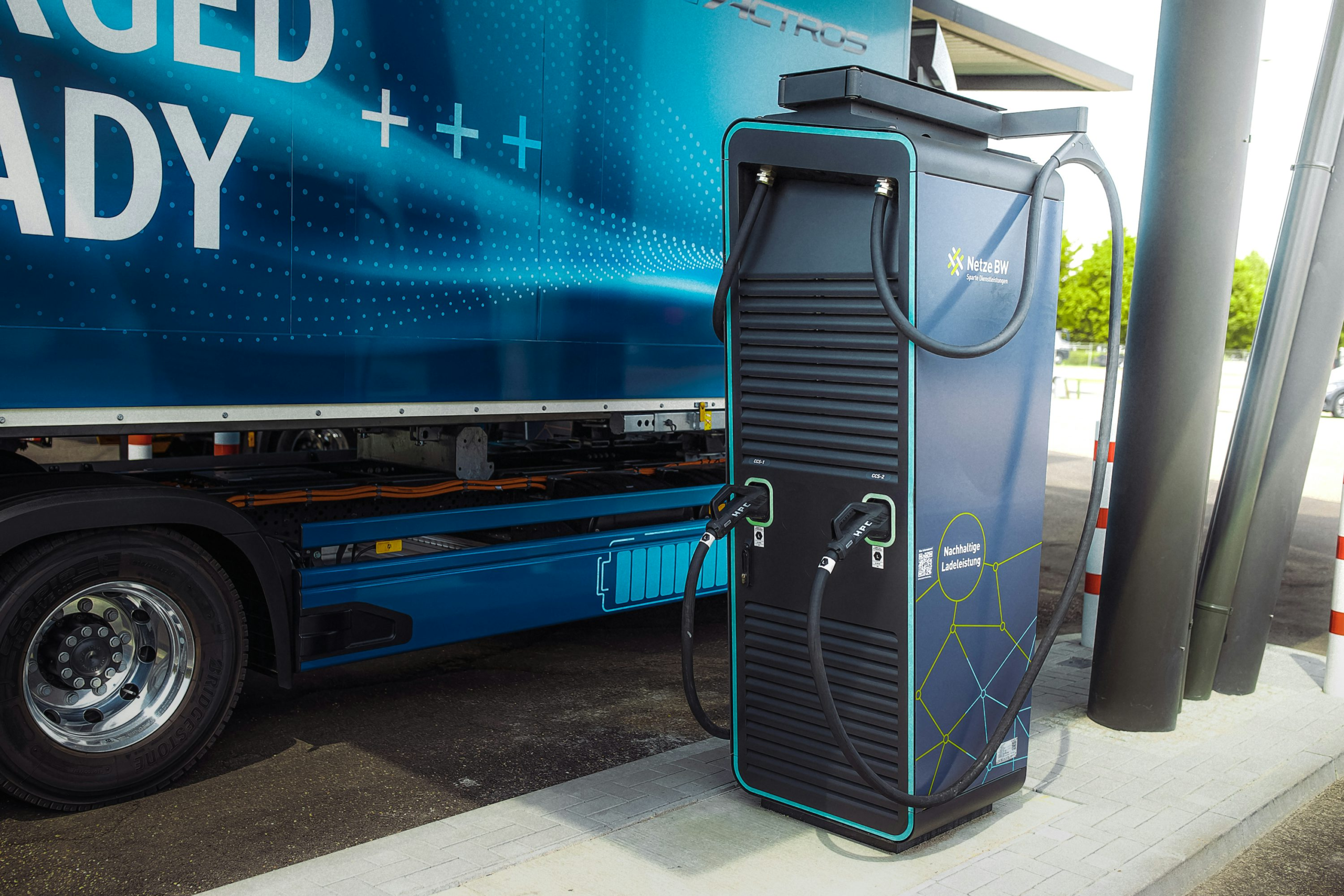
The longer overnight journeys will be supported by Electroway’s electric HGV charging facility at Magna Park in Lutterworth. The site provides charging infrastructure capable of delivering up to 400kW, giving the vehicle access to high-power charging away from its loading and unloading destinations.
Charging arrangements are central to operating an electric truck across repeated industrial deliveries. The vehicle must complete its scheduled journeys while retaining enough energy for subsequent movements, with the charging opportunity coordinated around loading, transport and unloading activities.
The power available from a charger influences how quickly electrical energy can be supplied, while the charging rate achieved by a particular vehicle depends on its battery system and operating conditions. A charger rated at up to 400kW can support substantial energy transfer, subject to the compatibility and charging characteristics of the connected truck.
Battery-electric operation also changes the energy requirements of the haulage service. A diesel truck carries fuel that is replenished at a filling station, while an electric HGV depends on stored battery energy and access to suitable charging infrastructure. The transport programme must accommodate those different requirements alongside the delivery schedule.
Bulk material haulage places significant demands on a heavy vehicle. The weight of the payload, road conditions, journey length and operating pattern influence energy consumption. Repeated journeys between fixed industrial facilities provide a defined duty cycle against which the new vehicle’s performance can be evaluated.
The MAN eTGX will be used on routes already serving the cement plant, where maintaining the movement of Climafuel is part of the wider manufacturing operation. Fuel deliveries must remain aligned with the output of the processing facilities and the requirements of the Rugby kiln.
At Malpass Farm, SUEZ processes non-recyclable waste into Climafuel through a series of material preparation operations. The resulting fuel provides an outlet for suitable residual material after recoverable fractions have been separated, allowing it to be used as an energy input in cement manufacture.
Cement clinker is manufactured by heating a prepared mixture of raw materials to high temperatures in a kiln. Thermal energy enables the reactions required to form clinker minerals, while the decomposition of limestone releases carbon dioxide as part of the chemical process.
Replacing conventional fossil fuels with suitable alternative materials changes the composition of the kiln’s energy supply. The environmental characteristics of the operation depend on the fuel mix, combustion conditions and the wider cement production process, including the emissions arising directly from the raw materials.
SUEZ’s Climafuel operation connects waste processing with cement manufacturing through a regular supply of prepared alternative fuel. Material recovered from waste streams is processed into a product that can be transported, handled and used within the requirements of the industrial kiln.
The relationship between SUEZ and Cemex has developed over more than a decade. Malpass Farm began operating in 2015, and by December 2024 the companies had recorded the delivery of one million tonnes of Climafuel to the Rugby cement plant.
During that period, the alternative fuel supply displaced more than 750,000 tonnes of coal consumption at the facility, according to Cemex. The cumulative figures describe the established fuel partnership, while the current electric vehicle trial concerns emissions associated with transporting that fuel between the processing facilities and the kiln.
The new haulage arrangement is expected to reduce annual diesel consumption by approximately 44,700 litres. SUEZ projects that the change will lower transport-related carbon dioxide emissions by 109 tonnes each year, based on replacing the diesel vehicle during the planned delivery programme.
Those projected savings are linked to the truck’s operation on the specified routes. The cement manufacturing process and the production of Climafuel remain separate activities within the wider supply chain, with their own energy requirements and emissions characteristics.
Baxter’s Haulage will provide the transport operation using the MAN eTGX, drawing on its experience of the existing delivery schedule. The trial will allow the vehicle’s suitability to be assessed against the frequency of journeys, loading requirements and access to charging infrastructure.
The route between Malpass Farm and the Rugby works provides repeated movements between established industrial facilities, while the overnight journeys from Birmingham place additional demands on driving range and charging arrangements. The combination gives the partners different operating conditions within the same fuel delivery service.
Managing the charging programme will require coordination with the vehicle’s daily workload. Time spent charging must fit around the movement of fuel, while the available battery energy must accommodate the journeys planned before the next charging opportunity.
The trial also introduces battery-electric transport into an existing cement supply operation without changing the underlying requirement for reliable deliveries. Climafuel continues to be manufactured at SUEZ’s processing facilities and used at Rugby, with the change concentrated on how the material moves between those locations.
The projected annual fuel and emissions savings will depend on the vehicle completing the intended duty in place of the diesel truck. Its operation across 11 planned daily journeys, supported by charging at Magna Park, provides a practical test of electric heavy haulage supplying an energy-intensive construction materials facility.
The MAN eTGX will extend SUEZ and Cemex’s existing alternative fuel partnership into the transport element of the supply chain. Its performance on the Malpass Farm and Birmingham routes will determine how effectively the new vehicle and charging infrastructure support the continued delivery of approximately 72,000 tonnes of Climafuel each year.