IN Brief:
- The final 76-metre launch of the west deck was completed on 24 October in nine hours.
- Both M6 South viaducts are structurally complete, each measuring approximately 320 metres.
- The M6 remained open, while an adjacent motorway link closed to establish an exclusion zone.
HS2 Ltd has completed the installation of its second M6 South viaduct near Chelmsley Wood in the West Midlands, after construction partner Balfour Beatty VINCI launched the final section of a 4,750-tonne steel deck over the motorway. The last movement took place on Saturday 24 October, bringing both parallel rail crossings to structural completion while the M6 remained open to traffic.
The west deck, which will carry high-speed trains towards Birmingham Curzon Street, was moved forward by 76 metres during a nine-hour operation using hydraulic strand jacks. Its neighbouring east deck, completed in December 2025, will carry trains towards Old Oak Common and Euston in London. Each viaduct is approximately 320 metres long, and the two structures stand only 100 millimetres apart.
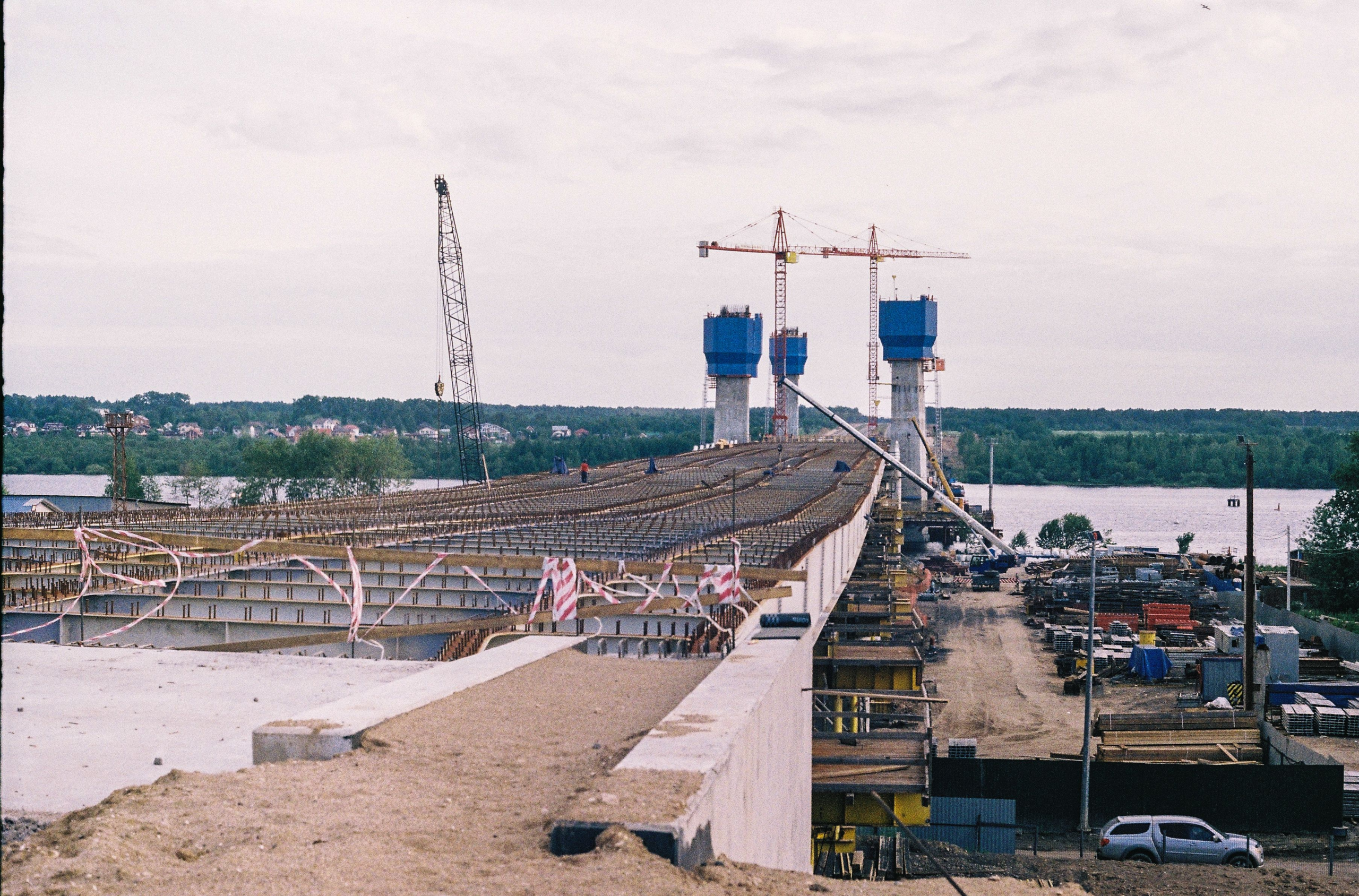
Both crossings were assembled and launched incrementally from construction areas beside the motorway rather than being lifted into place as fully completed spans. The west deck was installed in four movements and the east deck in three. For successive stages, steel sections were added behind the advancing structure before the connected deck was pushed towards its next support position.
Incremental launching shifts much of the steel assembly away from the carriageway. After sections have been joined on the prepared platform, hydraulic equipment moves the connected structure towards the next pier, with temporary supports and the launch sequence controlling the load at each stage. The method limits the periods when work directly above live traffic requires road restrictions, although it does not eliminate the need for exclusion zones or traffic management.
By the final movement, the deck was supported on concrete piers either side of the motorway, rather than depending on an advancing free end above the carriageways. This allowed engineers to complete the last 76 metres while M6 traffic continued underneath. Earlier pushes had required restrictions where the steelwork crossed slip roads and other parts of the motorway network.
The M42-to-M6 link road nevertheless closed to create a safety exclusion zone around the works. It reopened at 9pm on Saturday 24 October, 25 hours ahead of the planned reopening time, while the principal M6 carriageways remained in use. Separating the link-road work zone from live motorway lanes reduced disruption without removing the controls required around the bridge launch.
Weather also influenced construction activity during the weekend. High winds forced the postponement of parapet installation work on the separate Water Orton viaduct above the M42, even as the M6 South west deck launch proceeded. That package has been rescheduled for the weekend beginning 30 October, with northbound and southbound M42 closures planned through the early hours of 2 November.
Weathering steel forms a protective oxide surface under suitable exposure conditions, reducing the requirement for conventional coatings on the exposed bridge steelwork. During launching, successive pier reactions change as the deck advances. The construction sequence must therefore maintain acceptable load transfer between the steel structure, its temporary bearing arrangements and the concrete supports before the deck reaches its permanent position.
Raised embankments still have to be formed on both sides of the M6 South viaducts to connect the structures with the planned HS2 alignment. Track, railway systems and associated works must follow before the route becomes operational. The October completion concerns the load-bearing bridge decks across the motorway rather than a completed section of railway.
Balfour Beatty VINCI has worked around the established roads near Birmingham Airport, the NEC and Coleshill, where construction access and public traffic frequently intersect. National Highways coordination has included planned closures and changes to motorway links so that bridge installation and associated operations can be isolated from vehicles. The arrangements also depend on weather conditions and the ability to mobilise safely within the available working windows.
With both M6 South decks in position, the next work packages can progress the approaches, the connection between steelwork and embankments, and the railway formation. The completed launches remove the need for further large-scale movements of the two decks over the M6, although follow-on works must still be coordinated with the surrounding road network.
HS2 expects another complex motorway crossing in 2027 at the triple box near Coleshill, which is designed to carry four railway tracks over the M42. Its construction schedule is being coordinated with National Highways. At the M6 South site, the two 320-metre structures have reached structural completion, leaving the adjoining earthworks and railway installation to follow.