IN Brief:
- Network Rail published UK5 transparency notice 096761-2026 on 14 October for an intended direct award of up to £650m excluding VAT.
- The proposed scope includes track, signalling, electrification, structures and station works on the Marston Vale and Oxford–Bletchley routes.
- AtkinsRéalis, Laing O’Rourke and VolkerRail are named as intended suppliers, with 4 November the earliest proposed signature date.
Network Rail has set out an intention to place up to £650m of further East West Rail design and construction works directly with the existing alliance of AtkinsRéalis, Laing O’Rourke and VolkerRail. The plan appears in UK5 transparency notice 096761-2026, published on 14 October. It describes a proposed award rather than a completed contract or an instruction to begin every listed work package.
Network Rail gives an estimated maximum value of £650m excluding VAT, or £780m including VAT, for the combined proposed scope. The notice identifies 4 November 2026 as the earliest envisaged signature date and an indicative contract period from 9 November 2026 to 24 November 2036. Both the works and the proposed commercial arrangements remain subject to funding and any other required internal and external approvals.
The proposed package, titled East West Rail Further Critical Works, covers the Marston Vale Line between Bletchley and Stewartby, the Oxford Parkway–Bletchley railway and design or works interfaces at Milton Keynes Central. Its indicative scope includes rail systems, track capacity, re-signalling, electrification, bridges, underpasses, station alterations, earthworks, drainage and utility diversions. Network Rail intends to integrate those elements with Marston Vale Line Core Works already being delivered by the alliance.
Double tracking between Bletchley and Fenny Stratford, changes to Stewartby’s track layout, passing loops and level crossing closures are among the proposed works. Each would need to fit the railway’s signalling and operating constraints as well as its physical infrastructure. Additional track requires points, suitable formation and drainage, and clearance from nearby structures and station layouts. The transparency notice does not represent final design or construction approval for every element.
Re-signalling is among the more consequential interfaces because alterations to track layouts and level crossings have to be reflected in the control system before a revised railway can operate. Construction sequencing must therefore integrate civil engineering works, signalling design, testing, possession planning and timetable development. Network Rail identifies that coordination as a central reason for retaining the established alliance rather than procuring a separate contractor for the additional package.
Station works are envisaged at Winslow, Bletchley and Stewartby, alongside design services affecting Milton Keynes Central. Platforms, passenger circulation, accessibility arrangements and station systems would need to align with the revised railway operation. The notice excludes some final station arrangements in the Marston Vale signalling area and the option of a train maintenance depot on the Oxford–Bletchley corridor; those would require separate procurement if taken forward.
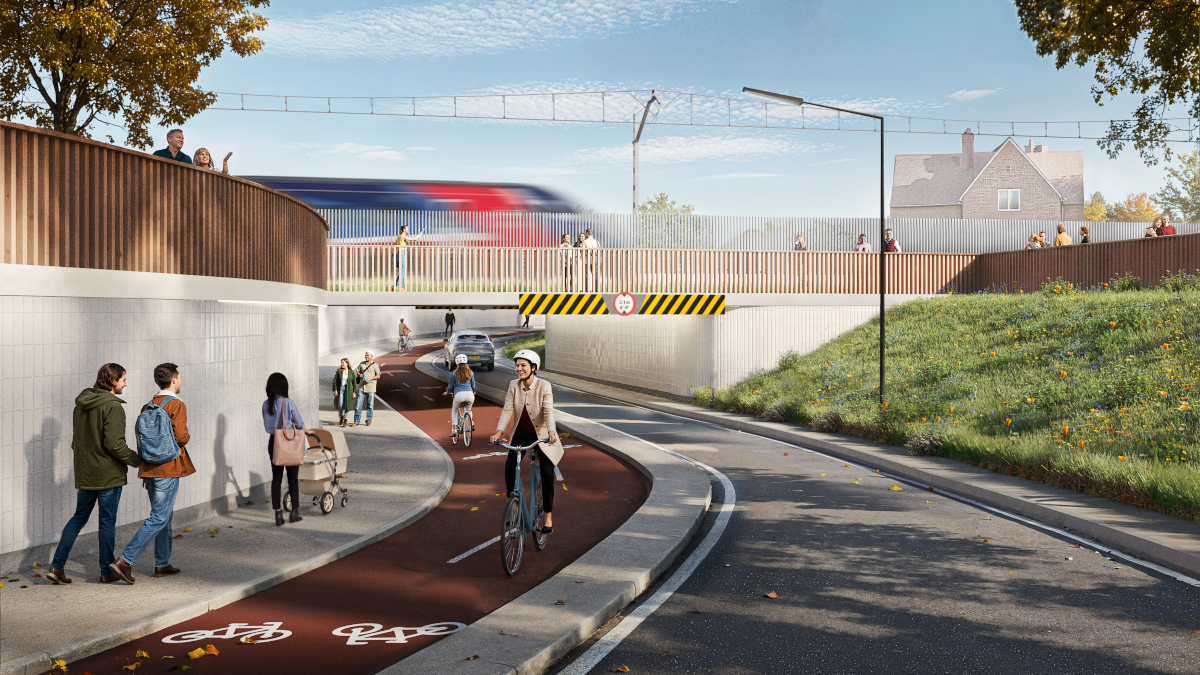
Proposed crossing closures, replacement access routes, bridges, underpasses, drainage measures and flood storage or environmental compensation areas form part of the civil engineering scope. Such enabling work could determine the sequence of railway possessions. Changes to embankments and drainage affect the formation carrying the tracks, while closing a level crossing can first require an alternative road or pedestrian connection.
Network Rail also envisages site clearance, construction compounds, utility diversions and work needed to discharge planning conditions. The notice refers to the East West Railway Company’s Development Consent Order requirements and existing Transport and Works Act obligations affecting Marston Vale works. The scope and timing of each consent requirement would be defined by the final design and location of the proposed works.
Network Rail justifies the proposed direct award by reference to the high level of technical integration with existing alliance work. Track possession windows, signalling architecture, rail systems testing and construction access are shared constraints, and the buyer argues that introducing another contractor could duplicate activities or create incompatible interfaces. This is Network Rail’s stated procurement justification, not evidence that a competitive exercise has already been completed or that the proposed suppliers have signed a new contract.
The capacity programme is intended to enable progressive operational improvements from the early 2030s and support anticipated demand associated with a major theme park expected to open in 2031. Those dates are planning assumptions within the procurement description. They do not amount to a guarantee of railway service patterns or a committed construction programme for each station and route section.
The UK5 transparency filing records an intended direct award, with the three proposed suppliers named but no executed contract established. The award status remains pending, and the £650m figure is an estimated maximum value for the combined scope, not expenditure already committed. It is not three separate £650m awards to the individual alliance partners.
Network Rail’s next material procurement milestone is a possible contract signature no earlier than 4 November 2026, provided funding and the necessary approvals permit the proposal to proceed. The indicative ten-year term allows for phased development and work on several connected railway sections, but neither the term nor the proposed signature date confirms when each individual civil engineering or rail systems activity will start.