IN Brief:
- Public realm construction has begun on Scarborough Street as part of Hartlepool's £18.5m Screen Industries Production Village programme.
- The works include granite paving, wider footpaths, Exeter Street junction changes and heritage-style lighting.
- Street improvements are scheduled for completion before Christmas, with separate restoration phases planned for November 2026 and January 2027.
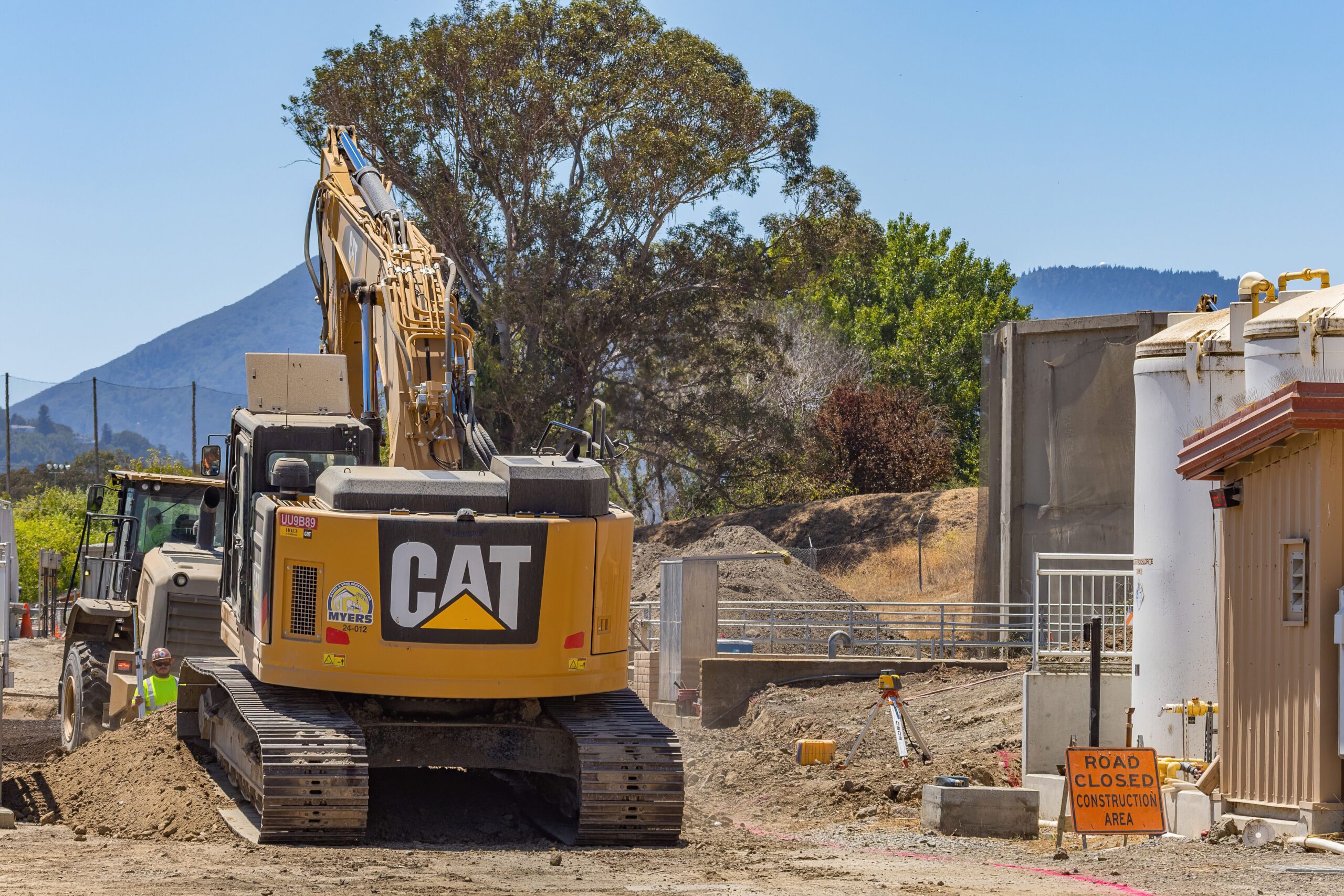
Hartlepool Borough Council has begun public realm construction on Scarborough Street, introducing granite paving, wider footways, junction changes and new lighting as part of the town’s £18.5m Screen Industries Production Village. The street works are expected to be completed before Christmas, with separate restoration projects involving historic buildings scheduled to begin over the following months. The current phase is intended to improve the connections between the planned production facilities and the surrounding town centre.
Scarborough Street will be resurfaced using granite paving selected to match the material palette planned for the wider development. The scheme will also increase the width of pedestrian routes, modify the junction with Exeter Street and introduce heritage-style lighting columns. The council says the improvements will complement work already undertaken by local businesses to upgrade their premises, while creating a more consistent public realm around the production village.
The junction alterations are intended to allow temporary road closures when businesses organise outdoor events, while maintaining arrangements for deliveries and business parking. This is a proposed operating feature of the completed street rather than a permanent closure to traffic. The council has not published the detailed junction geometry, the mechanisms that will control access during events or the precise dimensions of the altered pedestrian areas.
Granite paving will provide a consistent surface treatment within an area containing existing commercial properties and planned production facilities. Its performance will depend on the relationship between the paving units, their supporting layers and the loads imposed by the intended traffic. Although the council has confirmed the material choice, it has not disclosed the paving thickness, laying specification or whether the finished surface will incorporate different construction arrangements for pedestrian and vehicle movements.
The widening of footpaths will alter the space available to pedestrians along the street, while the junction changes are intended to accommodate occasional events and continuing business access. Combining these requirements within an existing street places demands on the arrangement of kerbs, crossing movements and vehicle circulation. The final engineering layout has not been disclosed in the October announcement, and the intended improvement in pedestrian facilities should not be confused with a measured increase in footfall.
New heritage-style lighting columns will form another part of the street improvements. The council says they will improve lighting levels while contributing to the character of the area. Their appearance has been identified, but the announcement does not specify the luminaires, electrical controls or lighting performance criteria. No reduction in energy consumption or quantified lighting improvement has been reported.
Work is taking place in an existing commercial street where access to businesses will need to be managed alongside construction activities. Replacing paving and altering a junction require physical access to the affected parts of the highway, although the contractor’s construction sequence and temporary traffic arrangements have not been published. The council has confirmed that the completed scheme will accommodate deliveries and business parking during temporary event closures, but that commitment does not establish the access arrangements for every stage of the current works.
The Scarborough Street programme is scheduled for completion before Christmas 2026. Resurfacing outside Hartlepool railway station is expected to follow, extending public realm improvements towards another important connection with the production village. The council has not announced a separate contract value or firm start date for the station-area resurfacing, which remains a future activity rather than part of the construction already completed.
The street improvements form one element of a wider project involving historic building restoration, new commercial accommodation and supporting infrastructure. Hartlepool’s Screen Industries Production Village is intended to build on the existing Northern Studios and the BIS creative business centre, providing space for companies working in film, television and related production services. The council identifies 2,750 sq m of flexible commercial and workshop accommodation within the wider development programme.
Existing properties form a substantial part of that programme. Early restoration work on the former Shades Hotel in Church Street is scheduled to begin in November, with the building intended to provide a gateway to the production village. A larger restoration phase involving the adjoining properties at 10–14 Church Street is planned for January 2027. Those dates relate to future building works and must be distinguished from the Scarborough Street activity already underway.
Restoration of the former Vaults pub and properties at 21–25 Whitby Street is also due to begin in January 2027. These buildings are intended to provide accommodation supporting the production village, although the council has not published the individual construction values, detailed repair specifications or contractor appointments for each property in its latest announcement. Conservation of historic buildings and adaptation for new uses will have different delivery requirements from the current highway and public realm works.
The wider programme includes a combination of spaces for production support, offices, workshops and related activities. Bringing those uses into existing town centre buildings will require the retained structures and new accommodation to meet the requirements of their intended functions. The project’s published information describes the proposed uses, but does not establish the final building services, structural interventions or completed operating capacity of individual properties.
Hartlepool Borough Council is leading the programme in partnership with the Northern School of Art, Tees Valley Combined Authority and North East Screen. The council identifies £16.5m of government support through the Local Regeneration Fund within the £18.5m programme. This funding relates to the wider development and should not be interpreted as the value of the Scarborough Street construction contract, which has not been separately disclosed.
Existing investment in the town’s screen production facilities provides the basis for the additional buildings and infrastructure. The production village is intended to support businesses requiring space for activities such as post-production, administration, design and associated workshop functions. The council expects the project to support employment and economic activity, but those remain forecast benefits dependent on the facilities being completed and occupied.
Councillor Rob Darby, chair of Hartlepool Borough Council’s Housing, Growth and Communities Committee, welcomed the start of the Scarborough Street improvements and linked the works to the regeneration of surrounding commercial properties. The council expects the completed public realm to support existing businesses as well as the future production village. No measured economic or pedestrian activity results have been attributed to the works at this stage.
The different construction packages will progress on separate timetables. Scarborough Street is already under construction, the initial Shades Hotel restoration is planned for November, and further building works are scheduled for January. The council currently expects the Screen Industries Production Village, incorporating improvements and expansion of the existing Northern Studios, to open in January 2028.
Completion of the paving, junction and lighting improvements before Christmas will provide the next defined construction milestone. Subsequent progress will depend on the building restoration packages and associated infrastructure being delivered, with the station-area resurfacing providing another planned phase of public realm work. The programme remains an active development, rather than a completed regeneration scheme.