IN Brief:
- Croatia plans around €6bn of railway infrastructure investment through 2035 across strategic corridors and regional routes.
- HŽ Infrastruktura manages 2,617km of railway, while current reporting identifies speed restrictions across 237km.
- Live projects include second-track construction, electrification, track renewal, signalling, station works, bridges, and level-crossing improvements.
HŽ Infrastruktura plans around €6bn of railway infrastructure investment through 2035, creating a long programme of track, civil engineering, electrification, signalling, and station work across Croatia’s strategic and regional routes.
The programme comes against a substantial existing maintenance and renewal requirement. HŽ Infrastruktura manages 2,617km of railway, together with 550 stations and stops, 1,429 level crossings, 113 tunnels, and 552 bridges.
Current reporting based on HŽ Infrastruktura and transport ministry data identifies speed restrictions across 237km of the network. Around 166km is out of service and roughly 400km is double track, leaving a large programme of both asset renewal and capacity improvement.
Speed restrictions are attributed mainly to infrastructure condition and to reconstruction, modernisation, and maintenance works. Their extent changes as individual sections move into and out of construction, meaning the restriction figure is both a condition measure and an indicator of the amount of active intervention taking place across the network.
The €6bn investment horizon is not a single funding award or construction contract. It is a portfolio extending across renewals, second-track construction, electrification, signalling, telecommunications, stations, bridges, crossings, drainage, and related railway structures.
HŽ Infrastruktura has described the period to 2035 as a major national investment cycle. An earlier programme statement put planned railway infrastructure expenditure at approximately €6.2bn, while its current project reporting continues to cite around €6bn through 2035.
Some of the workload is already well into delivery. Reconstruction and second-track construction on major corridor sections are progressing alongside regional renewals, creating a pipeline distributed across different stages rather than a future programme waiting to start.
The Hrvatski Leskovac–Karlovac corridor is among the larger packages. The project involves reconstruction of the existing railway and construction of an additional track over approximately 44km, together with electrification, signalling and telecommunications replacement, and station works.
That type of package demonstrates why railway modernisation involves substantially more than laying additional track. Existing alignments, bridges, drainage, platforms, signalling systems, overhead power equipment, telecommunications, crossings, and station buildings all have to be coordinated within a route that remains part of an operating transport network.
A separate renewal programme in northern Croatia covers the Čakovec–Varaždin–Koprivnica–Kloštar corridor. HŽ Infrastruktura has put the value at around €190m across roughly 90km of railway, with completion planned by the end of 2028.
Works there include renewal of upper and lower track formation, replacement of station switches, construction of passenger platforms, intervention at 62 road and pedestrian crossings, repairs to bridges and culverts, lighting upgrades, and renewal of signalling and traffic-management equipment.
The route illustrates the civil engineering depth within a national rail investment figure. Track renewals release work for earthworks, drainage, structures, and platforms, while operational railway systems add specialist electrical, signalling, telecommunications, and commissioning packages.
Working on existing railway also changes construction productivity. Access is governed by possessions and temporary traffic arrangements, which can restrict when contractors can occupy the line and how much work can be completed in a shift.
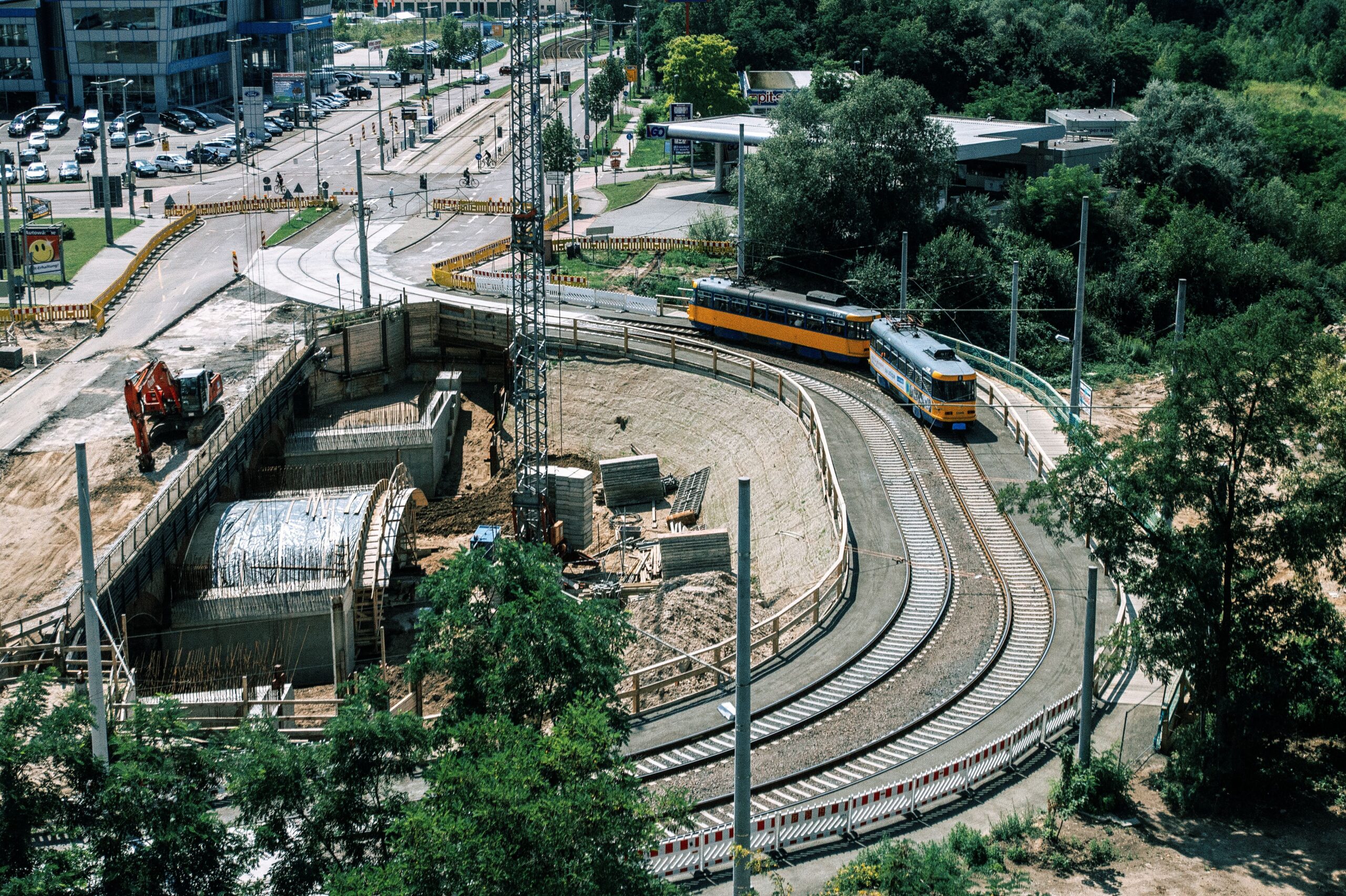
Current HŽ notices show closures and special traffic arrangements continuing across several sections of the network as work progresses. These include repeated possessions on routes such as Križevci–Koprivnica and other active renewal areas.
That operating environment creates different programme risks from greenfield infrastructure. Earthworks and structures can be physically ready while signalling or power systems remain incomplete, while delayed access to the railway can hold back several disciplines that would otherwise progress independently.
Croatia’s relatively limited double-track network creates another strand of the programme. Additional track on strategic routes can increase capacity and resilience, but construction alongside an existing operational line requires temporary layouts, staged commissioning, and eventual integration of new signalling and electrification systems.
Level crossings provide a separate national workload. HŽ Infrastruktura maintains 1,429 crossings, meaning modernisation requires numerous smaller safety projects alongside the large corridor contracts.
Funding sources vary across the programme. Strategic corridor projects draw heavily on European support, while other renewal programmes use national resources and international financing. HŽ Infrastruktura also has World Bank and European Bank for Reconstruction and Development lending associated with railway improvement and modernisation.
The spread of funding allows work to progress outside the largest European corridor schemes, although it also creates a procurement pipeline requiring design, supervision, contractor capacity, and access planning across many simultaneous projects.
The 237km of speed restrictions demonstrates why the construction programme cannot be measured solely through kilometres of new second track. Renewal of existing assets remains equally important if nominal network capacity is to translate into reliable operating speeds.
Individual projects will also reach site at different rates. Planning, design, land, permits, procurement, funding, and possessions all influence the transition from an investment programme into physical railway work.
The €6bn headline therefore represents a long construction market rather than a single burst of spending. Major corridor upgrades, regional renewals, bridges, signalling, crossings, and station works will move through procurement and delivery at different points between now and 2035.
For Croatia, the construction challenge is one of sequencing: renewing an ageing operating railway while adding the tracks and systems required for higher-capacity routes. For contractors and specialist suppliers, that creates a sustained mix of civil and railway systems work whose value will depend on how consistently individual projects move from investment plans into executable packages.