IN Brief:
- Network Rail will relocate Sportsfield level crossing by 40 metres and install Miniature Stop Lights and CCTV.
- Construction starts in the week beginning 5 October following an emergency closure prompted by repeated dangerous misuse.
- A new fenced pedestrian route will retain the existing access points, with reopening targeted before the end of 2026.
Network Rail will begin a six-figure reconstruction and safety upgrade at Sportsfield level crossing near Featherstone in October, replacing the current arrangement with Miniature Stop Lights, CCTV, and a relocated pedestrian crossing.
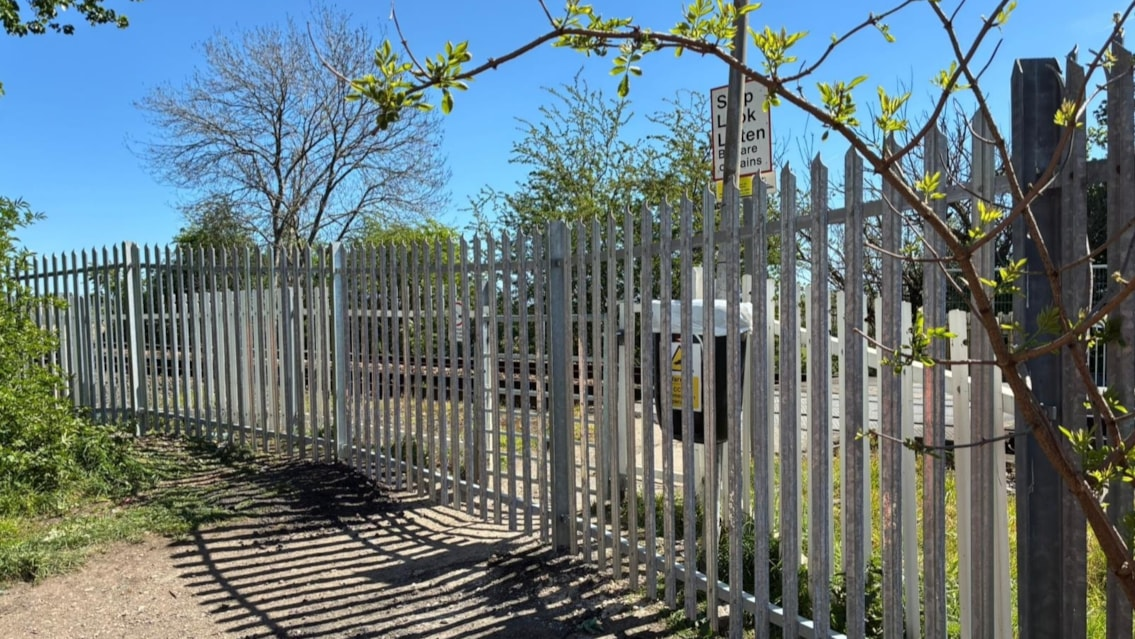
Work is due to start in the week beginning 5 October after the crossing was temporarily closed under emergency powers on 23 April. Network Rail acted following four near misses and a series of other incidents involving dangerous misuse of the railway.
The permanent scheme will move the crossing 40 metres east of its existing position for signalling and operational reasons. The current access points will remain, with pedestrians redirected along a new fenced route to the relocated crossing.
Miniature Stop Lights will provide red and green indications telling users whether it is safe to cross. CCTV will also be installed, giving Network Rail a clearer view of behaviour at the site after it returns to public use.
The programme is modest in value compared with major railway enhancement schemes, but its location beside an operational line means several disciplines have to be coordinated within a relatively small work area.
The crossing cannot simply be rebuilt in its existing position. Signalling requirements have determined the new location, while the pedestrian route has to maintain local connectivity and bring users towards the revised crossing in a controlled way.
Network Rail installed palisade fencing when the emergency closure was imposed and introduced regular patrols with British Transport Police to check that unsafe behaviour had not moved to neighbouring crossings.
Wakefield Council has since extended the temporary closure to cover the construction period. That allows the permanent upgrade to be delivered without briefly reopening the previous arrangement and then closing it again for the new works.
The project has consequently moved from an emergency safety intervention into a defined infrastructure package. Reopening now depends on physical changes to the crossing, warning system, route, and monitoring equipment rather than additional patrols around the old layout.
Relocating the crossing creates more work than installing new signals in place. The pedestrian approach has to be redirected, new fencing installed, the crossing integrated with the railway’s operational requirements, and access to the former position controlled so users follow the intended route.
The Miniature Stop Light system is designed for pedestrian and user-worked crossings where a clear visual indication is required before someone enters the railway. Its introduction at Sportsfield replaces a situation in which repeated misuse had made the existing arrangement unacceptable to the infrastructure owner.
CCTV serves a separate function. Warning lights tell users whether it is safe to cross, while monitoring equipment allows the operator to understand how the site is being used and identify repeated misuse after the upgrade enters service.
The engineering measures are being supported by a wider safety programme in the surrounding community. Since the April closure, Network Rail has delivered rail safety workshops to children and young people at 13 schools in the area.
More than 1,000 people were also engaged during a Vision Zero event in Castleford in August, while further safety activity has taken place at the National Coal Mining Museum. The programme is intended to reduce unsafe behaviour beyond the physical boundaries of the crossing.
Education cannot replace engineering controls where a site has experienced repeated near misses. The permanent scheme instead combines both approaches, altering the asset while attempting to change how local users behave around the railway.
The crossing remains an established pedestrian connection, making permanent closure more disruptive for residents. Wakefield Council has supported the relocation and the addition of safety and accessibility improvements while emphasising the need to restore the route.
Keeping the existing general access points should limit the amount of change for pedestrians approaching from either side. The new fencing will instead guide users towards the relocated crossing rather than requiring an entirely different local route.
The construction timetable is relatively concentrated. Work begins in early October and has to progress through the crossing relocation, warning-light installation, CCTV, fencing, route alterations, testing, and commissioning before public access can resume.
Network Rail’s current target is to complete the upgrade and reopen the crossing before the end of the year. Meeting that date will depend on the civil and signalling elements reaching completion together, because the public route cannot return to service with only part of the safety system operational.
The finished asset will therefore operate differently from the crossing that closed in April. Users will approach a different physical location, follow a controlled route, and receive an active warning indication before crossing the railway.
Sportsfield is a small railway project in capital terms, but repeated near misses have turned it into a technically defined safety intervention. Its success will be measured less by the scale of construction than by whether the crossing can remain open without recreating the behaviour that forced its emergency closure.