IN Brief:
- Bell Plant has ordered 21 JCB X Series tracked excavators through dealer Holt JCB.
- The 140X and 220X machines join a wider fleet containing approximately 100 JCB units.
- The investment supports group housebuilding, civil engineering, groundworks, and external hire activity.
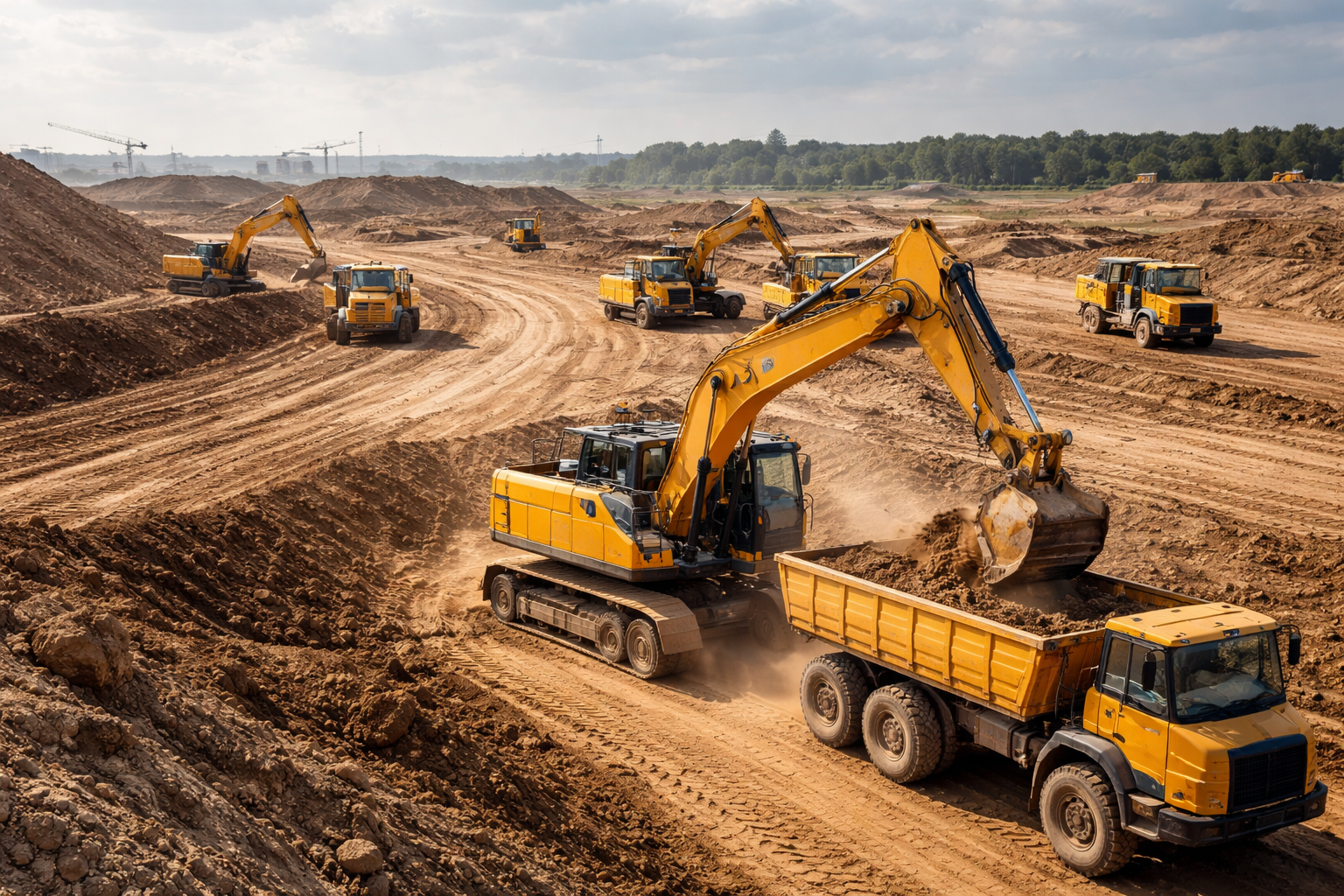
Bell Plant has taken delivery of 21 JCB X Series tracked excavators for deployment across housebuilding, civil engineering, groundworks, and plant hire operations.
The order comprises 140X and 220X models supplied by Holt JCB. They join a wider fleet of approximately 100 JCB machines operated across businesses within the KW Bell Group.
Bell Plant supports group companies including Bell Contracting and Bell Homes, while also providing machinery to external customers. The new excavators will work across residential sites, infrastructure, bulk earthmoving, drainage, foundations, and general civil engineering.
The purchase extends a relationship between Bell and JCB lasting more than 40 years. The machines were handed over to Bell Plant managing director Peter Bell, whose family business is now operating through its fourth generation.
JCB’s 140X occupies the middle of the crawler excavator range and is intended to balance transportability, digging performance, fuel use, and lifting capability. The larger 220X provides greater operating weight, reach, power, and stability for heavier excavation and infrastructure work.
Operating related models across two weight classes can simplify training, controls, maintenance planning, diagnostics, parts stocking, and operator movement between projects. It also allows machines to be allocated according to excavation depth, lifting requirement, working space, transport access, ground condition, and attachment demand.
Fleet investment is increasingly assessed through whole life cost rather than purchase price alone. Fuel consumption, service support, residual value, finance, downtime, telematics, operator acceptance, wear, and attachment compatibility determine the cost of keeping an excavator productive across several years.
Bell Plant said its continued use of JCB reflects product reliability, dealer support, and the manufacturer’s UK production base. The company expects the X Series machines to provide the performance and efficiency required across the group’s construction workload.
Fleet management moves towards common platforms
JCB is continuing to broaden the X Series, including plans for its largest crawler excavator in the range, aimed at heavier quarrying, earthmoving, and infrastructure applications.
Contractors and hirers increasingly select machine platforms rather than treating each purchase separately. Standard controls, quick couplers, attachments, telematics, diagnostics, and service arrangements make it easier to deploy operators and equipment across several sites.
Attachments have become central to utilisation because excavators able to work with buckets, breakers, grabs, compactors, pulverisers, and specialist tools can replace several single purpose machines where hydraulic capacity and coupler arrangements are correctly matched.
Operator availability also influences purchasing decisions. Construction continues to face shortages of experienced plant personnel, increasing the value of familiar controls, strong visibility, low vibration, intuitive displays, and cab environments capable of supporting long working periods.
Modern machines generate detailed information on operating hours, fuel use, idle time, location, fault codes, service intervals, and utilisation. Fleet managers can use that information to identify underused assets, improve allocation, and intervene before developing faults produce extended downtime.
Connected machinery produces limited benefit when reports remain separate from project planning and cost control. Telematics data must be linked with programme, fuel purchasing, operator performance, maintenance, and internal charging if it is to influence commercial decisions.
Fuel remains one of the largest variable costs for tracked excavators. Efficient hydraulic systems and reduced idling can lower consumption, although results depend on operator technique, ground condition, attachment choice, machine sizing, and the intensity of the work.
An oversized excavator can consume unnecessary fuel and create access or transport problems, while an undersized machine may take longer or operate continuously at high load. Bell’s combination of 140X and 220X units provides a broader range for matching equipment to project requirements.
The continued purchase of diesel powered excavators also reflects the present limitations of zero emission alternatives within heavier duty cycles. Battery equipment is expanding rapidly in compact plant, but energy storage, charging, purchase cost, and long shifts remain constraints at larger operating weights.
Emissions can still be reduced through careful allocation, lower idling, efficient transport, maintenance, appropriate attachments, and replacement of older machinery. Fleet renewal can improve performance where newer engines and hydraulic systems displace less efficient equipment.
The 21 machine order is large enough to increase operating capacity across several projects rather than replace one or two ageing units. Its commercial return will depend on utilisation, uptime, fuel performance, service support, and the secured workload available to keep the excavators active.
Bell’s housing and civil engineering businesses provide an internal base of demand, while external hire offers another route to utilisation. That combination allows the company to move machines between its own contracts and the wider market as activity changes across regions and sectors.