IN Brief:
- Castleforge and Galaxy Data Centers have secured planning consent for a 15MW data centre at Redhill.
- The project will include four data halls and an office block on the Foxboro Business Park site.
- Grid capacity, heat reuse, cooling, and specialist M&E delivery are shaping data centre construction.
Castleforge and Galaxy Data Centers have secured planning consent for a new 15MW data centre at the Redhill campus in Surrey, advancing a major expansion of digital infrastructure capacity outside London.
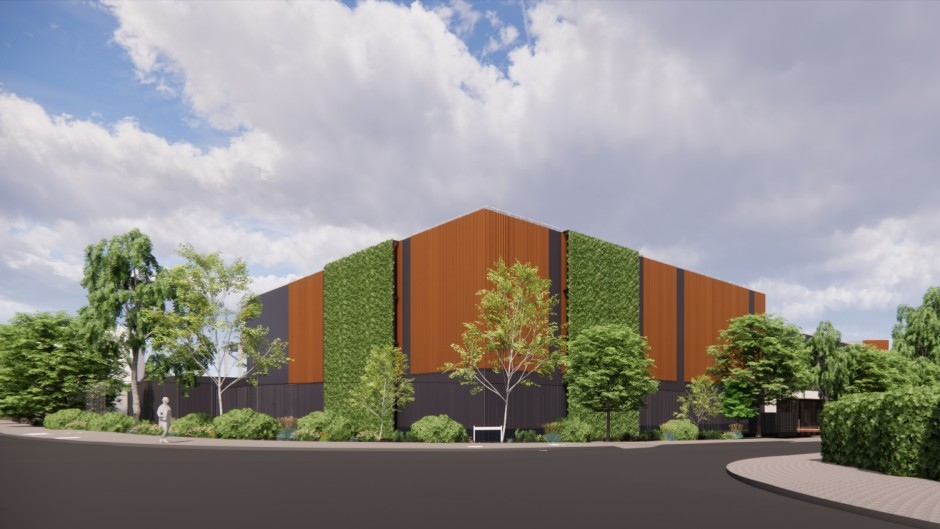
The approved project sits on the existing 3.1-hectare Foxboro Business Park estate and will comprise a two-storey data centre with four data halls and an accompanying office block. The partners plan to invest a further £200m in the site, taking the gross project value to around £500m.
The Redhill campus currently spans 11,800 square metres across three buildings. The latest consent extends the site’s role in a London data centre market facing rising demand from artificial intelligence, cloud computing, hybrid workloads, enterprise requirements, and edge applications.
The project team includes Red Engineering for MEP and sustainability, Gardiner & Theobald for quantity surveying and project management, TTSP as architect, Abstruct Consulting for structural engineering, and Rapleys for planning.
The scheme is expected to support local waste heat recovery, placing energy efficiency and heat reuse within the design rather than leaving those questions for the operational phase. Data centre developers are under growing pressure to show how power consumption, cooling, and heat output can be managed alongside local infrastructure constraints.
The approval reinforces the spread of data centre development beyond central London and into locations with access to power, fibre connectivity, land, and occupier demand. Sites such as Redhill offer proximity to the capital’s digital economy while providing larger development footprints than many urban locations.
IN Site has previously covered the way data centre construction is pulling power planning further up the delivery chain, including Dawsongroup’s addition of a JCB hydrogen generator for data-centre standby duty. Capacity is shaped by more than the building envelope. Power availability, resilience, cooling, backup generation, grid connections, commissioning, and heat strategy all influence whether a facility can be delivered and operated as planned.
Data centres are among the more technically demanding building sectors in the UK pipeline. Main contractors, M&E specialists, structural engineers, power-system suppliers, cooling contractors, commissioning teams, and fire-safety specialists must work within tight tolerances. Programme certainty depends on coordination between shell construction, equipment installation, testing, energisation, and operator handover.
Waste heat recovery is becoming a larger planning consideration. Data centres produce significant low-grade heat, and planning authorities are placing greater emphasis on whether that heat can be captured for local use. The economics depend on nearby demand, pipe routes, building density, and the maturity of heat-network infrastructure, but developers are increasingly expected to demonstrate a credible position before consent is secured.
Grid access remains one of the hardest constraints. Developers may have capital, occupier demand, and available sites, but connection capacity can dictate phasing and delivery speed. That is creating additional work for contractors involved in substations, cabling, temporary power, enabling infrastructure, and network reinforcement.
The Redhill project also shows how business parks and industrial estates are being reappraised. Assets originally planned around light industrial, office, or distribution uses are being assessed for mission-critical infrastructure where power, connectivity, planning policy, and site configuration align.
For the construction sector, the scheme adds another technically intensive building project to a market where conventional commercial demand remains uneven. Data centre delivery requires M&E strength, commissioning control, sustainability evidence, and early engagement with utilities. Those capabilities are becoming central to the next phase of commercial building work as AI and cloud demand continue to reshape development priorities.