IN Brief:
- The Port of Dover has appointed contractors to major and minor works frameworks covering civils, marine, and infrastructure projects.
- The frameworks support long-term investment in ferry, freight, cargo, utilities, highways, and logistics assets.
- The appointments give the port access to delivery capacity across both major schemes and smaller operational works.
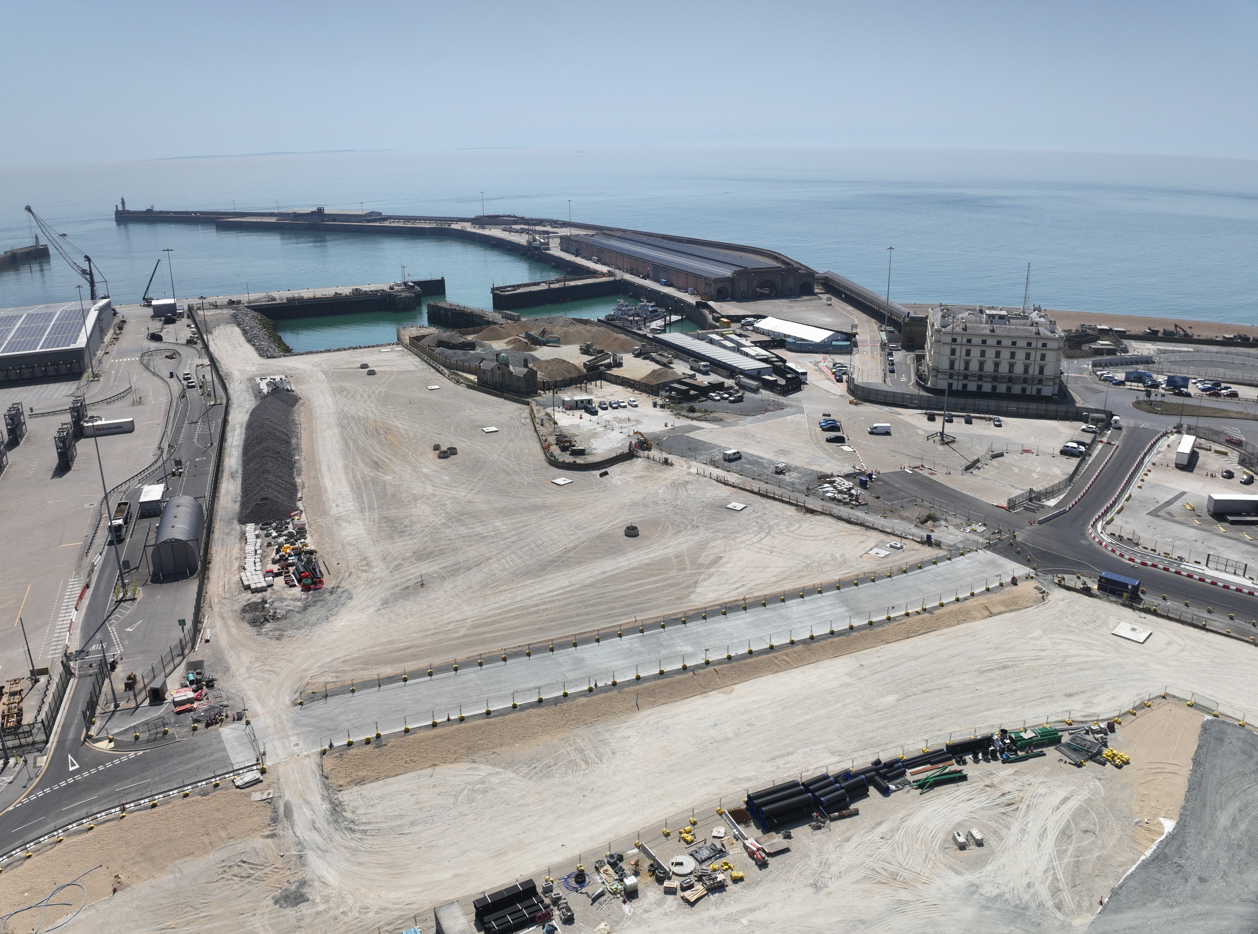
The Port of Dover has appointed a new contractor line-up to support a rolling programme of civil engineering, marine, and infrastructure works across its operating estate.
The framework appointments cover utilities, berth upgrades, highways, structures, and building works. The port has selected contractors across two procurement routes, giving it access to suppliers for larger project packages and smaller works as schemes progress through design, enabling, and delivery.
The major projects framework will run for six years and cover schemes valued above £3m. A separate four-year minor works framework will cover projects below that threshold. FM Conway, Jackson Civil Engineering, Knights Brown, Mitie, and UK Power Networks Services are among the contractors appointed to both routes.
Other named suppliers include Associated Asphalt Contracting, Blu-3, Concrete Repairs, Costain, CPE Projects, McLaughlin & Harvey, M Group Transport, REDEC Refurbishment, and Walker Construction. The structure gives Dover a wider delivery pool as the port advances investment linked to ferry operations, freight movement, cargo handling, utilities resilience, and estate modernisation.
The appointments sit behind the Port of Dover 2050 masterplan, which sets out plans to create a more efficient, sustainable, and technology-enabled gateway. Planned works across the wider programme include upgraded ferry berths, expanded cargo handling facilities, improvements to roads and utilities, cruise terminal enhancements, and new logistics development land.
The scope goes beyond marine engineering. Berth infrastructure, highways, distribution land, operational buildings, utilities, grid connections, security systems, and energy works all form part of the same asset base. Delivery will need to be sequenced around live operations, customs activity, passenger flows, freight traffic, and security requirements.
Ports are among the more complex infrastructure environments for construction teams. Work is often constrained by vessel movements, tidal windows, safety restrictions, border controls, and limited working space. Programmes must protect daily operations while upgrading assets that cannot be taken offline for long periods.
The framework model gives Dover a route to plan that work across several years rather than tender each package in isolation. IN Site recently reported on Pagabo’s £4.15bn infrastructure framework, another example of clients seeking repeatable procurement routes for civils, demolition, enabling works, and infrastructure delivery.
Electrification will add further complexity to port investment. Shore power, ferry electrification, substations, cabling routes, resilience systems, and grid connections all require early coordination between marine, civils, M&E, and utilities teams. Those requirements are becoming more prominent as ferry operators and port authorities work through lower-emission operating models.
Logistics capacity is also reshaping port estates. Freight movement, customs processing, cargo handling, and storage demand are pushing ports to treat land, buildings, roads, and utilities as an integrated system. Investment decisions increasingly depend on how efficiently goods can move from ship to road, rail, warehouse, or processing facility.
The Dover framework gives the harbour authority flexibility between major investment packages and smaller operational interventions. In a market still affected by inflation, skills pressure, and procurement delays, securing contractors early gives the port a stronger base for programme control as its long-term plan moves from strategy into delivery.