IN Brief:
- A hydrogen showcase at the Port of Tilbury demonstrated production, storage, dispensing, refuelling, and off-grid power applications.
- The hub is linked to activity at the Port of Tilbury and National Highways’ Lower Thames Crossing programme.
- The project reflects growing interest in hydrogen where grid connections or battery charging capacity remain constrained.
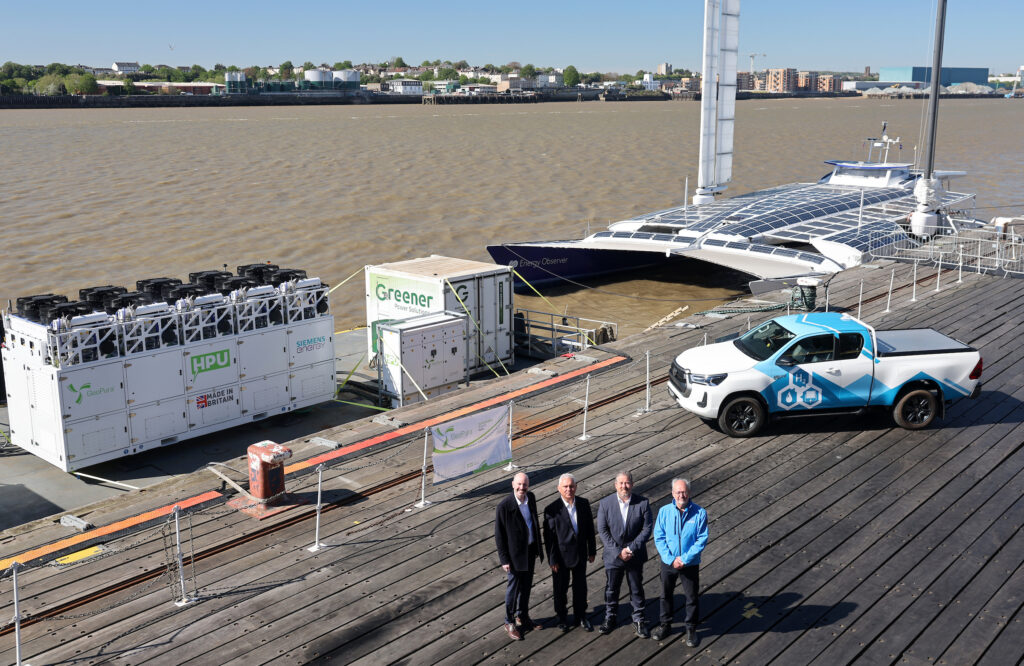
GeoPura, the Port of Tilbury, Toyota, JCB, and a group of technology and supply-chain partners have demonstrated hydrogen power systems at the London International Cruise Terminal in Tilbury.
The showcase brought together hydrogen production, storage, dispensing, refuelling, and off-grid power systems, with equipment demonstrated for construction, port, and heavy industrial applications. The event also marked the arrival of Energy Observer, a self-sufficient hydrogen-powered vessel and floating renewable energy laboratory.
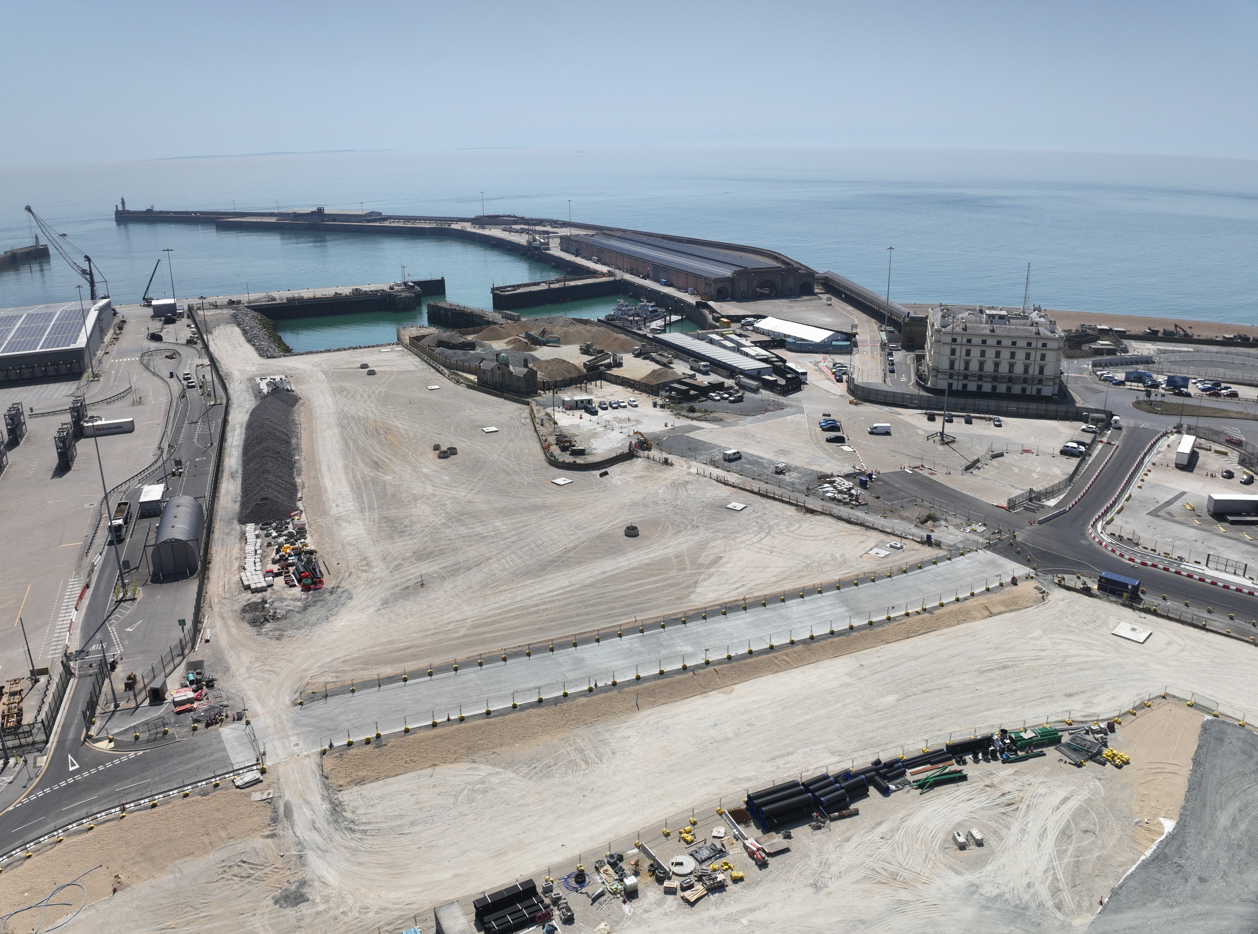
The demonstration follows an agreement between GeoPura and Forth Ports, owner and operator of the Port of Tilbury, to develop an on-site green hydrogen production facility. The hub is intended to support port and maritime equipment while also contributing to low-carbon delivery around National Highways’ Lower Thames Crossing.
Attendees were shown hydrogen generation and refuelling systems, hydrogen-powered vehicles, off-grid power units, and construction equipment applications. Partners involved in the event included the Lower Thames Crossing, Briggs Equipment UK, ULEMCO, TCP, Fuel Cell Systems, Intelligent Energy, and HYKIT.
The Port of Tilbury project is positioned as an early commercial-scale use of hydrogen for heavy industry at a UK port. GeoPura has also agreed to supply green hydrogen to the Lower Thames Crossing, in what has been described as the largest volume of hydrogen contracted for a UK construction project.
Major sites often need substantial temporary energy for welfare, lighting, lifting, plant, charging, pumping, and logistics. Grid connections can be slow, expensive, or unavailable at the required capacity, especially on large infrastructure programmes or remote compounds.
Hydrogen power units and refuelling systems offer one route through that constraint. They do not replace grid electrification where capacity is available, but they can reduce diesel generator use in locations where battery-electric plant and charging infrastructure are not yet viable at scale.
Infrastructure projects are under pressure to cut emissions from temporary works, site logistics, and non-road mobile machinery while maintaining reliable power for programme-critical operations. Hydrogen can support high-utilisation applications that are difficult to electrify quickly, particularly where energy demand is uneven or equipment has to move between sites.
Commercial and logistical barriers remain. Hydrogen supply, storage, transport, permitting, operator training, and safety management all need to mature before the model becomes routine. Contractors will also need clear cost comparisons against diesel, HVO, grid connections, and battery systems.
Tilbury moves hydrogen from demonstration into a delivery setting. Ports, major civils projects, and temporary power providers are now testing how hydrogen infrastructure works around live logistics, plant demand, and grid limitations. The next phase will depend on whether it can deliver predictable, affordable, and safe performance across repeatable construction use cases.