IN Brief:
- Fluke has launched the SmartTrace 2082 Series of underground utility locators.
- The system can trace cables and pipes to depths of up to 6m and identify ground, sheath, and coating faults.
- Bluetooth connectivity links the locator with PointMan for smartphone mapping and documentation.
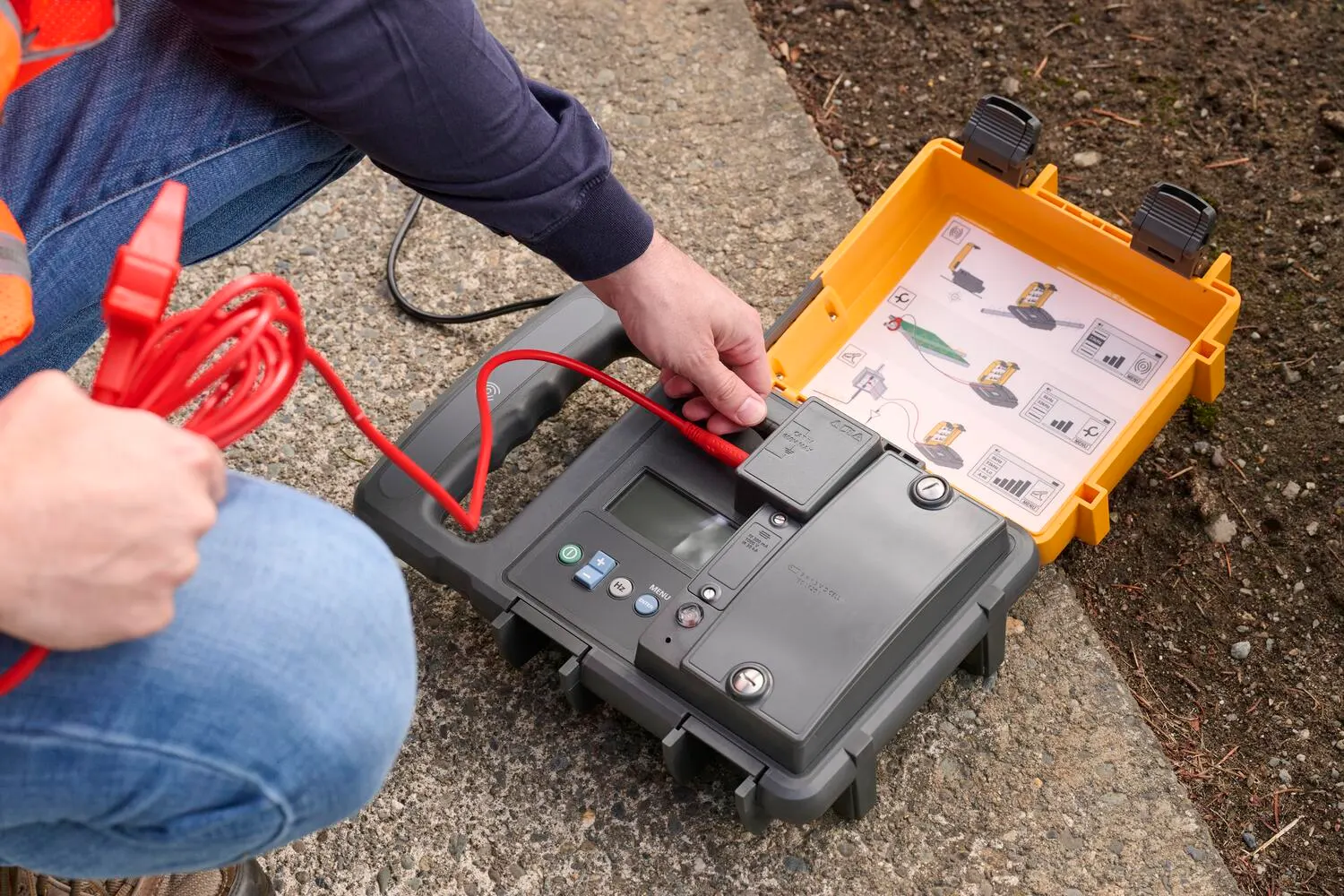
Fluke Corporation has launched the SmartTrace 2082 Series of Underground Locators, a connected utility location system designed to help site teams identify buried services before excavation.
The locator provides information on the location, depth, and path of underground cables and pipes, helping workers identify unknown assets and reduce the risk of strikes during digging. The system is designed for tracing and fault detection, including ground faults, sheath faults, and coating defects on pipelines or cables in direct contact with the ground.
SmartTrace works by injecting signals into buried assets at depths of up to 6m. The system then detects the location and path of metallic conductors, including areas where conductors touch earth ground faults or where leakage currents occur through corrosion, damaged joints, or other defects.
The new series can connect via Bluetooth to Fluke’s PointMan app, allowing utility locations to be mapped and documented on a smartphone. The geolocation function supports real-time tracking and creates reference points for future projects or ongoing works.
The SmartTrace 2082 Core model includes a CAT IV 600V-rated transmitter for work around energised systems, depth measurement up to 20ft, multiple modes for energised and de-energised lines, a grayscale display designed for use in sunlight or rain, and a rugged IP54-rated housing.
The Premium Kit adds field accessories including mapping flags, a spray canister stick, an A-Frame, and a signal clamp. The A-Frame can be used with the transmitter to detect sheath or ground faults, while the clamp supports tracing where direct electrical contact is not possible.
Utility detection has become a central control in construction, civils, housing, and infrastructure works. Underground strikes remain a persistent safety and programme risk, particularly on brownfield sites, highways, utilities upgrades, and urban projects where historic records may be incomplete or inconsistent.
Connected locating tools are also changing site documentation. Traditional utility location often ends with a marked surface line, a sketch, or a project-specific record that may not transfer cleanly into future works. Linking detection with geolocation and mobile documentation creates a more useful asset record, especially where multiple contractors, survey teams, and project phases interact on the same site.
The equipment does not remove the need for competent operators or safe-dig procedures. Locating technology depends on the method used, the site records available, and the controls around excavation. Combining tracing, fault detection, and digital mapping can reduce ambiguity before ground is broken.
A utility strike can stop work, affect neighbouring assets, create emergency repair costs, and trigger investigations that outlast the original excavation. SmartTrace enters a market where asset certainty is becoming central to both safety and productivity as more infrastructure is installed beneath already crowded streets and sites.