IN Brief:
- Landmark Windows has joined Made in Britain, formalising its commitment to UK-made timber windows, doors, and joinery.
- The move comes as England’s older building stock continues to support demand for heritage and conservation-led refurbishment.
- Traceability, provenance, and specification confidence are becoming more important in traditional building products and retrofit supply chains.
Landmark Windows Co Ltd has joined Made in Britain, strengthening its position as a UK manufacturer of bespoke timber windows, doors, and joinery for heritage and conservation projects.
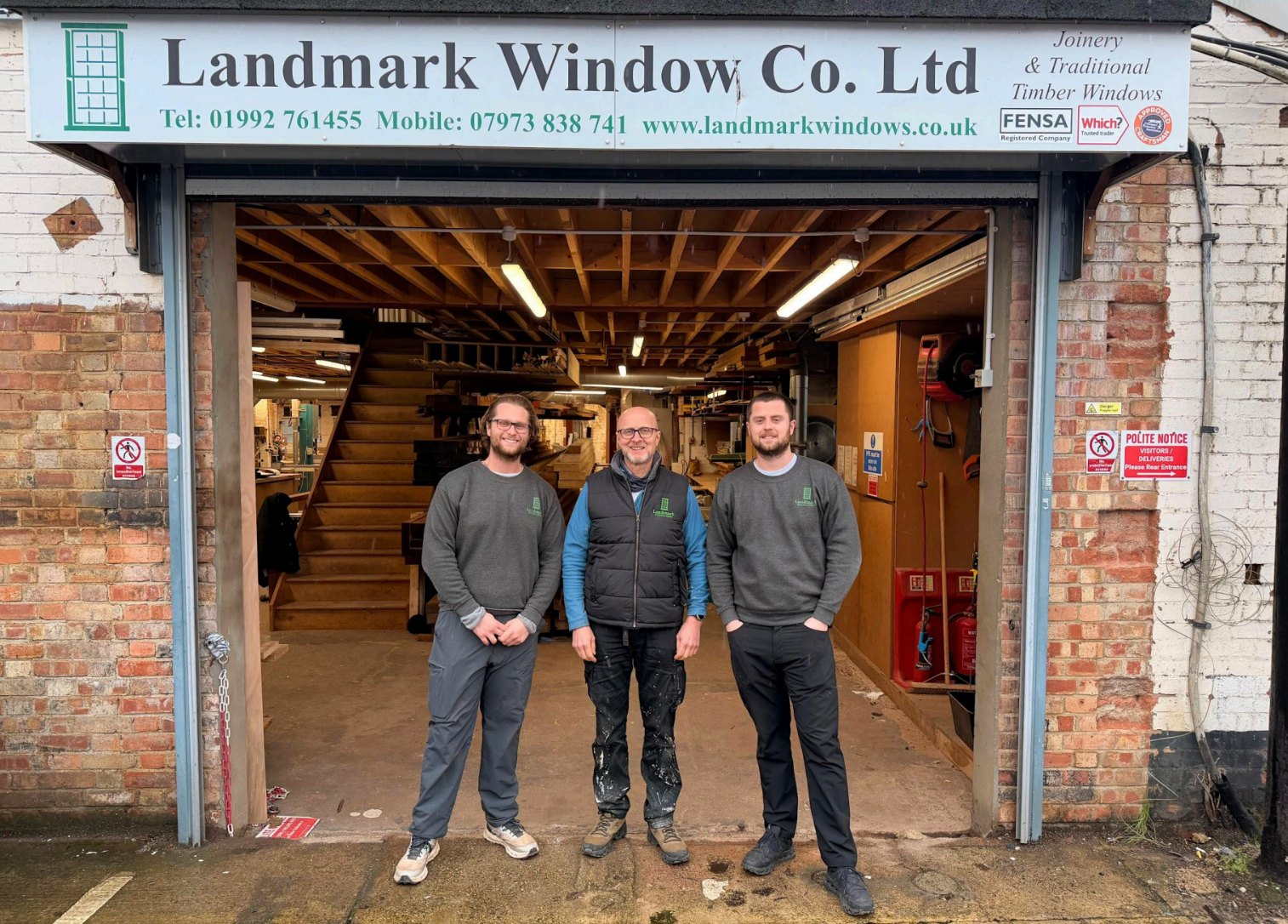
The family-run business designs and manufactures timber sash windows, casement windows, hardwood doors, and bespoke joinery from its workshop in Waltham Abbey. Founded by Steve Hunt and now led by his sons Tom and Ben, the company has more than 35 years of experience supplying trade and residential projects across London and the South East.
The Made in Britain trademark gives the business formal recognition for domestic production as product origin, traceability, and craftsmanship receive closer attention in refurbishment and conservation-led construction.
Tom Hunt, Head of Operations at Landmark Windows Co Ltd, said joining Made in Britain felt like a natural step for the company. “We’ve always been committed to manufacturing our timber windows and doors here in the UK, so it was about formalising that commitment,” he said.
“The membership represents both recognition and responsibility. It reinforces our commitment to maintaining the highest standards in British manufacturing and positions us among a community of respected UK producers.”
Landmark operates in a market shaped by the age and complexity of the UK building stock. Historic England has identified that 21% of domestic buildings in England and 32% of non-domestic buildings were constructed before 1919. Those buildings often require repair, maintenance, and upgrading approaches that differ from standard modern replacement work.
Timber windows and doors are central to that challenge. In listed buildings, conservation areas, and traditional properties, replacement products often need to match original sightlines, profiles, glazing patterns, mouldings, and materials while still improving thermal performance, draught-proofing, security, and durability.
Landmark’s offer includes full replacement products and sash upgrade services, allowing original box frames to be retained while glazing performance and draught-proofing are improved. That approach is suited to refurbishment projects where preservation is a priority and wholesale replacement would be technically unnecessary, commercially unattractive, or difficult to justify through conservation consent.
The company manufactures in-house, including spray finishing and glazing, giving it control over quality and allowing products to be tailored to individual buildings. Its website says every window, door, and bespoke joinery item is handmade in its workshop, with products made to order rather than supplied as standard off-the-shelf units.
Charlie Casey, Business Development Manager at Landmark Windows Co Ltd, said the Made in Britain mark gives clients an added layer of trust, particularly when the company is speaking to new clients or exploring opportunities further afield. He said it provides “a clear and immediate signal of quality and origin”.
The accreditation reflects a wider shift in how traditional building products are being specified. Contractors and consultants are being asked to demonstrate performance, compliance, provenance, sustainability, and suitability for existing fabric. In heritage retrofit, that balance is especially important because inappropriate interventions can create moisture risks, visual harm, or premature product failure.
Landmark said it is continuing to invest in workshop capability and sustainable timber solutions while expanding its presence across the UK. As demand for repair, maintenance, and sensitive retrofit grows, specialist manufacturers with traceable production and conservation knowledge are likely to play a larger role in keeping older buildings usable, efficient, and commercially viable.