IN Brief:
- Prague’s public transport operator has signed the next major Metro D contract, worth CZK 29.99bn excluding VAT.
- The works cover the Olbrachtova – Nové Dvory section, including three stations and almost 6km of tunnels.
- The package advances the city’s wider 10.6km, 10-station Metro D programme and follows a period of procurement delay and legal challenge.
Dopravní podnik hl. m. Prahy (DPP) has signed the construction contract for the next section of Prague’s Metro D, clearing the way for work to move forward on the Olbrachtova – Nové Dvory package after an extended period of challenge and delay. The contract has been awarded to a consortium comprising Subterra, HOCHTIEF CZ, HOCHTIEF Infrastructure, and BeMo Tunneling, with a tendered value of CZK 29.99bn excluding VAT.
The section follows the first phase now under way between Pankrác and Olbrachtova and is one of the most significant live urban infrastructure packages to reach contract stage in Central Europe this month. The newly signed works include three stations — Nádraží Krč, Nemocnice Krč, and Nové Dvory — along with several tunnel sections totalling almost 6km. Construction is expected to begin in the coming weeks, with completion of this phase planned for 2032.
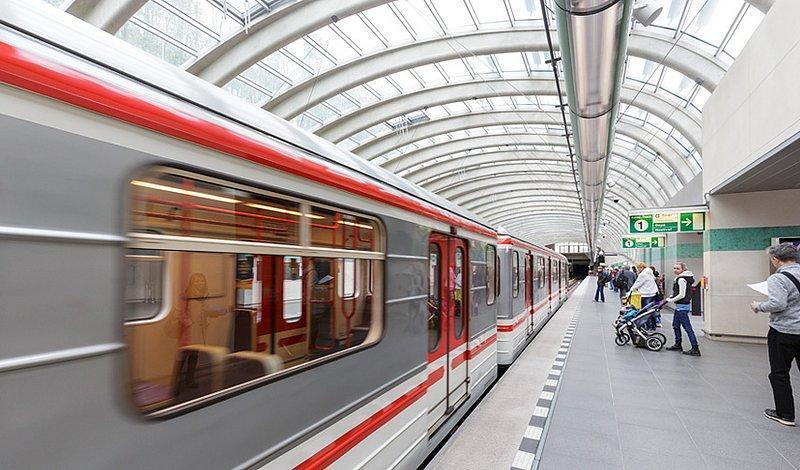
Metro D is Prague’s fourth metro line and its first fully automated route, with the full scheme stretching 10.6km from Náměstí Míru to Depo Písnice across 10 stations. Within that wider plan, the operational section running from Pankrác to Nové Dvory is 4.6km long and will contain five stations. The newly contracted segment is therefore central to moving the line from early works into a more substantial operating spine.
The package also brings important interchange and access infrastructure into play. Nádraží Krč will connect with the Praha–Krč railway station and is planned with substantial park-and-ride provision, while Nové Dvory is designed to connect with a future tram route and additional P+R capacity. Metro D is being built not only as a line extension but as part of a wider transport restructuring effort in the southern part of the city, linking metro expansion more closely with rail, tram, bus, and road access.
The contract has taken longer to reach site than originally expected. DPP has said the signing was possible only after competition authority and court decisions removed barriers that had prevented the authority from finalising the award. That sequence is familiar on major infrastructure procurement across Europe, where funding and design readiness do not always translate into immediate progress once tender outcomes are challenged.
With the contract now signed, the emphasis shifts back to execution. The work combines urban tunnelling, station construction, and interfaces with live transport infrastructure, all within a programme that will remain active for years. Delivery on one section will shape confidence in the timing and credibility of those that follow, particularly on a scheme where future packages depend heavily on the pace and performance of the earlier phases.
The engineering profile is also notable. Metro D combines mined and cut-and-cover station construction in a dense urban setting, alongside a staged delivery model that requires careful management of interfaces, logistics, and public disruption. Once that sequence slips, costs and programme pressure travel quickly through the rest of the scheme. Holding momentum on the newly awarded package will therefore matter well beyond the boundaries of the section itself.
Across Europe, urban rail remains one of the clearer long-cycle opportunities for major contractors, but projects still have to make the difficult transition from intent to executable packages. Prague has now done that for another key section of Metro D. The next phase will test how efficiently the city can convert that progress into sustained delivery over the coming decade.