IN Brief:
- Harrow is using high-resolution drone data to deepen a lower-resolution borough-wide model and support remote inspections, estate surveys, and service planning.
- A roof survey at Headstone Manor & Museum replaced scaffolding and manual inspection, with the council reporting a £12,000 saving on that job.
- The next phase includes wider BIM integration, more trained drone operators, and the addition of live operational data into the model.
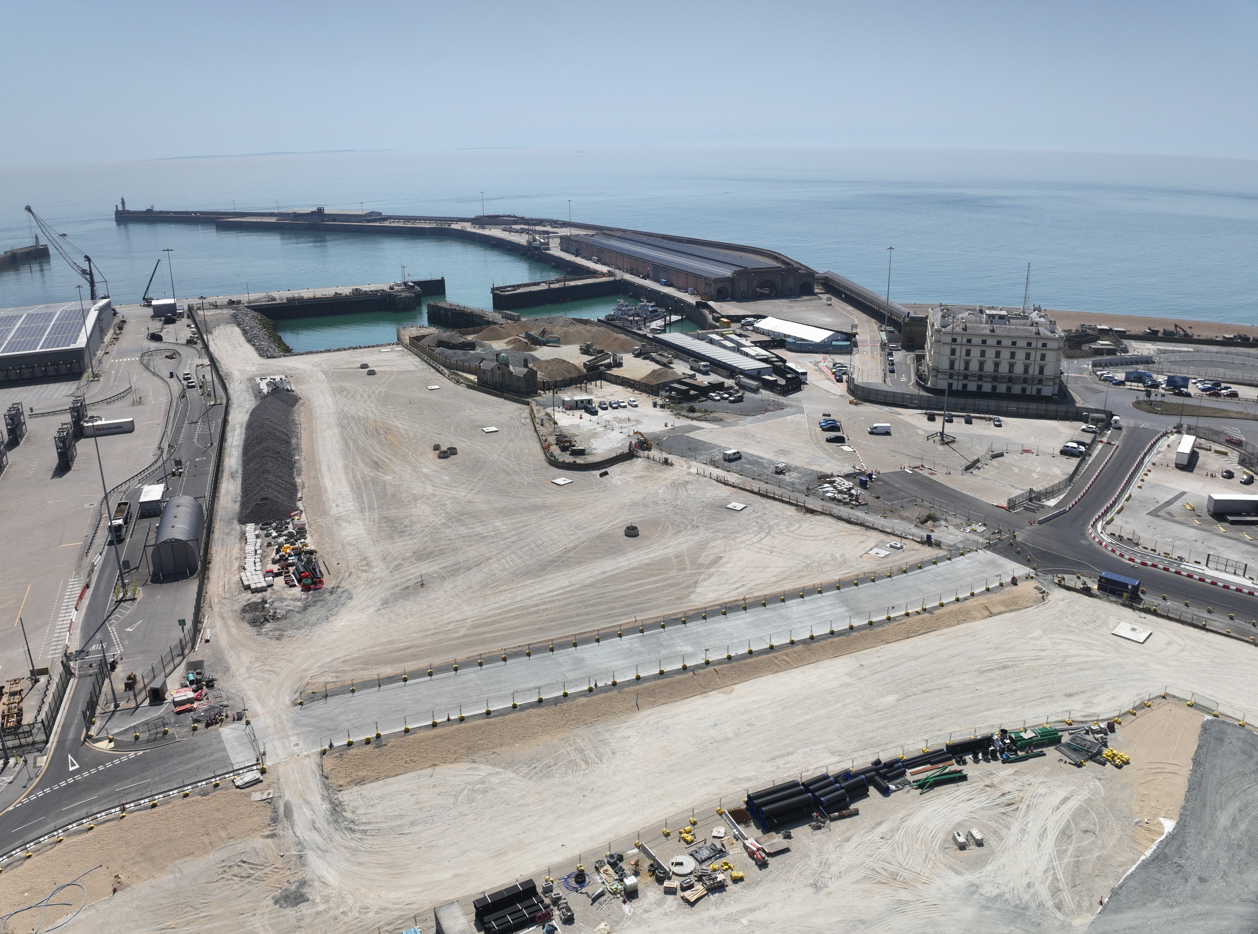
London Borough of Harrow is expanding the use of drone-derived 3D modelling across its estate, moving beyond visualisation and into maintenance, inspection, and service planning. The borough has been building a hybrid digital twin that layers new high-resolution data onto an existing lower-resolution model, allowing it to target detail where it is needed rather than rebuild the whole area at full resolution.
That approach is already being used on live assets. Harrow has used drone imagery and 3D modelling to support remote inspections of buildings and structures, reducing the need for more labour-intensive surveys on site. One of the earliest applications has been at Headstone Manor & Museum, where the borough used the system to carry out a roof survey on the Grade I listed building. By replacing scaffolding and manual inspection with drone-based capture, the council said it saved £12,000 on that exercise alone.
The model is being built using Site Scan for ArcGIS from Esri UK, which processes aerial data into 2D and 3D outputs including point clouds and mesh models. That gives estate and maintenance teams more than a visual reference. Distances, surface areas, and volumes can be measured directly from the model, giving survey, maintenance, and planning teams a more detailed base to work from without returning repeatedly to site.
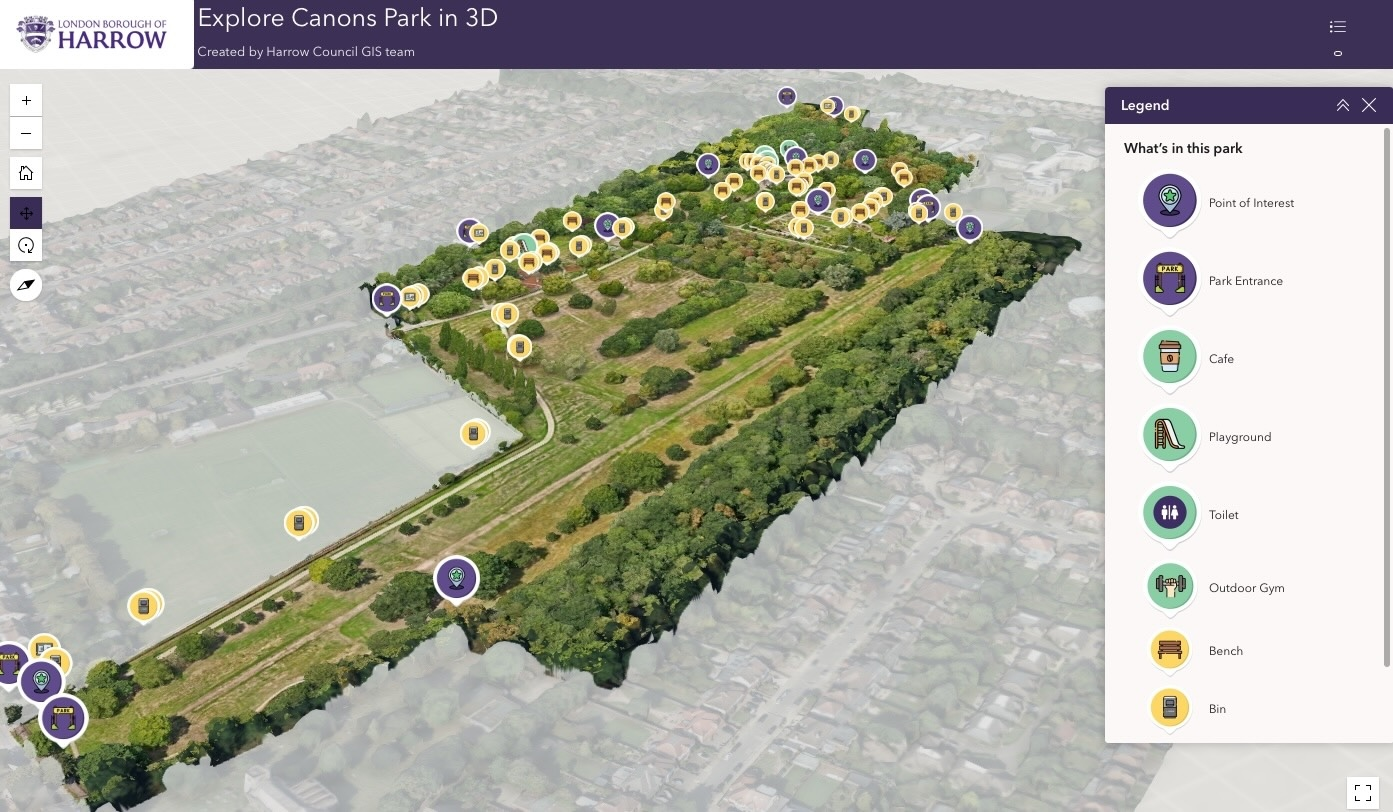
Harrow is also applying the model across wider public services. As part of the borough’s Healthier Harrow work, interactive 360-degree imagery and 3D park mapping are being used to encourage greater use of green space, with Canons Park among the first locations to go live. The same data is being tested in environmental enforcement, where high-resolution imagery of fly-tipping hotspots can be reviewed to assess access, boundaries, sight lines, and the best location for deterrents such as fencing, signage, or cameras.
For building owners and asset managers, the appeal is straightforward. Remote condition checks, roof surveys, and measured 3D records are useful where access is awkward, buildings remain occupied, or heritage constraints make conventional inspection disruptive and expensive. On listed or civic assets, that combination of speed, reduced access equipment, and better visual records can shorten decision cycles as well as trim cost. The same principle carries into schools, leisure centres, housing blocks, and public realm assets where maintenance teams are working against limited budgets and growing backlogs.
Local authorities have spent years discussing digital twins as strategic platforms, but many projects have remained limited pilots with little operational effect. Harrow’s model points in a more practical direction. Instead of trying to build a fully detailed borough-wide twin from the outset, the council is combining lower-cost baseline coverage with targeted high-resolution capture in areas where teams can use it immediately. That makes the platform easier to justify in budget terms and easier to scale.
The next phase suggests the borough intends to treat the model as part of its operational infrastructure rather than a one-off innovation exercise. Harrow is looking at integrating Revit-based information into the environment, training more staff as drone pilots, and adding live data such as traffic and weather over time. As that develops, the model will move closer to a live operational layer for the estate rather than a static survey output.
Digital twins have often been presented as a future-facing ambition for cities and public assets. In practice, their value rests on mundane but costly tasks: inspections, surveys, maintenance planning, and record-keeping. Harrow’s rollout shows where the technology is beginning to settle — not as a showcase, but as a working tool for buildings, infrastructure, and services that need to be managed with tighter budgets and better information.