IN Brief:
- East West Rail has moved to a phased delivery approach, bringing sections and stations into use as they are completed.
- The revised plan includes a core four-trains-per-hour service, with a possible fifth train and longer five-carriage trains.
- Station scope, freight provision, and corridor growth assumptions are all becoming more defined ahead of the DCO stage.
East West Railway Company has updated its plans for the Oxford to Cambridge route, shifting the project toward a more phased delivery model and materially increasing the service ambition now being designed into the scheme. The latest consultation package points to sections of the railway, stations, and associated upgrades coming into use as they are completed rather than waiting for a single end-to-end opening, while the operating plan now allows for a core four trains an hour across the route with the option of a fifth service if demand requires it.
That change matters because East West Rail is no longer being presented simply as a long-horizon corridor project with a distant end date. It is being recast as a scheme that can release capacity, station access, and development benefits in stages. For project teams, that is more than a timetable adjustment. It changes the rhythm of delivery, the sequencing of civils and station works, and the way contractors and suppliers will read the pipeline as the project moves toward its Development Consent Order submission in 2027.
The revised package brings several design moves into sharper focus. On the Marston Vale section, the route is now being planned around a consolidated station option, replacing a set of lightly used and often poorly accessible stops with four modern stations, including a new station at Stewartby intended to serve the proposed Universal resort area. The service pattern is being scaled accordingly, with provision for longer trains of up to five carriages. East West Rail is also carrying freight requirements through the design, with path provision built into the route, which is an important signal that the scheme is being shaped around wider network function rather than passenger journeys alone.
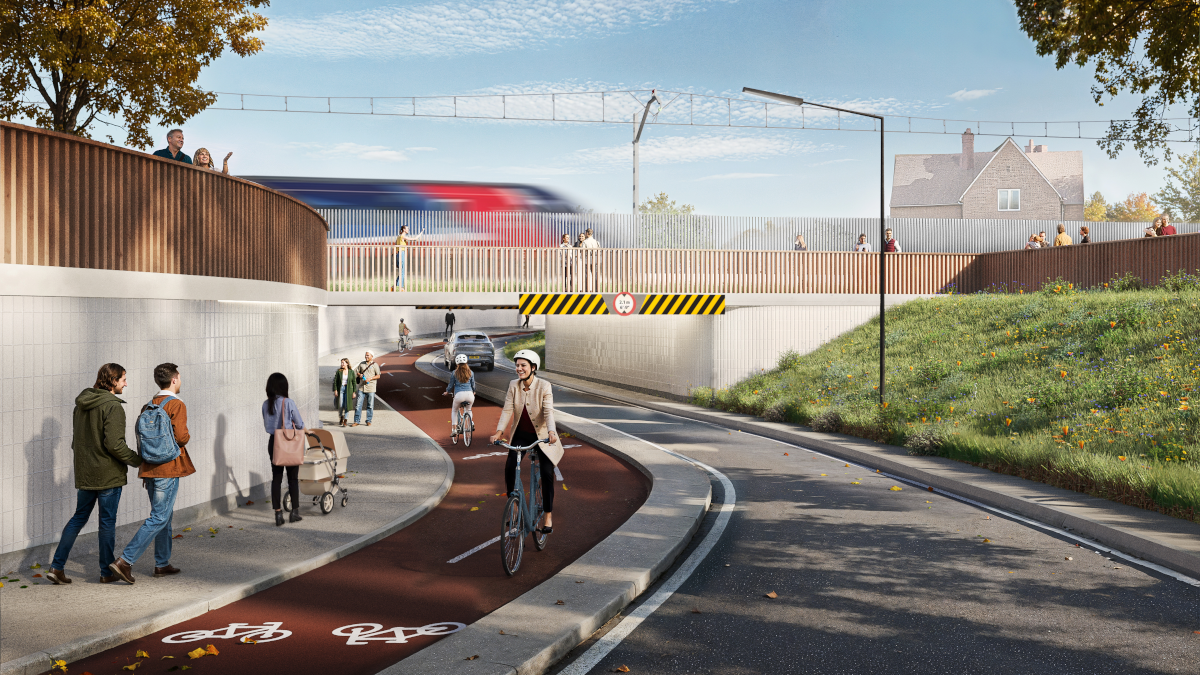
Elsewhere, station scope is expanding in ways that will affect the construction picture as much as the operating one. A new Cambridge East station has been formally added to the project scope, subject to third-party funding, while revised station access and entrance proposals at locations including Cambridge and Bedford point to a scheme that is increasingly tied to urban regeneration, interchange quality, and active travel connectivity. East West Rail says more than 80 changes have been made following consultation feedback, which shows the project moving from broad route selection into a more detailed and more buildable design phase.
For the market, the most notable feature is the move toward usable infrastructure arriving in tranches. That approach has become more common across large UK transport projects because it reduces the political and commercial risk of deferring all benefits to the end of the programme. It can also reshape procurement. Rather than a single narrative about the full railway opening in the mid to late 2030s, the supply chain now has a series of earlier milestones to watch around Bedford, the Marston Vale corridor, Tempsford, and Cambridge. That tends to sharpen interest in enabling works, stations, systems integration, access routes, and local interface packages.
There is also a wider planning trend at work. East West Rail is being used to support housing growth, labour-market integration, leisure demand, and freight resilience across one of the country’s most scrutinised development corridors. That means the railway is carrying a policy burden beyond transport alone. Station design, road access, walking and cycling links, and the timing of local benefits are therefore becoming central construction questions rather than secondary design flourishes. A corridor railway framed this way has to do more than move passengers. It has to support place-making, unlock land, and show visible progress early enough to hold political support.
The next stage will be watched closely because this is the point at which broad strategic arguments start giving way to harder delivery questions. Phasing, station scope, freight provision, and service assumptions are all tightening. For contractors, consultants, and suppliers, that is the signal that East West Rail is moving further out of concept territory and deeper into the territory where design development, interfaces, and future packages begin to look real.