IN Brief:
- GripLock has been launched through a collaboration between Grayson and Vision.
- The tool is designed to hold the next masonry support section in place during installation.
- The launch reflects continued demand for low-cost site tools that improve safety and productivity.
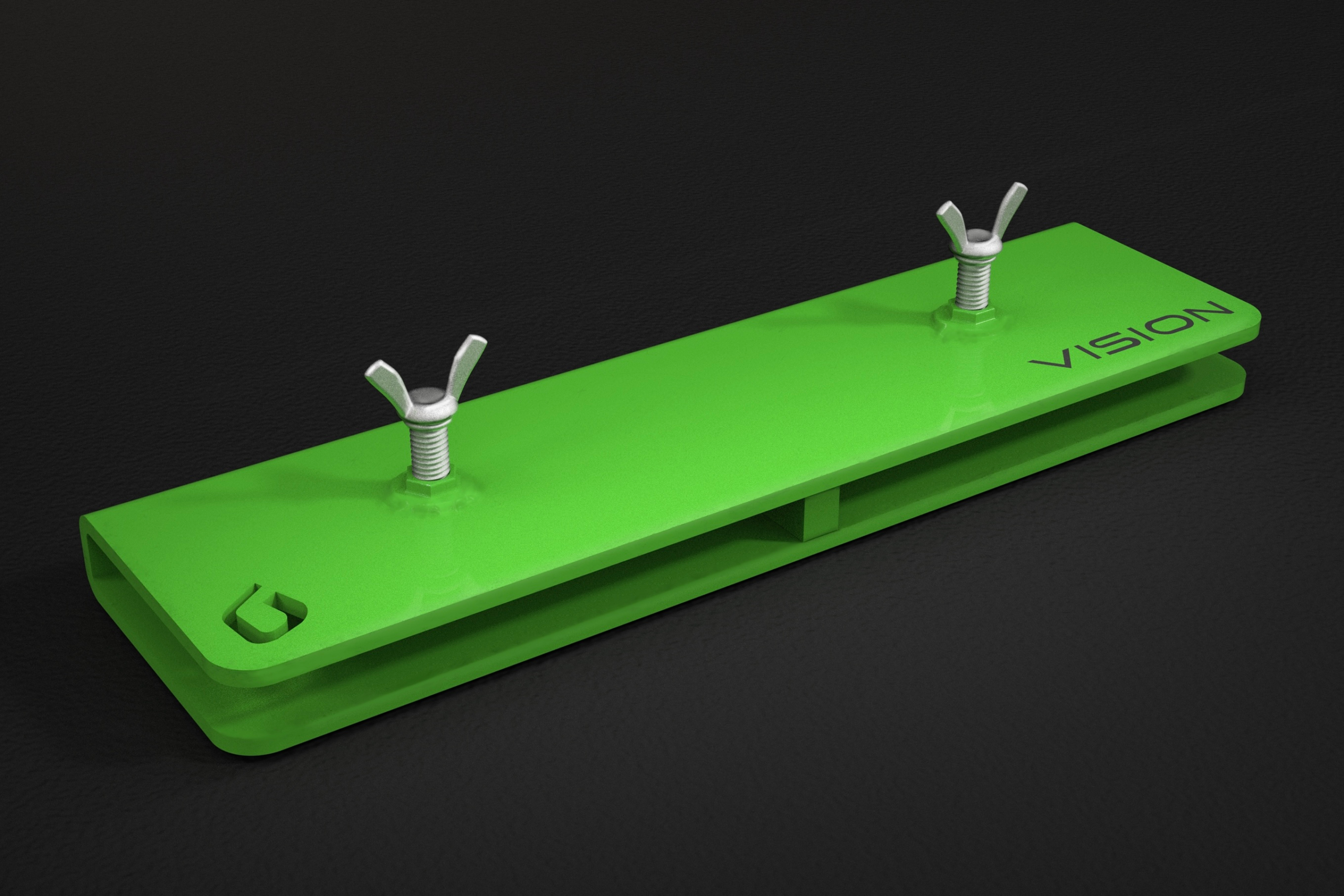
Grayson has launched the GripLock masonry support fitting tool in collaboration with specialist installer Vision, bringing to market a product designed to address a basic but persistent issue on façade and masonry support installations: how to hold the next section securely in place while it is being marked up and fixed. The tool has been developed from site experience rather than desk-led product planning, and that origin gives the launch its relevance. It is aimed squarely at the practical bottlenecks that slow installation, create awkward manual-handling moments, and often require an extra pair of hands simply to keep the work moving.
The idea was developed by Richard Brealey, managing director of Vision, after repeated site visits highlighted inefficiencies in how masonry support sections were being handled during installation. The issue was not especially glamorous, but it was real enough: installers were losing time holding and marking the next section, existing clamps were not performing well enough, and the process carried an avoidable risk of sections slipping or dropping while being positioned. Working with Vision’s fitting teams and a local engineering company, Brealey developed and refined the concept through on-site trials before patenting the design and bringing Grayson in to help develop it into a market-ready product.
The resulting tool is intended to hold the next length of masonry support in place firmly enough for the installer to work without relying on another operative to steady the section. Clare Spivey, sales and marketing director at Grayson, said the product offered “a quick and effective solution to a long-standing challenge”, while Brealey said making the tool widely available would allow more installers to benefit from a safer and faster installation process. Those are familiar claims in product launches, but in this case the proposition is plausible because it is tightly focused. GripLock is not trying to redefine masonry support design. It is trying to remove waste and awkwardness from one part of the installation sequence.
That sort of incremental site innovation tends to be underrated in construction coverage, yet it often delivers the most immediate value. Large digital platforms and major equipment launches attract attention, but jobsite productivity is still shaped by dozens of smaller tasks that are repeated every day. When one of those tasks is awkward, the cost is cumulative: a few lost minutes on each section, extra labour to hold components in place, more stop-start workflow, and greater exposure to minor handling incidents that can easily become reportable events. A simple tool that reduces those points of friction can therefore have an outsized impact if it is adopted consistently.
The wider market conditions make that kind of tool more relevant, not less. Labour remains expensive, site teams remain stretched, and contractors continue to look for ways to improve installation productivity without introducing new complexity or lengthy training requirements. Products that succeed in that environment are usually the ones that can be explained in a sentence and put to work immediately. GripLock appears to fit that model. It addresses a narrow task, uses familiar site logic, and speaks directly to the industry’s continuing search for safer, faster, and more labour-efficient ways to complete repetitive specialist work.
For Grayson, the launch also plays to a broader positioning around practical masonry-sector problem solving rather than pure product distribution. For Vision, it turns specialist installation knowledge into a sellable tool that can circulate beyond its own teams. That combination is worth noting. Some of the most useful innovations in construction do not emerge from major R&D programmes. They emerge when experienced installers decide that a bad site routine has gone unchallenged for long enough.